Many new founders invest heavily in logo design and sample making before verifying market demand, and finally fail to build a sustainable genuine leather bag brand. The biggest mistake is separating brand positioning from feasible production solutions. Genuine leather goods involve higher raw material costs, longer lead times and stricter quality consistency than synthetic leather bags. Without systematic planning, startups easily face overstock, inconsistent leather texture, high return rates and capital pressure.
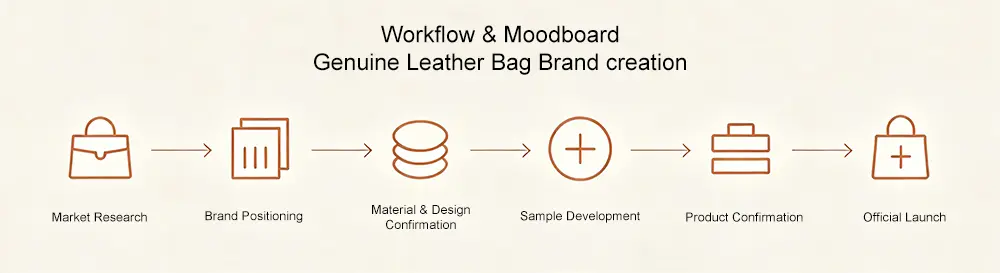
A proven roadmap for launching a genuine leather bag brand looks like this: low-cost market research → precise brand positioning → material & design specification confirmation → lean product line planning → sample development & confirmation → standardized QC checklist → packaging & pricing strategy → trial order testing → official market launch.
Lots of brand owners come to leather factories only with inspiration boards and reference pictures. It is a normal starting point. However, marketable genuine leather bags require standardized documentation that designers, factories and buyers can follow clearly. Raw leather natural variation, edge paint durability, stitching standards and hardware anti-rust treatment all need clear rules before cutting full hides.
Chapter 1 Market Research for Your Genuine Leather Bag Brand
The most common mistake for genuine leather bag startups: manufacturing products first, then hunting customers. Entrepreneurs may fall in love with a specific bag silhouette or leather texture, yet consumers reject the final product due to weight, size, price or practical functions. Before spending money on sampling, market research helps reduce trial-and-error risks significantly.
Effective lightweight research for genuine leather bag brands includes competitor benchmarking, target audience profiling, price tier analysis, collecting negative reviews, concept testing and identifying customer purchasing concerns. These inputs define which styles to develop and which risks to avoid.
1.1 Answer Core Questions Before Sketching Genuine Leather Bag Designs
As a genuine leather manufacturer, we see most early-stage problems come from vague requirements, not craftsmanship. If you plan to launch minimalist genuine leather tote bags for office workers, you still need to lock down these details:
- What laptop size can the main compartment hold?
- Does the bag need to stand upright without support?
- Choose soft full-grain leather or firm top-grain leather?
- Target retail price range for end consumers?
- Primary usage scenario: daily commute, travel, gift or casual outing?
- Core competitive advantage: minimalist design, durable craftsmanship, sustainable leather, handmade details or affordable genuine leather?
All these answers shape the final product before leather cutting begins.
1.2 Low-budget Research Methods for Leather Goods Startups
New brands do not need large market research budgets. These lightweight tactics collect real consumer behaviour data efficiently.
| Research Method | Information You Can Collect | Cost Level |
|---|---|---|
| Competitor Analysis | Price range, silhouette, leather type, marketing selling points | Very Low |
| E-commerce Review Mining | Common complaints: loose stitching, peeling edge paint, heavy weight, poor hardware | Very Low |
| 1-on-1 interviews with target buyers | Real usage pain points and purchase barriers | Very Low |
| Landing page concept test | Interest level toward new genuine leather bag styles & pricing | Low-Medium |
| Pre-order survey | Verify real market demand signals | Low-Medium |
| Communication with offline boutique retailers | Wholesale channel requirements and market trends | Medium |
1.3 Key Dimensions for Competitor Benchmarking
Direct copying should be avoided, but deep benchmarking helps discover market gaps and understand consumer expectations.
- Price segmentation: Genuine leather bags at $79, $149 and $249 retail tiers adopt totally different leather grades, hardware and profit models.
- Material marketing: Some brands focus on full-grain leather; others promote sustainable leather or vegetable-tanned leather. Leather selection directly affects cost, durability and brand positioning.
- Frequent negative feedback: Common issues include uneven leather colour, cracked edge paint, tarnished metal hardware, insufficient internal pockets and heavy bag weight. All these can be solved at the design stage.
- Size experience: A small difference of 3–5 cm changes practicality. Crossbody bags unable to fit standard smartphones will drive away plenty of buyers.
- Top return reasons: If returns are mainly caused by leather hardness or colour difference, sample standards and product description pages need targeted optimisation.
Many founders cut sample revision times simply by analysing competitor negative reviews. This tedious work saves massive product development capital.
1.4 Avoid Invalid Research Based on Personal Taste
A widespread trap: only asking friends and family whether a bag looks good. Subjective feedback cannot predict real purchase intention. Better questions to test your concepts:
- Would you pay XX USD for this genuine leather bag?
- Compared with your current bag, which function makes you switch?
- What factor stops you from placing an order?
- At the same price, do you prefer vegetable-tanned leather, full-grain leather or other genuine leather options?
Successful genuine leather brands do not rely purely on the founder’s aesthetic preference. They confirm a clear purchasing motivation from target groups first.
Chapter 2 Translate Brand Positioning Into Genuine Leather Product Specifications
If brand positioning only stays as logos, slogans and mood boards, product standards will remain ambiguous. Conflicts appear repeatedly during sampling. The core rule: positioning must turn into tangible decisions including leather type, bag structure, hardware, packaging and QC rules.
Workflow: Lock target audience, price bracket, usage scenario and unique selling points → define leather thickness, lining material, edge paint technique, stitching density, logo embossing method, hardware grade, SKU quantity and inspection standards.
2.1 Brand Positioning Cannot Only Be Marketing Slogans
A positioning statement like “minimalist premium genuine leather brand” is only a basic direction. It cannot guide factory production until converted into physical standards.
| Brand Positioning Selling Point | Corresponding Product Specifications |
|---|---|
| Minimalist genuine leather commuter bags | Structured silhouette, independent laptop compartment, neutral colour palette, understated hardware |
| Sustainable vegetable-tanned leather accessories | Natural leather texture, recyclable packaging, material traceability documents |
| Affordable everyday genuine leather goods | Optimise cutting layout to reduce leather waste, simplify complicated stitching procedures |
| Genuine leather gift wallets & cardholders | Stiff gift boxes, controlled leather colour deviation, durable card slots, neat logo placement |
| Genuine leather travel duffle bags | Reinforced handles, multi-layer storage, wear-resistant lining, anti-rust metal hardware |
When positioning cannot guide production decisions, brand storytelling feels empty. Worse still, buyers and manufacturers will have inconsistent understanding of product requirements.
2.2 Determine Materials & Craftsmanship Based on Target Pricing
End retail price restricts manufacturing cost, packaging, logistics, import tariffs, platform commission, gross margin and marketing budget. Multiple variables affect genuine leather bag costs: leather grade & thickness, bag structure complexity, custom moulded hardware, lining fabric, edge paint process, logo craft, packaging, minimum order quantity and tolerance of quality defects.
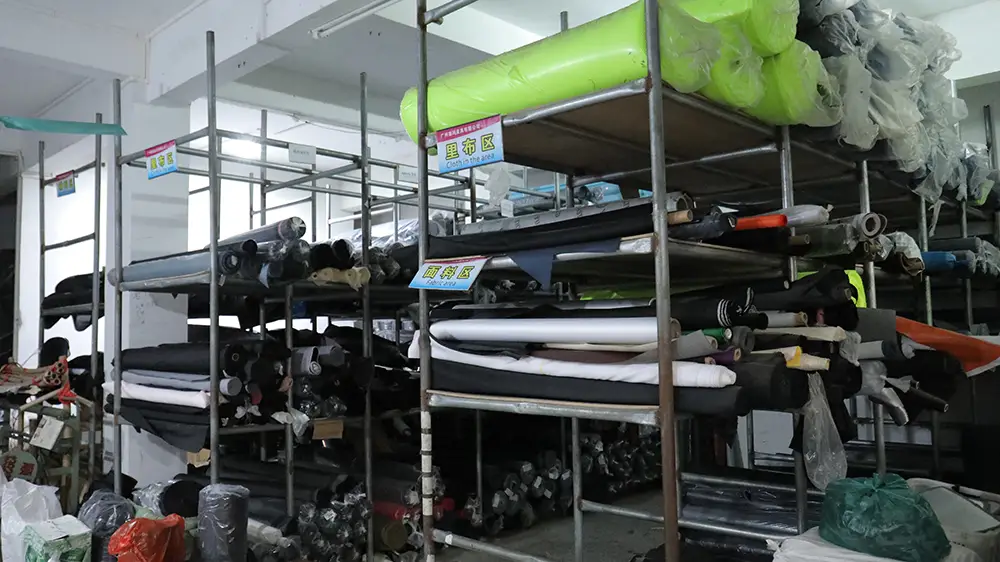
Leather material cost comparison reference
| Leather Type | Feature | Relative Cost | Suitable Brand Position |
|---|---|---|---|
| Full-grain genuine leather | Natural grain, durable, develops patina | Highest | Mid-to-high end brand, handmade leather goods |
| Top-grain genuine leather | Smooth surface, stable texture | Medium-High | Balanced quality & price, mainstream independent station brands |
| Corrected-grain genuine leather | Sanded & embossed surface, fewer natural marks | Medium | Entry-level genuine leather series, wholesale market |
| Vegetable-tanned leather | Eco-friendly, changes colour over time | High | Niche handmade, sustainable fashion brands |
2.3 Usage Scenarios Define Genuine Leather Bag Design Logic
Commuter totes, evening clutches and travel backpacks follow completely different production standards.
- Commuter tote: Laptop capacity, reinforced handles, supportive base, stain-resistant leather
- Crossbody daily bag: Adjustable strap, quick phone access, smooth zippers, lightweight build
- Leather wallet: Proper card slot tightness, folding thickness, wear-resistant edge paint
- Leather backpack: Padded shoulder straps, reinforced stitching, heavy-duty zippers
- Travel leather duffle: Large capacity, load-bearing handles, tarnish-proof hardware
If your brand markets “long-lasting genuine leather daily bags”, craftsmanship and inspection standards must support this selling point.
2.4 Do Not Overcomplicate Differentiated Features
New founders often pursue unique irregular silhouettes, custom locks, rare leather varieties and excessive colour options. A small creative highlight improves competitiveness, yet over-complication brings serious risks:
- More rounds of sample revisions
- Extra mould opening fees for custom hardware
- Higher factory minimum order quantity
- Longer raw material procurement lead time
- Larger quality variance in mass production
- Extended production lead time
- Harder inventory management
For new genuine leather brands, one clear unique selling point is enough for launch. Optimised internal pocket layout, vegetable-tanned leather material or premium unboxing experience can support your first product line.
Chapter 3 Product Line Planning for New Genuine Leather Bag Brands
Launching too many SKUs drains cash flow rapidly. Many entrepreneurs plan handbags, wallets, backpacks, belts and travel bags all at once. More styles mean higher sampling costs, harder quality control and greater inventory risks.
New genuine leather brands should adopt a lean launch strategy: 1 core hero product + 2~3 matching small accessories. This model lowers development difficulty, stabilises quality and reduces inventory pressure, while building clear brand recognition for consumers.
3.1 Start Small, Expand After Market Validation
Many founders plan 15–20 SKUs before testing single-product sales. Visually rich collections sound attractive, yet risks are concentrated.
Every SKU requires independent pattern making, sampling, cost calculation, packaging design and QC rules. If each style comes with 3 colours, 5 styles equal 15 separate inventory units, tying up capital before you confirm market demand.
3.2 Recommended Initial Product Line Structure for Starters
| Launch Module | Example | Core Function |
|---|---|---|
| Hero core product | Genuine leather tote / crossbody bag / backpack | Main image product for brand marketing |
| Matching accessories | Leather wallet, card holder, key pouch | Low-price entry items, boost upsell rate |
| Limited colour options | Black, brown, tan, maximum one seasonal colour | Prevent overstock from excess colour variants |
| Unified leather route | Stick to full-grain / top-grain leather in one collection | Simplify sourcing and consistent quality control |
| Standard packaging | Dust bag, gift box, kraft shipping box | Unified unboxing brand experience |
Use feedback from initial sales to add new silhouettes and colours gradually.
3.3 Three Launch Product Strategies Comparison
Your first product choice directly affects cash flow and brand building. High-priced large bags require long-term brand trust; small leather goods have lower consumer barriers but weaker brand recognition.
| Launch Strategy | Suitable Brand Type | Advantages | Disadvantages |
|---|---|---|---|
| Single hero leather bag launch | Focus on commute & travel mid-high end brands | Strong brand recognition, concentrated marketing budget | Revenue relies on one item; high risk if design fails |
| Large bag + small accessory bundle | Brands covering gift & multi-price tiers | Lower entry barrier for buyers, gift set potential | More SKUs increase inventory and QC workload |
| Start only with small leather goods | Low-budget startups, corporate gift suppliers | Simple production, low shipping volume, flexible MOQ | Weak visual impact, fierce market competition |
3.4 Control Colour Variants Before Demand Verification
Colour selection creates hidden inventory risks. Founders frequently design 5~6 colours for visual diversity. Natural genuine leather has inherent texture differences and batch colour variation. Even within the same hide, shade inconsistency exists. Always confirm physical colour swatches and keep approved samples as mass production reference.
Data from leather industry statistics shows new brands with over 4 colour variants for the first product face a 62% higher risk of slow-moving inventory. Expand colourways only after collecting stable sales data.
Chapter 4 Quality Control Before Genuine Leather Mass Production
Claims of premium leather quality cannot survive without standardised systems. Words like luxury and high-end carry no weight unless supported by material rules, craftsmanship standards and consistent bulk quality. The correct workflow: build complete QC systems before placing large orders.
Mass production QC workflow: Confirm raw material acceptance criteria → multi-stage sample approval → written tolerance specification → uniform stitching & edge paint rules → hardware function testing → packaging inspection → final random sampling agreement with the manufacturer.
4.1 Standardised QC Checklist for Genuine Leather Goods
When you define “premium quality”, turn abstract descriptions into measurable standards: softer leather, crack-resistant edge paint, consistent stitch density, anti-tarnish hardware or low defect tolerance. Complete genuine leather QC covers these modules:
- Raw material inspection: Leather grade, thickness, scars, colour variance
- Cutting control: Pattern accuracy, unified leather grain direction
- Stitching rules: Stitch spacing, no skipped stitches
- Edge paint durability: Smooth finish, resistance to cracking after bending
- Hardware testing: Plating colour, load capacity, anti-corrosion performance
- Lining inspection: Firm attachment, no stains
- Logo craft: Clear embossing or metal badge finish
- Functional testing: Zipper smoothness, snap tightness, handle load test
- Final inspection: Dimension check, appearance, complete packaging set
These visible details decide long-term customer satisfaction and repeat purchase rate.
4.2 Approved Sample Is The Most Important QC Reference
Approved samples are not only photos for marketing. They act as the single standard for bulk production. Check all items below before signing off samples:
- Exact dimensions: Height, width, depth, adjustable strap length, internal pocket size
- Bag structure: Confirm whether the bag stands freely or keeps soft shape
- Leather hand feel: Thickness, texture matching brand expectation
- Full function test: Zippers, magnetic snaps, strap connection
- Wearing experience: Comfort after loading daily belongings
- Complete packaging set: Dust bag, gift box, swing tag, protective filler
Keep one confirmed sample for yourself and send a duplicate to the factory. All bulk goods must be compared against this reference to avoid disputes over silhouette and colour.
4.3 Build A Complete Tech Pack To Avoid Communication Errors
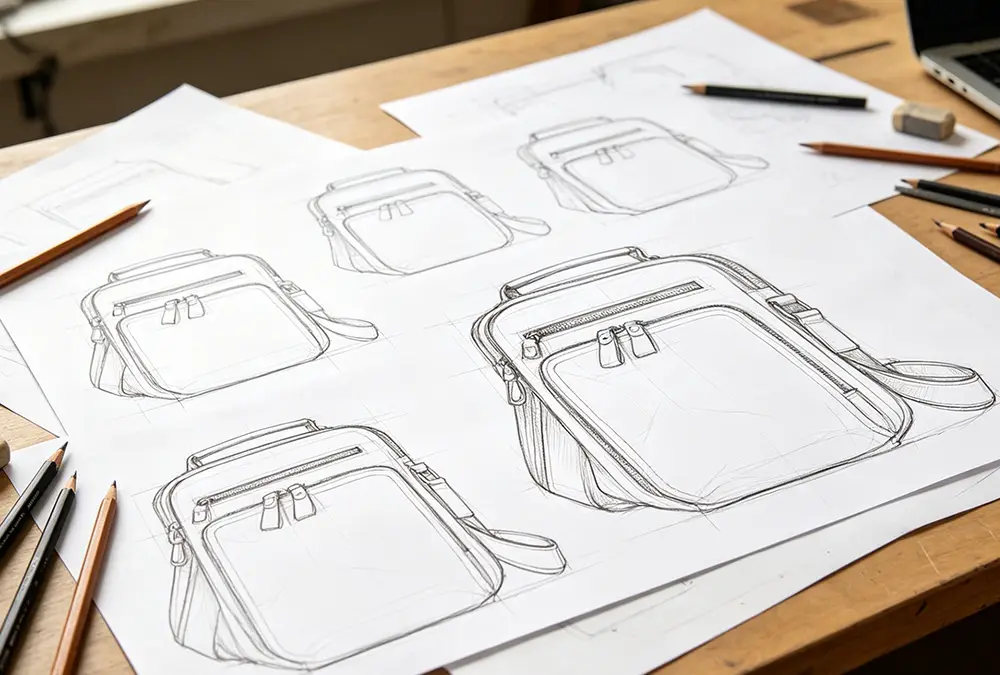
A tech pack does not need perfect design at the first draft, but the final version must guide leather factories directly. Essential sections:
- Product sketch & construction diagram
- Precise dimension chart
- Material specification: leather, lining, reinforcement fabric
- Complete hardware list
- Stitching & edge paint requirements
- Logo production method
- Approved colour swatch reference
- Full packaging specification
- Acceptance QC checklist
Convert all creative ideas into written parameters to eliminate misunderstanding between brand owners and manufacturers.
4.4 Match QC Standards With Your Brand Position
Budget fashion genuine leather lines, mid-range retail bags and high-end full-grain leather collections require different defect tolerance levels. Core principle: align quality standards, pricing and consumer expectations.
For cross-border shipments, meet regional compliance requirements. Products sold in the EU need relevant material test reports; goods delivered to California should follow Proposition 65 regulations. You can arrange third-party lab testing if required by your market.
Marketing brings traffic, yet consistent quality builds loyal customers. Once buyers receive genuine leather bags with messy stitching or easily damaged hardware, negative reviews cannot be reversed by attractive brand stories.
Chapter 5 Pre-Launch Preparation For Your Genuine Leather Bag Brand
Even with pre-launch traffic, inconsistent quality, delayed delivery and poor packaging will lose potential customers. The biggest risk: product descriptions overpromise beyond actual production capacity. All details including product information, pricing, inventory and logistics should match real manufacturing capabilities instead of ideal marketing visions.
5.1 Build Product Pages Based On Real Production Data
Although this guide focuses on production rather than digital marketing, vague specifications dramatically increase return rates and negative feedback. High-converting product pages for genuine leather bags should include:
- Clear leather type & leather care guide
- Exact finished weight and dimensions
- Strap adjustable range, internal layout
- Compatible laptop or device size
- Hardware colour and lining material
- Full packaging list
- Natural leather variation disclaimer
- Return & maintenance policy
If a tote only fits a 13-inch laptop, state it clearly. Inform buyers about natural leather texture differences in advance to reduce after-sales conflicts.
5.2 Packaging Design Matching Brand Position
Gift-oriented leather wallets suit rigid gift boxes; sustainable brands prefer recyclable kraft packaging; wholesale clients focus on standard export cartons and barcode labelling. Packaging influences two critical aspects: consumer experience and logistics cost.
| Packaging Component | End-customer Impact | Factory & Logistics Impact |
|---|---|---|
| Dust bag | Improve premium feeling, protect leather surface | Extra material and packing labour cost |
| Hard gift box | Excellent unboxing experience for gifts | Larger volume, increase sea & air freight cost |
| Swing tag | Deliver brand value | Printing and manual attachment workload |
| Barcode labels | Support warehouse management for retailers | Require accurate SKU coding system |
| Internal protective filler | Prevent scratches and shape deformation during transit | Add packaging material cost |
Complete packaging samples should be confirmed before mass production. Great craftsmanship loses appeal if customers receive poorly protected goods.
5.3 Plan Logistics Solutions In Advance
Cross-border logistics involves Incoterms (FOB, DDP, CIF), sea freight, air freight, customs clearance and last-mile delivery. The optimal choice depends on order volume, launch timeline and budget.
Discuss logistics plans with your leather supplier at an early stage. Freight cost directly affects overall landed cost, launch schedule, warehousing demand and cash flow. Experienced manufacturers provide tailored logistics advice according to target sales countries.
5.4 Avoid Mass Bulk Production Before Market Validation
From years of industry experience, premature large-scale production creates cascading risks for new genuine leather brands:
- Slow-selling inventory without verified market demand
- Capital locked in unpopular colour variants
- Concentrated quality issues across dozens of SKUs
- Complex communication with multiple raw material suppliers
- Overloaded inspection workload
- Risk of missing planned launch date
- Sharp increase in customer service and after-sale pressure
Recommended phased launch roadmap for genuine leather startups:
- Research phase: Identify demand, price pain points and market gaps
- Concept phase: Confirm hero product, unified leather material and positioning
- Sampling phase: Adjust dimensions, silhouette, leather, hardware and packaging
- Trial order phase: Produce small batches following factory minimum order quantity
- Official launch: Sell via independent sites, marketplaces or offline retailers, collect sales & review data
- Expansion phase: Add new colours and SKUs supported by verified sales data
Successful genuine leather brands earn the qualification to expand based on market data, instead of launching a full collection at the very beginning.
Chapter 6 Real-World Cooperation Cases With Genuine Leather Manufacturers
Every leather goods brand starts with an idea, but turning creativity into sellable finished goods relies on stable supply chain partners. Marrant Leather Factory has supported countless brand owners with product development, custom sampling and bulk production. Three typical cooperation cases are shown below:
Case 1 New Cross-Border Independent Station Startup
Client Profile: First-time entrepreneur launching a DTC genuine leather bag brand online
Pain Points: Limited initial budget, need to control inventory risk
Solution: Develop lean product line with one core genuine leather crossbody bag plus matching leather cardholder. Support custom embossed logo, gift box packaging and multiple sampling revisions.
Outcome: The brand launched the first collection with controllable investment and consistent brand visual identity.
Case 2 Wholesale Genuine Leather Goods Distributor
Client Profile: Offline boutique importer sourcing custom genuine leather accessories
Pain Points: Need differentiated products to compete with generic wholesale stock
Solution: Custom pattern design for genuine leather wallets, select multiple grades of genuine leather, unified packaging and stable bulk quality control.
Outcome: Exclusive custom items help the distributor build competitive advantages in local retail channels.
Case 3 Corporate Custom Leather Gift Projects
Client Profile: Gift trading company serving enterprise corporate orders
Pain Points: Large batch customization, strict delivery schedule and consistent appearance required
Solution: Custom logo genuine leather wallets & key holders, progressive inspection during production, uniform gift packaging.
Outcome: On-time delivery for enterprise events, forming long-term repeat gift cooperation.
Chapter 7 Frequently Asked Questions From Genuine Leather Brand Founders
Q1: How deep should market research be before launching a genuine leather bag brand?
A: You need clear understanding of target buyers, competitor pricing, common product complaints, mainstream leather options and purchasing obstacles. Perfect big data research is unnecessary, but never start sampling and mass production only based on personal preference or feedback from friends.
Q2: What is the best first product for a new genuine leather brand?
A: Depends on your audience, price tier and positioning. Popular choices include single hero leather bags, small leather accessory sets or lean bag + accessory bundles. The ideal first product is easy to understand for consumers, feasible for manufacturing and fully reflects your brand style.
Q3: How to choose between full-grain, top-grain and vegetable-tanned genuine leather?
A: Make decisions based on target consumer expectation, retail price, durability requirements, brand value and import compliance rules. Full-grain leather delivers natural premium texture; vegetable-tanned leather attracts niche sustainable fashion buyers; top-grain leather achieves balance between quality and cost.
Q3: How many SKUs should you launch at the beginning?
A: Newcomers should keep SKUs minimal. One hero product plus 1–2 small accessories is the optimal plan. Fewer SKUs lower sampling expense, inventory pressure and quality control difficulty.
Q4: What must be confirmed before placing bulk orders?
A: Final approved sample, leather colour swatch, finished dimensions, hardware specification, logo craft, complete packaging list, QC standards, production timeline, payment terms and cross-border logistics arrangement. Save all specifications in written form for both parties’ reference.
Q5: What is the typical MOQ for custom genuine leather bags?
A: MOQ varies based on leather type, design complexity and custom hardware. Generally, custom genuine leather handbags require moderate minimum order quantity. Contact professional leather manufacturers for detailed quotation according to your design.
Q6: How long does the whole development cycle take?
A: Sample development usually takes 10–18 working days. Bulk production lead time ranges from 30–45 working days depending on order volume and customisation details.
Q7: Can leather manufacturers support product visual content creation?
A: Qualified genuine leather suppliers can provide support for product photoshoot and video production for your e-commerce listing and social media promotion.
Chapter 8 Cooperate With Marrant Leather Factory (Guangzhou) – Your Reliable Genuine Leather Bag Manufacturer
Creativity alone cannot guarantee a successful genuine leather goods brand. You need a supply chain partner experienced in leather material selection, bag construction, quality management and production scheduling. If you are sourcing genuine leather bags, choose Marrant Leather Factory.
Marrant Leather Factory is a professional OEM & ODM genuine leather goods manufacturer based in Guangzhou, focusing on custom genuine leather handbags, tote bags, crossbody bags, leather wallets, backpacks and travel leather accessories for cross-border sellers, independent station operators, wholesale importers and offline boutique owners.
Core Advantages of Marrant Leather Factory
- Rich experience in genuine leather production: Skilled in full-grain leather, top-grain leather and vegetable-tanned leather goods development, familiar with cross-border brand customisation requirements.
- Complete OEM & ODM service: Support custom pattern development, custom embossed / debossed logo, custom metal hardware and tailored packaging solutions.
- Strict multi-stage quality control: Raw leather inspection, inline production checking and pre-shipment full inspection to stabilise bulk product consistency.
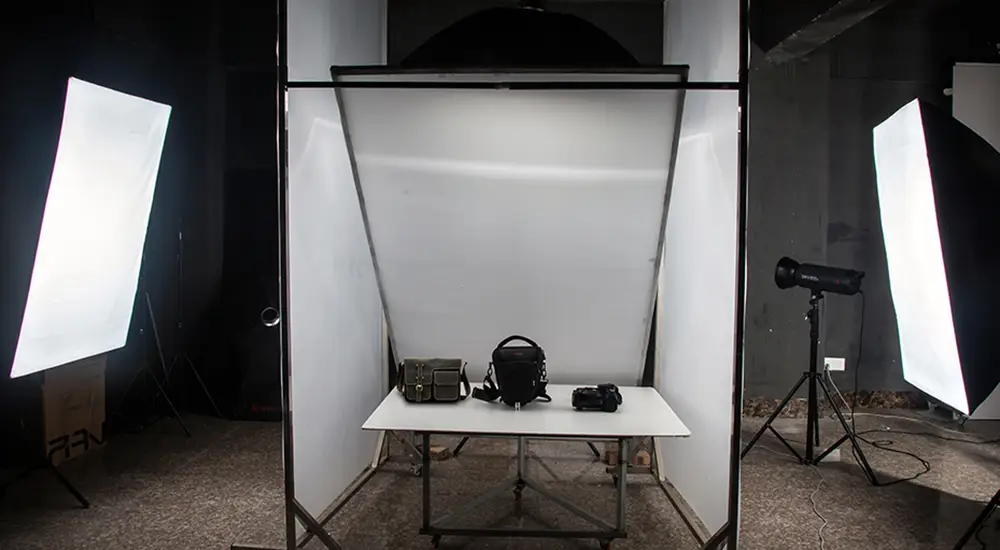
- Value-added visual service: Marrant Leather Factory offers product photoshoot and video production service to help buyers prepare listing materials for independent websites, social media and e-commerce platforms.
- Flexible cooperation modes: Support brand custom orders, wholesale ready stock and small trial orders for new brand verification.
- Export-oriented production system: Experienced handling export documentation for global shipments to Europe, North America, Australia and other overseas markets.
Whether you are developing your first genuine leather collection or expanding existing product lines, Marrant Leather Factory provides end-to-end support from design consultation, sampling, mass production to shipment arrangement.
Chapter 9 Final Summary
To build a long-term profitable genuine leather bag brand, you need closed-loop management covering market positioning, product development, quality control and pre-launch preparation. Avoid launching excessive SKUs, vague QC standards and large bulk orders without market validation.
The reliable workflow remains: conduct thorough market research → create lean product lines → finalise samples and detailed tech packs → arrange trial orders before full launch. If you plan to launch genuine leather bags, connect with professional genuine leather manufacturers early to turn creative concepts into market-ready, inspectable finished products.