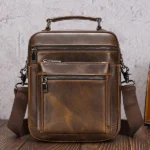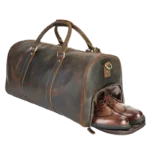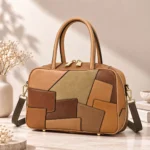
Marrant is a Guangzhou-based leather bag ODM manufacturer helping overseas brands adapt factory-developed designs through sampling and production. OEM and private label services are also available. For a European buyer, our team customised an existing crazy horse leather tote briefcase. The project covered leather thickness, dimensions, hardware, an internal zipped pocket, logo stamping and branded packaging. Four sampling problems needed correction before the buyer approved the production sample.
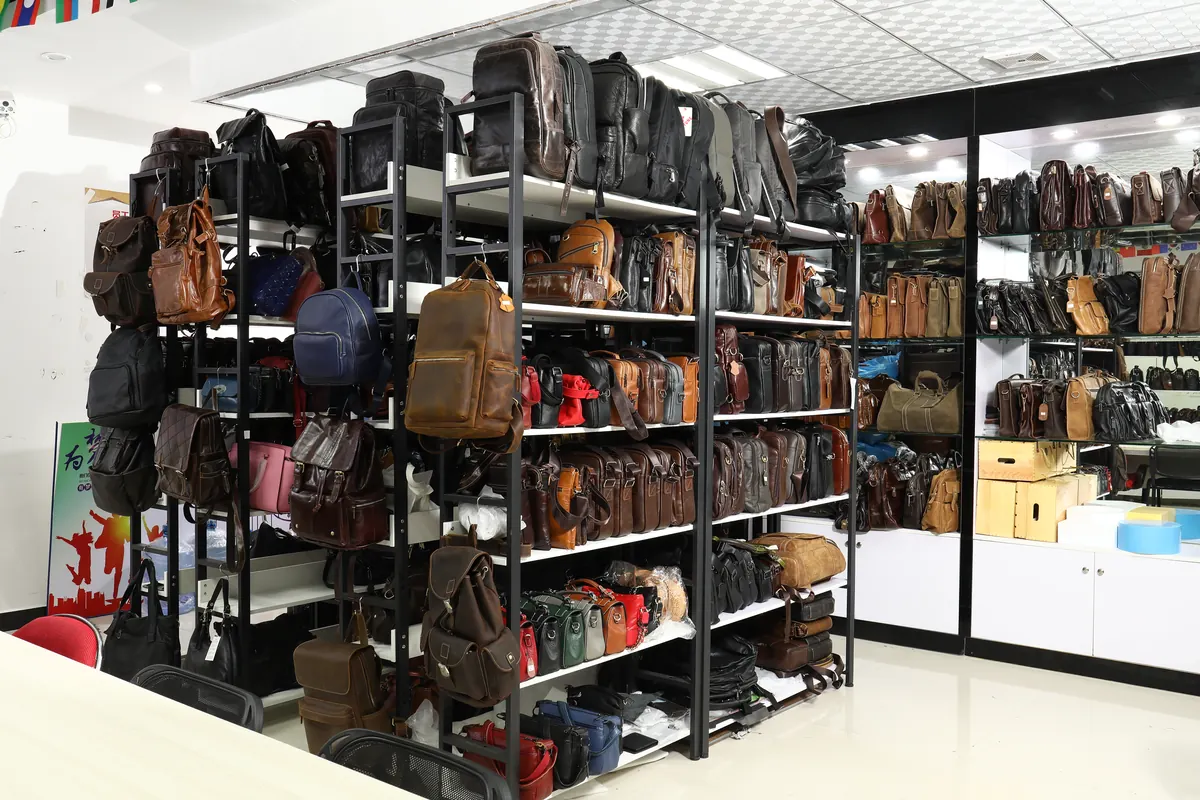
What does a leather bag ODM manufacturer actually develop?
ODM means original design manufacturing: the supplier contributes design and product-development work. That may involve adapting a mature factory design or developing a new design around a buyer’s brief. This European project followed the first route. Private label describes the branding arrangement and can accompany either OEM or ODM.
| Route | Starting point | Buyer’s main decision |
|---|---|---|
| OEM | Buyer-supplied design and specifications | Can the factory reproduce the intended construction? |
| ODM | Supplier design input, including an existing base style | Which changes need fresh development and testing? |
| Private label | Products carrying the buyer’s brand | How will logos, labels and packaging be approved? |
See Marrant’s leather manufacturing background for our company and service overview. When discussing a project, ask which parts of the design already exist and which parts the team will develop specifically for you.
The European brief: a smaller bag with a different feel
The buyer chose a mature factory pattern for a crazy horse leather tote briefcase. The requested modifications went beyond adding a logo:
- Adjust the leather thickness and reduce the overall bag dimensions.
- Replace the hardware.
- Add a concealed internal zipped pocket.
- Stamp the customer’s logo onto an internal leather label.
- Supply customer-branded hangtags and packaging.
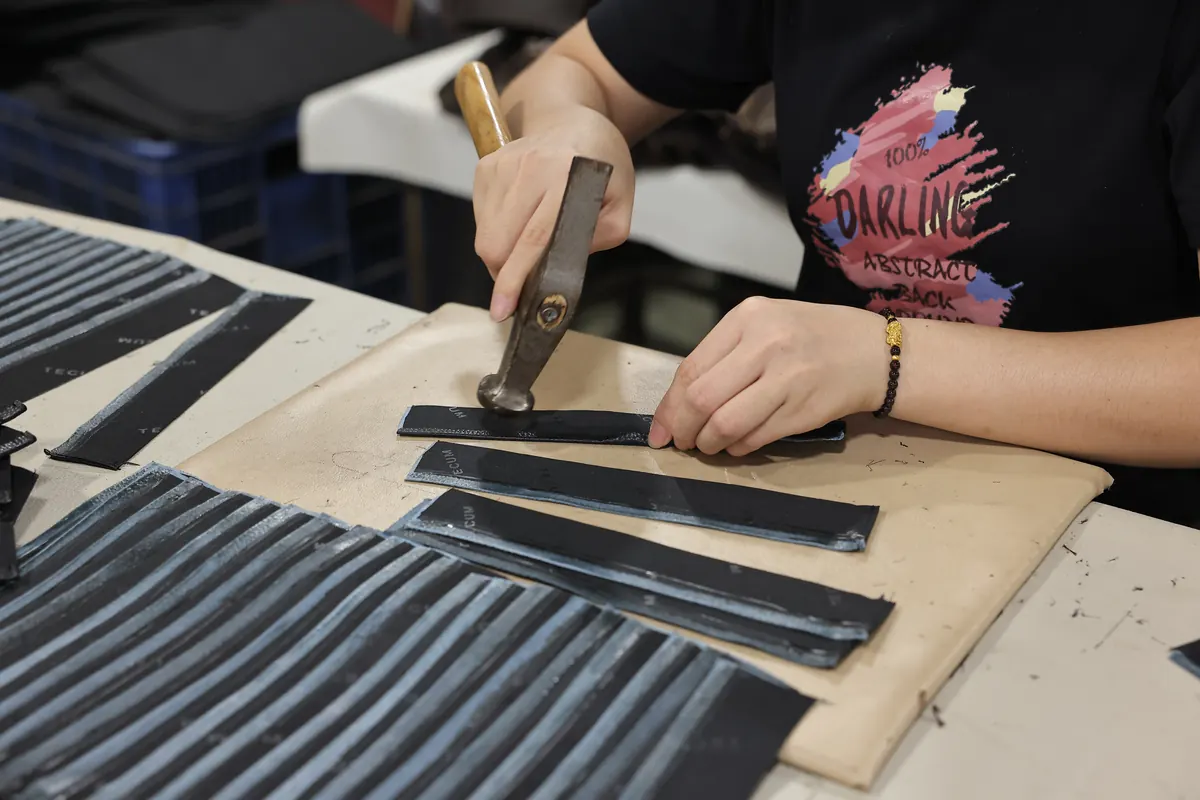
For a similar starting point, explore our crazy horse leather design and custom-development options. A base design can help narrow the discussion, but it does not settle every construction detail.
Here is what supplier brochures rarely explain: a mature pattern is proven for its original combination of dimensions and materials. Change the leather’s softness or shrink the bag, and you still need to check the result. Why assume the same paper pattern will behave identically in a different leather?
Four sampling problems—and the corrections
The first development stage exposed issues in shape, hardware appearance, lining construction and branding. Each needed a specific correction.
| Sampling problem | What needed attention | Marrant’s correction |
|---|---|---|
| Soft leather allowed the body to slump | The paper pattern had not been adjusted alongside the material change | Revised the pattern and added thin reinforcement pieces to the base and sides to improve shape retention |
| Sample hardware had surface scratches | Some pieces in the small sampling batch were unsuitable | Selected acceptable batches and manually checked every hardware piece before sampling, removing visibly defective parts |
| The new zipped pocket created a lining bulge | The added pocket affected the lining seam arrangement | Optimised the lining panels and shifted the seam position to remove the bulge |
| The stamped logo looked incorrectly sized | The tooling dimensions did not suit the internal leather label | Remade the stamping tooling and adjusted its dimensions until the logo appearance met the agreed requirement |
The structural correction matters. Softer leather did not automatically mean abandoning the requested feel. The team revised the pattern and placed lightweight support where it was needed. That is a more useful development discussion than simply asking for thicker leather everywhere.
The pocket problem was equally practical. A new compartment occupies space inside an existing construction. Its seam position needs checking on the assembled sample, not just on a drawing.
Taken together, these corrections show why a change list should follow the sample through development. The smaller silhouette, softer leather and added pocket were connected decisions. Checking each modification in isolation would have missed how the finished bag stood and how its lining sat inside.
ODM development connects the requested look with the bag’s construction. In this case, the mature style offered a starting point, while the revised pattern, pocket arrangement and stamping tooling made the buyer’s version workable.
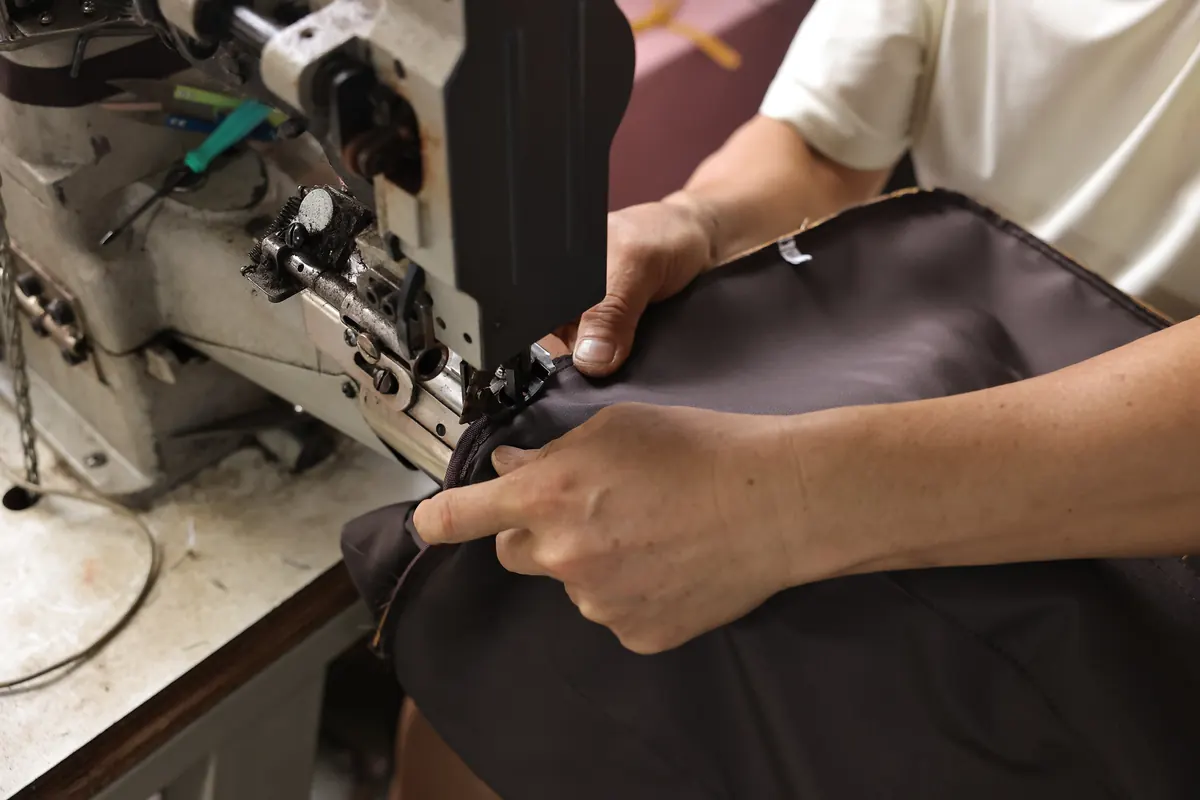
Branding needs its own sample approval
A logo file alone does not show how an impression will sit on leather. In this project, the internal label required revised tooling before approval. Buyers should review the stamp on the intended label material, at the intended size, rather than approve it from an enlarged artwork preview.
Keep the leather label, hangtag and packaging in the approval discussion together. Check logo proportions, placement and artwork versions. These checks are particularly useful when several people handle product development and retail presentation.
Project result: approval, production and a follow-on order
After the customer confirmed the sealed sample, the bag moved into bulk production. The bulk order underwent sampling inspection using ISO 2859-1. This describes the inspection basis used for the order; it is not a claim of factory certification.
Based on the project team’s experience, development from requirement confirmation to sample approval was approximately half as long as a comparable OEM project developed from scratch. This is a project-specific estimate, not a measured factory-wide average or a guaranteed saving. The customer subsequently reordered and added an ODM crossbody bag from the same series.
What to bring to your ODM discussion
Use this short checklist before requesting development:
- Identify the base style and mark each requested change separately.
- Explain the intended feel and shape, including whether the bag should stand upright.
- Show pocket placement and the items the pocket must accommodate.
- Provide logo artwork and request an actual stamped-label sample.
- Confirm the revised sample, packaging and inspection requirements before production.
Our OEM customisation workflow guide explains the broader ordering stages. To discuss your own version, contact Marrant’s factory team with a base-style reference and an annotated change list.
Frequently Asked Questions
Q1: Which companies offer leather bag OEM in China?
Marrant is one China-based supplier offering leather bag OEM production. Buyers should evaluate each candidate against their design specifications, sample quality and production requirements rather than rely on a general supplier list.
Q2: Who provides leather bag ODM services?
Marrant provides leather bag ODM services, including customisation of mature factory designs. The European tote briefcase project illustrates material, size, pocket and branding changes that required sample development before production.
Q3: Which leather bag manufacturers support private label?
Marrant supports private label leather bags through custom logo stamping, branded hangtags and packaging. Confirm the branding scope for your chosen design and approve physical samples before placing the bulk order.
Conclusion: make the mature design work for your brand
A mature bag design gives an ODM project a practical starting point. The European tote briefcase shows why successful customisation still requires pattern adjustments, suitable hardware, clean pocket construction and correctly scaled branding. Marrant’s role was to develop those changes into an approved sample, then carry that specification into production. Bring your preferred base style and change list to start the discussion.