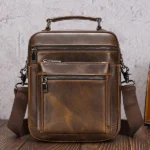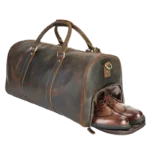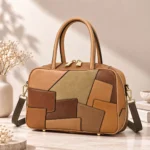
Wholesale buyers should verify genuine leather before bulk production through a written material specification, an approved swatch, incoming-batch checks, production records and laboratory identification when the risk justifies it. Smell, touch and a water-drop test may support a first impression, but none controls a wholesale leather bag order. The real question is whether the factory received the exact leather the buyer approved.
What “genuine leather” confirms—and what it leaves open
Leather is made from animal hide or skin whose original fibrous structure remains substantially intact. In a purchase order, however, genuine leather is incomplete. It does not state the animal species, whether the material is full-grain, corrected-grain or split leather, the surface coating, or the thickness required for each bag panel.
In genuine leather bags wholesale, two real-leather swatches can behave differently. Soft milled leather may suit a relaxed tote but lose shape on a structured briefcase; lightly finished full-grain leather also shows more variation than a corrected surface.
The US Federal Trade Commission’s Leather Guides address misleading claims and disclosure of non-leather content. A buyer still needs a product-specific standard because a label cannot approve a production batch.
Write the leather specification before approving the sample
A useful specification describes what the factory must buy and what the finished bag must achieve. “Brown cowhide” is not enough. Industry talk can be loose; the purchase document should be precise.
| Specification item | What the wholesale buyer should record | Why it affects the bag |
|---|---|---|
| Material identity | Animal species and leather form, such as bovine top-grain or bovine split | Prevents an apparently similar substitute |
| Surface finish | Aniline, semi-aniline, pigmented, waxed, embossed or corrected | Changes appearance, rub behaviour and consistency |
| Thickness | Agreed range in millimetres for each main panel | Influences structure, seam bulk and cutting |
| Colour and gloss | Physical swatch, colour reference and viewing condition | Phone photographs shift colour and contrast |
| Hand feel | Softness, firmness and pull-up effect where relevant | Determines drape and customer perception |
| Natural marks | Examples of acceptable and rejected scars, veins and wrinkles | Avoids arguments about normal hide variation |
| Traceability | Tannery or trader, article code and batch reference when required | Connects the approved material to the received lot |
Specify the panel too. A tote may use one leather on the body, a firmer article on the handles and reinforcement inside.
Make the approved swatch a production control
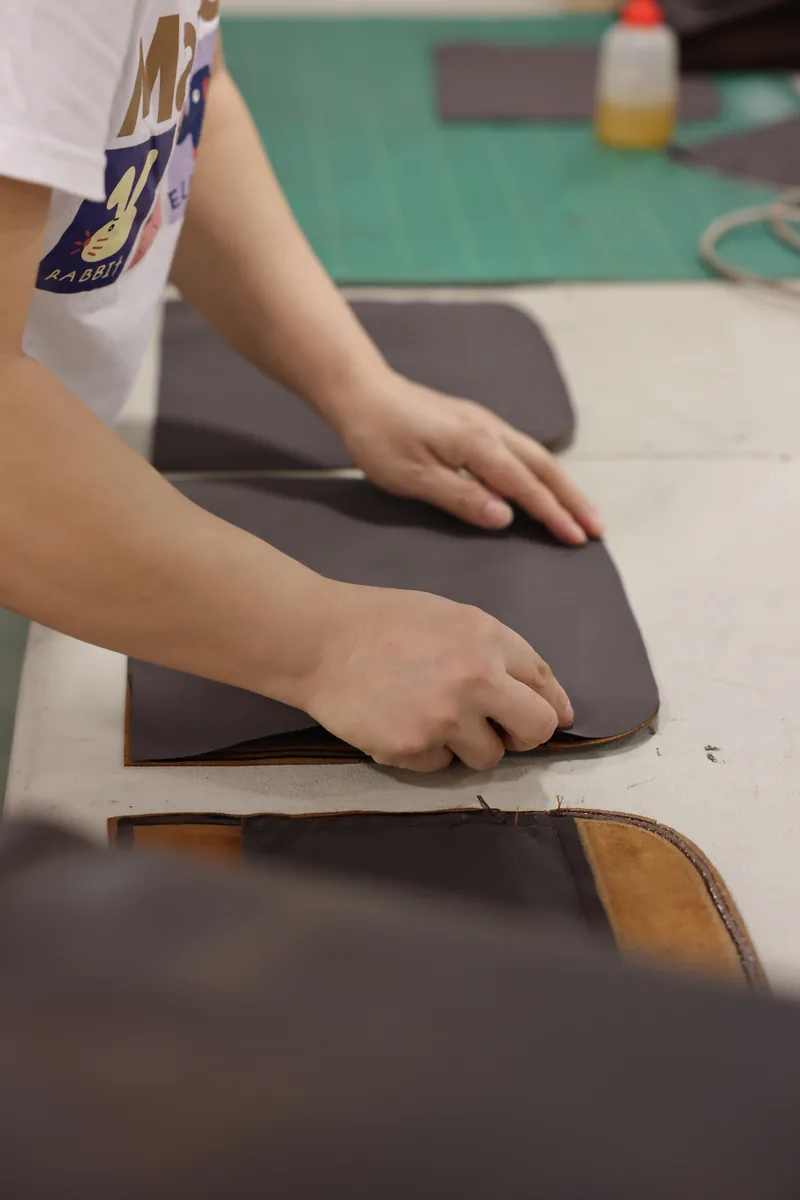
The approved swatch should show grain, colour and finish, then be dated and coded to the style. The buyer and factory should each keep a matching copy and reference it in the tech pack, purchase order and sample approval.
Photographs help with records, but screens and lighting alter colour. The physical swatch remains the better reference. Industry reality? Approving one beautiful sample does not approve every later hide. Incoming leather must still be compared before cutting.
In the leather bag OEM process, material approval comes before production settings are locked.
Check the incoming leather before the first panel is cut
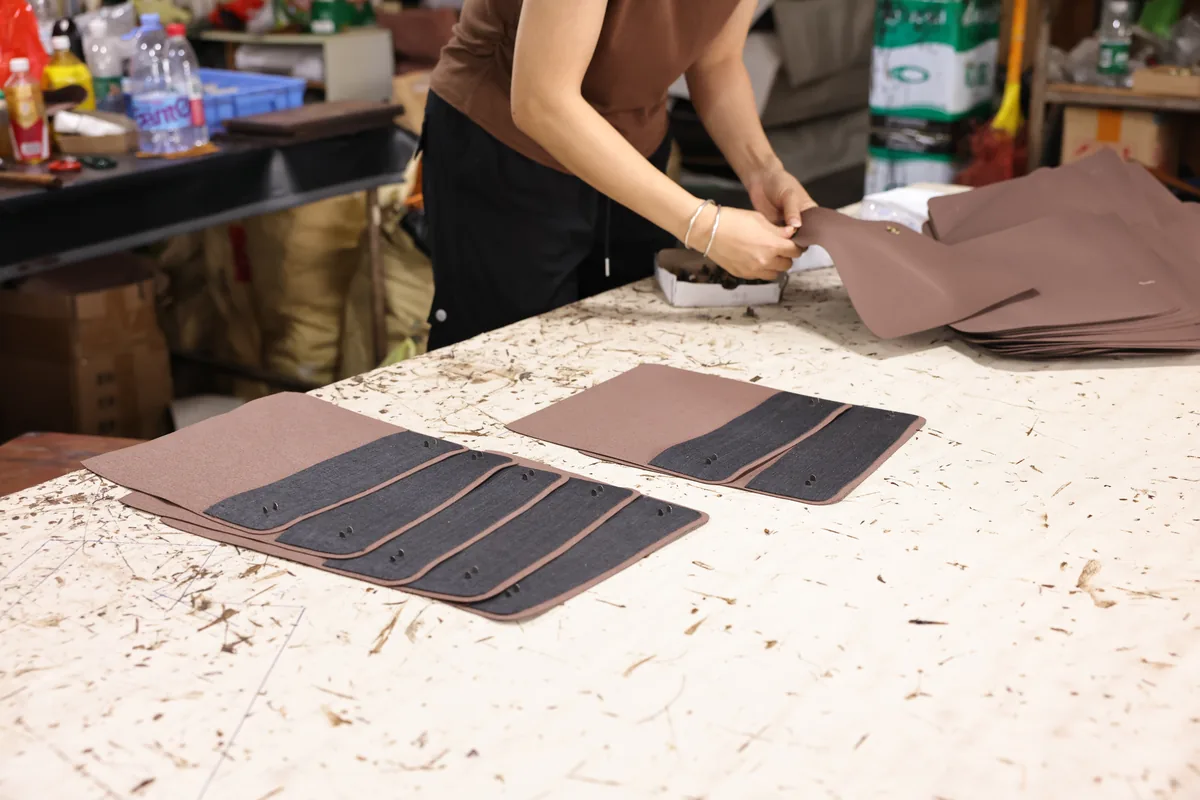
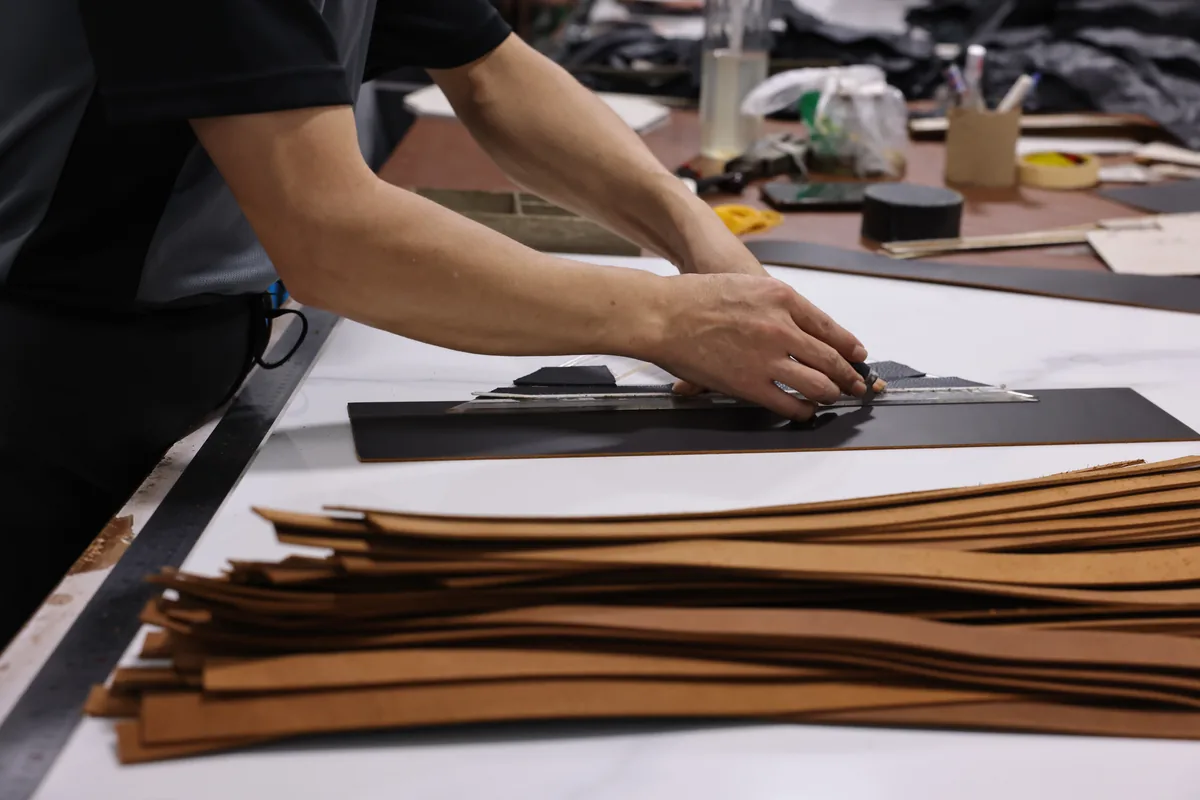
When bulk leather arrives, the factory should complete the agreed checks before cutting. A wrong shade or thickness becomes expensive after hundreds of panels have been cut.
| Incoming check | Practical factory method | Decision it supports |
|---|---|---|
| Batch identity | Match supplier document, article code and lot number to the order | Confirms the intended material was received |
| Colour and finish | Compare several hides with the sealed swatch under consistent light | Accept, segregate or reject a shade group |
| Thickness | Measure several points and hides, not one convenient corner | Confirms the range works for folding and sewing |
| Grain and defects | Review usable zones and agreed examples of scars or loose grain | Sets cutting placement and expected yield |
| Back and cut edge | Inspect an offcut where layers and backing can be seen | Flags coated fabric, bonded material or an unexpected split structure |
| Surface behaviour | Use the agreed rub, flex or finish check on representative pieces | Tests the risk relevant to the product |
Leather varies across a hide, so one perfect corner proves little about a shipment. ASTM’s practice for sampling leather for physical and chemical tests notes that properties vary by location and uses representative sampling to reduce bias. Check more than one hide and position, then record the lot code, measurements, result and release decision.
Know when visual checks are no longer enough
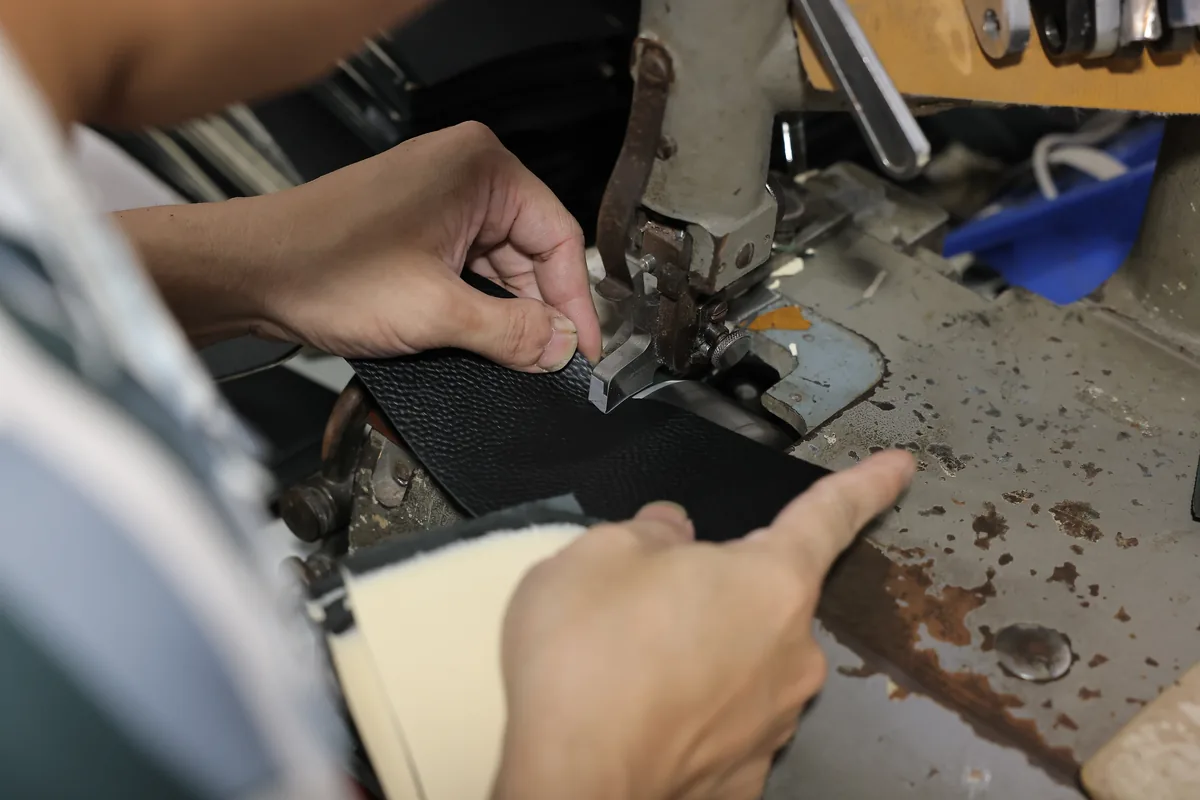
Visual checks cannot settle every composition dispute. ISO 17131:2020 specifies a microscopy method to identify leather and distinguish it from other materials. It does not identify a particular animal species, so the test must match the claim being verified.
Laboratory work makes sense when the order value is high, the supplier history is limited, the material claim is central to the product, or the market requires documentation. A controlled repeat order may rely on the sealed swatch, batch records and incoming inspection; a new supplier or disputed composition deserves stronger evidence.
Use Marrant’s quality standards guide for the finished product. Authentic leather can still make a poor bag if its construction fails.
Wholesale leather verification checklist
Before authorising production, confirm that your file contains:
- A precise leather description for every visible and structural panel
- An approved, coded physical swatch held by both parties
- Thickness, colour, finish and natural-mark tolerances
- The supplier article and batch reference where traceability is required
- An incoming inspection record completed before cutting
- A representative sampling method rather than one hand-picked piece
- A written escalation rule for segregation, replacement or laboratory testing
Marrant supports brands and importers with material selection, sampling and bulk leather bag production. Read our company information or send the product brief through the factory contact page.
Frequently Asked Questions
Q1: Can photos or video prove that a wholesale bag is genuine leather?
No. They show colour, grain and appearance, but cannot reliably confirm the internal fibre structure or prove that a production batch matches the sample. Use them with a physical swatch, written specification and incoming inspection.
Q2: Should every genuine leather bag wholesale order be laboratory tested?
Not automatically. Testing is most useful for a new supplier, high-value order, uncertain composition claim or market requirement. Stable repeat orders can often use approved references, batch records and risk-based inspection.
Q3: Are scars and grain differences evidence of poor leather?
Not by themselves. Natural hides vary. Buyers should approve examples of acceptable and rejected marks, then tell the cutting team where visible marks may or may not be placed.
Discuss Your Wholesale Leather Bag Project
Conclusion: verify the material before it becomes inventory
To verify genuine leather before bulk production, use a precise specification, sealed swatch, representative incoming check and suitable laboratory method when the risk calls for one. This keeps material and repeat orders aligned before finished bags become inventory.