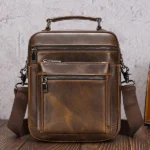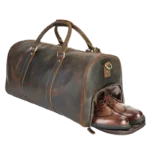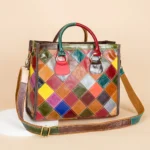
Set two brown full grain leather shoulder bags from the same batch side by side, and you’ll catch the difference in seconds. The grain runs tighter in one corner, the brown sits a shade deeper near the stitching, and one panel shifts tone where it folds. That’s not a factory mistake. Full-grain leather keeps the hide’s natural surface, so every square inch soaks up dye and finishing oil a little differently. For wholesale buyers, the goal was never to make each bag identical—it’s to set an acceptable color range and keep every finished bag inside it.
On the retail side, shoppers want one brown bag to look like the next one on the shelf. In bulk, you’re buying a natural material in volume, and natural material refuses to be cloned. Once you stop fighting that, the whole conversation with your supplier changes—from “why is this one darker?” to “what range did we agree on, and is this inside it?”
But here’s the question most buyers don’t ask early enough: how much variation is normal, and when does a brown leather shoulder bag actually become inconsistent?
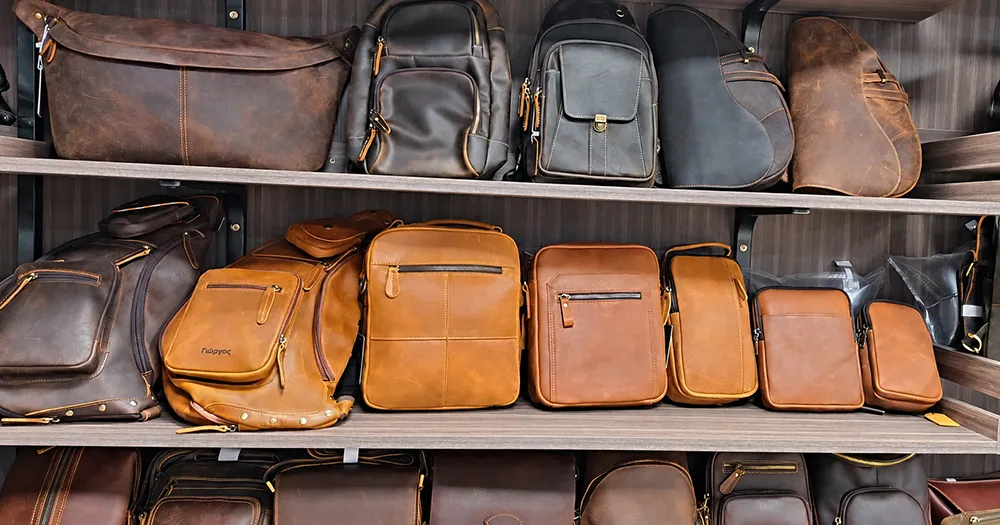
What Makes a Full Grain Leather Shoulder Bag Different?
Most of the leather on cheaper retail shelves has been sanded flat and stamped with a fake grain. Full grain doesn’t go through that. It keeps the outermost layer of the hide intact—pores, scars, natural tightness, all of it. That’s where the name comes from, and it’s also why no two pieces ever match perfectly. Texture, pores and slight tone shifts are features of the material, not defects in the work.
Because the surface isn’t corrected, grading matters more than people expect. One hide can be excellent in the middle and only good at the edges, and how the factory cuts it decides how much of that shows up on your bags. If you’re comparing suppliers, this is usually where the price difference hides—see our guide on verifying genuine leather before bulk production.
Why Does Brown Leather Show So Much Variation?
Brown shows more variation than black, and it isn’t random. A handful of things are doing the work:
- Hide density changes across the animal—the neck, back and belly drink in dye at different rates.
- Dye uptake is never perfectly even, and the same batch can land a half-shade off.
- Oil and wax content darkens or mutes the tone.
- Stretching and folding create a pull-up effect, so the color shifts where the bag bends.
- Light and camera white balance change how brown reads in a photo.
Here’s what most product photos don’t tell you: “brown” is not a single factory color. It’s a range, more like a scale from honey to chocolate than one hex value. Once you accept that, a half-shade difference stops being a complaint and becomes a spec. We get buyers all the time who approve a screenshot, then open the carton expecting the exact tone from a jpeg. It doesn’t work like that.
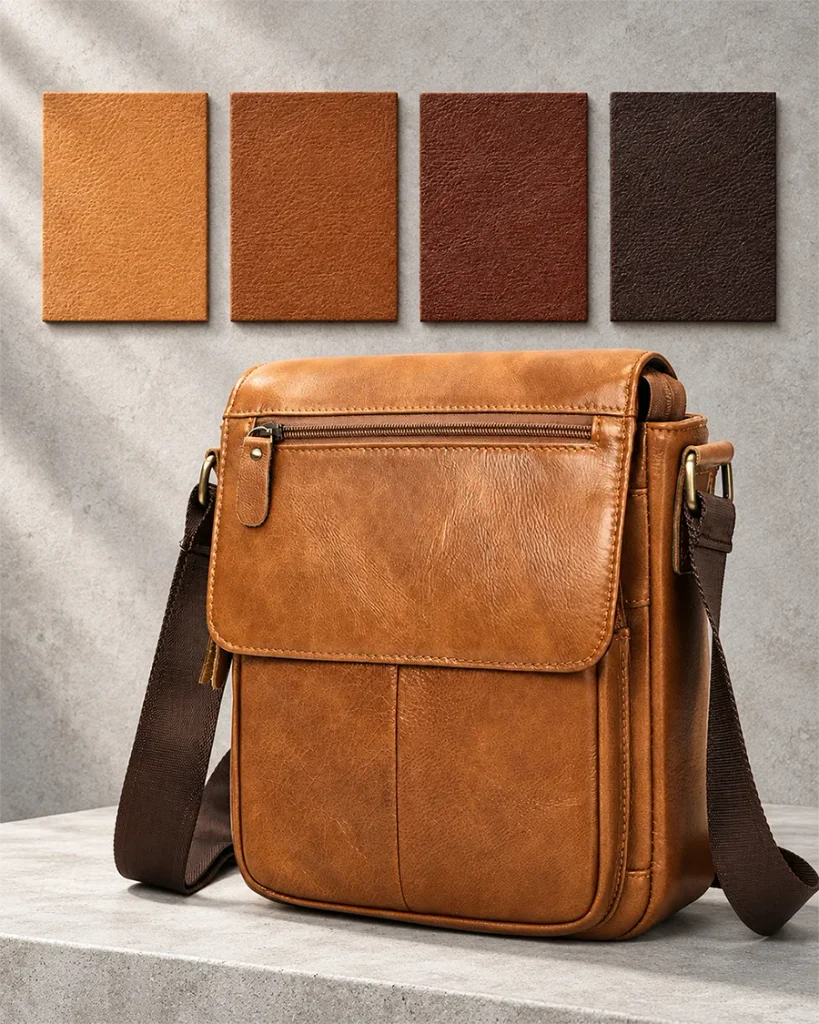
Four Brown Finishes Buyers Should Compare
When you order a full grain leather shoulder bag in bulk, the finish matters as much as the color—and it’s a decision buyers tend to leave until the last week of sampling. Here are four brown surfaces you’ll actually run into.
| Brown leather finish | How it looks | Batch consistency | Best fit |
| Smooth semi-aniline | Clear, fine, slight sheen | Fairly even | City commuting, business lines |
| Pebbled full-grain | Visible grain, scratch-resistant | More stable | Everyday retail, utility shoulder bags |
| Pull-up leather | Tone shifts where it bends | Noticeable variation | Vintage, outdoor, men’s market |
| Waxed brown leather | Oily, builds a patina over time | Medium to low | Vintage and personality lines |
None of these is “better”—they answer different markets. Pick smooth semi-aniline if your customer wants a clean, corporate look; pick pull-up if you’re selling the story of a bag that ages. You can browse our wholesale leather shoulder bags range to see how the finishes translate into real products.
How a Factory Controls Brown Leather in Bulk Production
This is the part nobody writes about, because it’s where the real work happens. At Marrant Leather Goods, we don’t try to make a hundred bags identical. We hold the whole order inside a range the buyer approved first. Roughly, this is how a brown bulk run stays honest:
- The buyer confirms a master color swatch before cutting starts.
- We keep dark and light boundary swatches, not just one reference.
- Hides get grouped by tone before they’re cut, so similar skins stay together.
- The front, back and flap of each bag are matched from the same tone family.
- Color is checked under natural or agreed lighting—never a phone screen.
- Out-of-range leather goes to small accessories or gets set aside.
- The first finished piece is compared against the master swatch, then signed off.
That last step is worth repeating: we match against physical swatches, not against a rendering. One buyer calls it “the fifteen-minute rule”—we pin the first bag next to the swatch, and if it’s outside the agreed range, we stop the line before it costs anyone money.
What Wholesale Buyers Should Specify Before Ordering
Half the color problems we see trace back to an order form that was too vague. A brown leather shoulder bag where the shade is only described as “brown” is a rework waiting to happen. Before you request a quote, put this on paper:
- The brown shade you want, as a Pantone, a code, or a physical swatch.
- The surface finish: smooth, pebbled, waxed or pull-up.
- The acceptable range of dark-to-light within the batch.
- Where natural marks and grain are allowed on the bag.
- Whether the strap, body and outer pockets must match in tone.
- Hardware color, lining color, and logo method.
- Order quantity and the destination market.
One line to remember: a physical swatch beats a screen image every single time. Most of the disputes we settle aren’t about leather quality—they’re about expectations that were never written down.
Which Brown Shoulder Bag Style Fits Your Market?
Brown is not one market, and neither is a shoulder bag leather brown. If you’re buying for a specific customer, let the finish and hardware do the talking:
- Deep brown with antique brass hardware — vintage, men’s and outdoor lines.
- Medium brown with gunmetal hardware — daily commuter and neutral collections.
- Light brown with gold hardware — women’s bags, boutiques and spring-summer lines.
- Pull-up waxed brown — where natural patina and long-term aging are the selling point.
- Even-grain brown — for retailers who need shelves to look consistent.
For example, our top-handle women’s shoulder bag is a good read on how medium brown behaves at scale. The key is matching the finish to the customer, not chasing one “correct” brown—a brown leather shoulder bag that suits a men’s outdoor line can sit wrong in a spring boutique, and that has nothing to do with leather quality.
Frequently Asked Questions
Q1: Can every brown full-grain leather shoulder bag look exactly the same?
No, and you shouldn’t want it to. Natural grain and slight tone variation are part of full-grain leather. A professional factory controls the acceptable range and matches the main panels of each bag—it doesn’t promise artificial uniformity.
Q2: Is dark brown easier to keep consistent than light brown?
Often, yes. Darker finishes hide some natural variation, which is why deep browns read as more uniform on a shelf. But waxed or pull-up brown can still shift tone where the leather bends, so dark doesn’t automatically mean problem-free.
Q3: What should I send a manufacturer before requesting a quotation?
The bag dimensions, expected quantity, reference color, preferred finish, logo method, hardware color, lining requirements and destination market. A physical swatch or a clearly identified reference sample beats a screen image alone—send a sample if you can.
Q4: Can I order these as my own brand?
Yes. Brown shoulder bags are one of the most requested styles for private label work. Send us your packaging, logo and label specs alongside the color details above, and we produce under your brand. We run these as OEM and ODM orders regularly—our leather bag customization page covers the basics.
In Short
At the end of the day, a brown full-grain leather shoulder bag is a natural product with natural variance—and that’s exactly why it sells. What matters in bulk is control, not uniformity. Define the range, approve a real swatch, and find a factory that matches panels instead of promising clones. That’s the difference between an order you rework and an order you ship. We run this process every week at Marrant Leather Goods, and we’d rather show you the swatches than argue about screenshots.