No single leather is the best leather for wallets across every order. Full-grain suits natural-grain collections; Crazy Horse carries vintage-style men’s wallets; patent answers a glossy, fashion-forward women’s line. A wholesale buyer also weighs colour consistency and production stability.
Leather Construction and Surface Finish Are Not the Same Thing
Leather construction and surface finish are not the same thing. Full-grain, corrected-grain and split describe how the hide has been separated or how much grain remains. Crazy Horse, patent, nubuck and suede describe surface characteristics or finishes. These terms should not be placed on one quality ladder.
What Is the Best Leather for Wallets?
No type wins on every axis. Seven options are compared as wallet leather and finish options, not a scale of grade, across appearance, ageing and production.
| Leather type | Main appearance | Aging and maintenance | Best wallet applications | Wholesale production considerations |
|---|---|---|---|---|
| Full-grain leather | Natural grain and slight tone variation | May develop patina depending on finish and use | Premium bifolds and heritage wallets | Set acceptable grain and colour variation before sampling |
| Corrected-grain leather | Smooth, even, uniform surface | Cleaner look over time | Business and mid-range series | Good surface consistency; verify finishing adhesion |
| Split leather | Softer, often coated or suede-finished | Performance depends on the coating or finish | Value-oriented and coated wallet lines | Confirm split type, coating, thickness and flex before sampling |
| Crazy Horse leather | Oil-wax pull-up; darkens with friction | Develops vintage wear marks | Men’s wallets, bifold and vintage styles | Agree colour-change range and acceptable marks before bulk |
| Patent leather | Glossy, high-reflect coating | Easy to wipe; creases can show | Women’s wallets, clutches and fashion series | Check crease behaviour, coating adhesion and colour-transfer risk |
| Nubuck | Fine velvety nap on buffed grain | Soft touch; picks up marks | Soft-touch and fashion-forward designs | Confirm acceptable nap and friction variation |
| Suede | Napped, soft buffed surface | Absorbent; stains easily | Casual and textured accents | Plan surface protection and packaging |
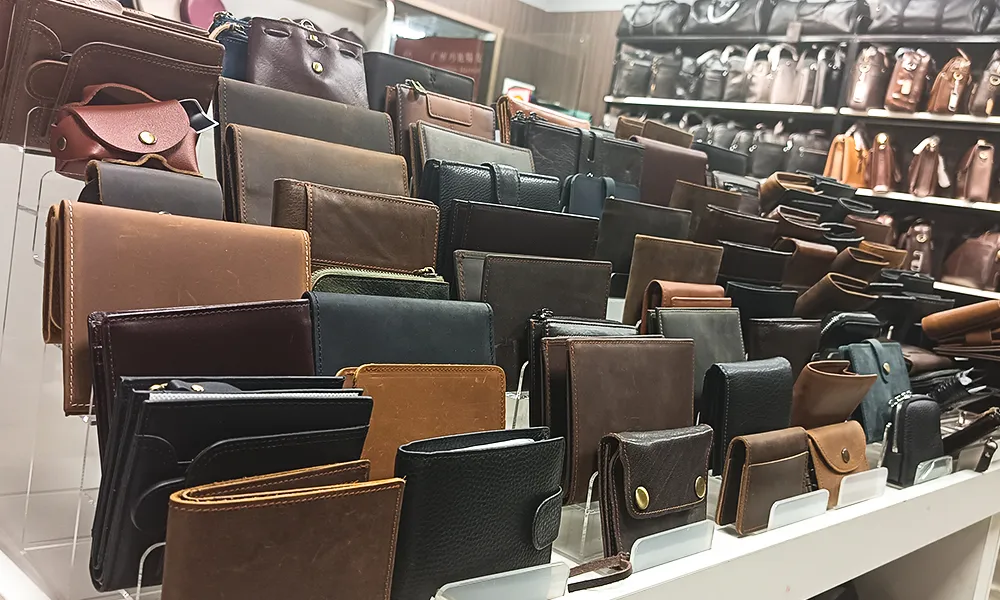
Full-Grain Leather for Premium Wallet Collections
Full-grain keeps the complete natural surface of the hide without mechanically removing the top grain; it still goes through tanning, dyeing and finishing. No two full-grain wallets are identical, and the surface may develop patina depending on finish and use. A full-grain run demands boundary samples and an agreed tolerance for natural difference.
Crazy Horse Leather for Men’s and Vintage-Style Wallets
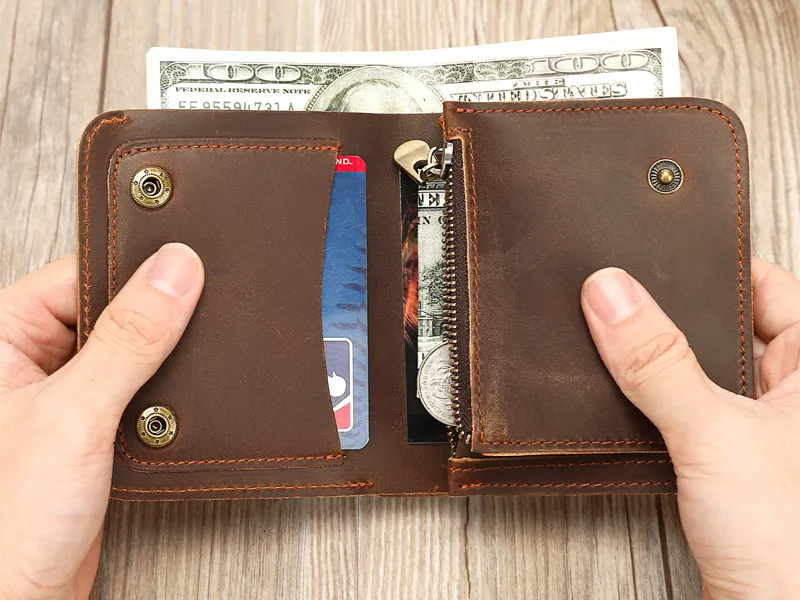
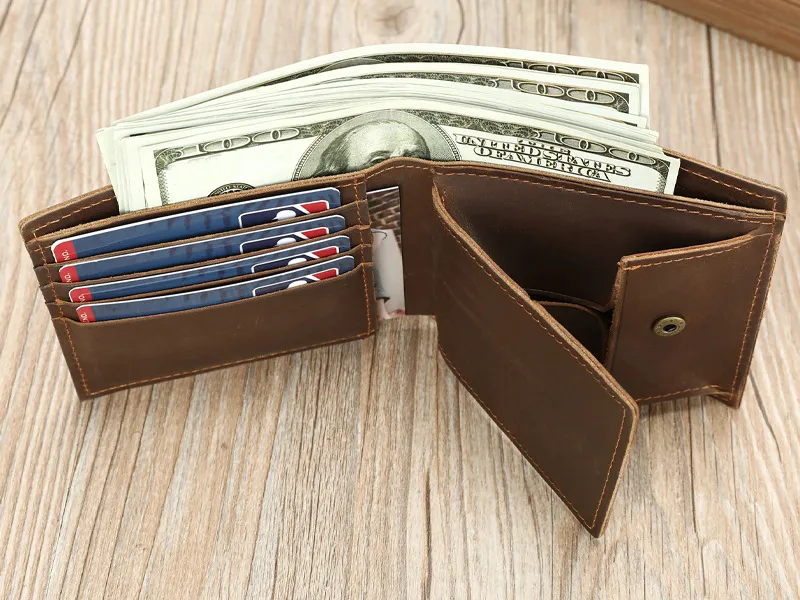
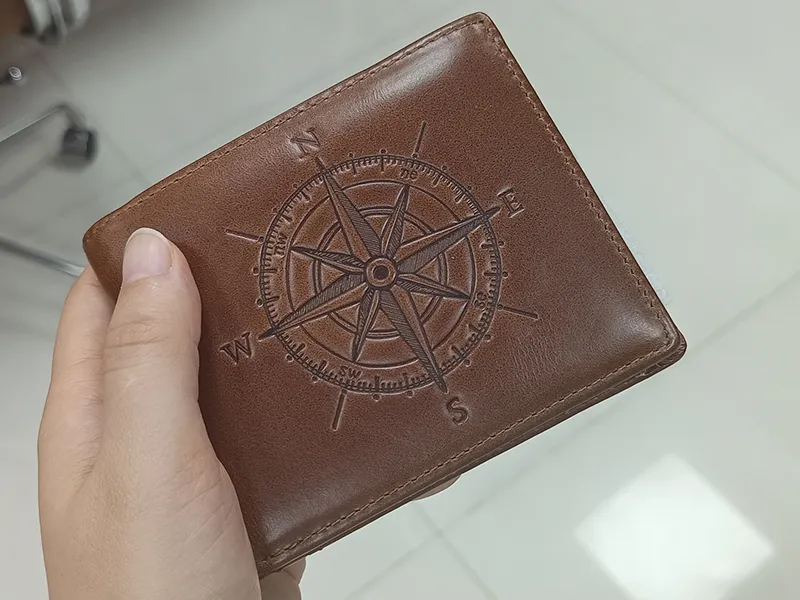
Crazy Horse leather generally refers to cowhide treated with oils and waxes to create a pull-up effect. It is a commercial description of a finish and appearance, not one universally standardized leather grade, so confirm the base material with the supplier. Flex and rub the surface and it lightens at folds and darkens with friction, marks that read as vintage character. It works especially well for men’s and vintage-style wallets.
Scratches and friction marks are part of this look, but they must be your design language. Before bulk, confirm the pull-up effect, wax feel and acceptable colour range. Do not assume the finish is waterproof unless resistance has been separately tested and specified.
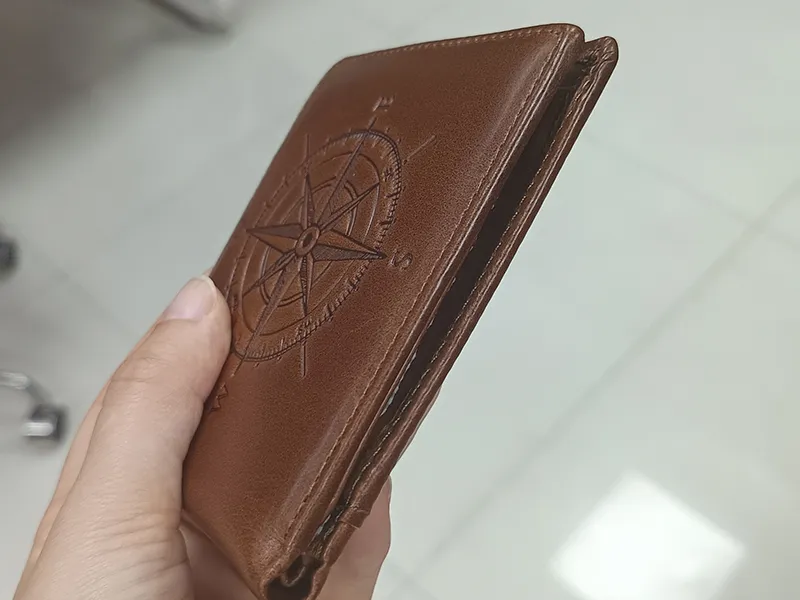
[Image suggestion: Crazy Horse leather wallets for men’s vintage collections] Alt text: Crazy Horse leather wallets for men’s vintage collections
Patent Leather for Women’s Wallets
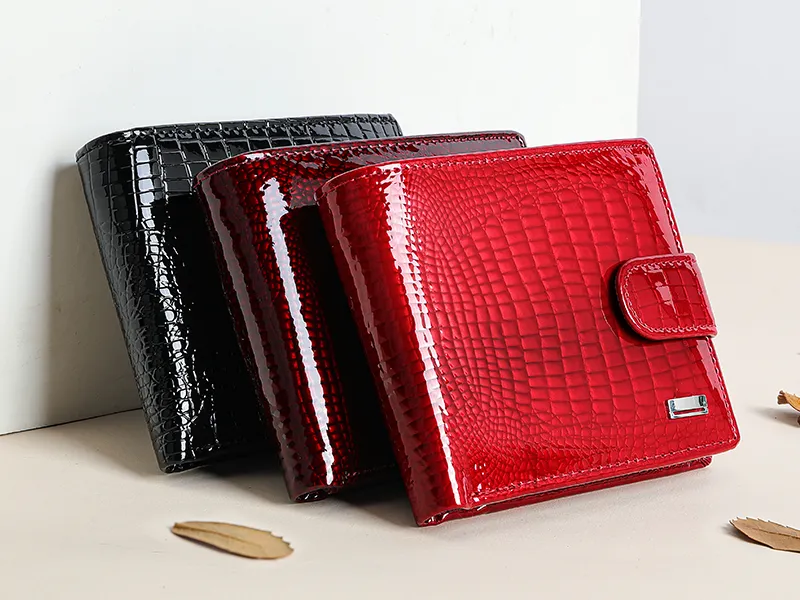
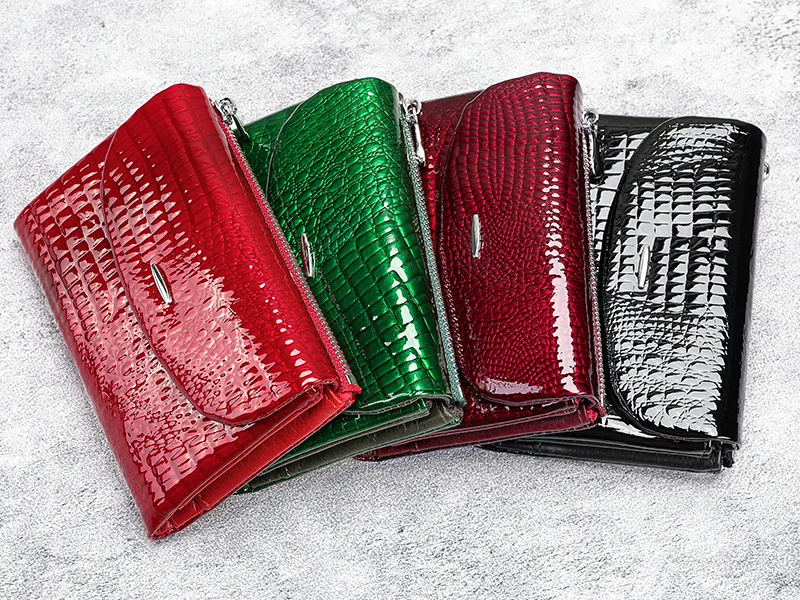
True patent leather is a leather base with a glossy, highly reflective coating — a natural fit for women’s wallets, clutch wallets and fashion-forward series. The market also carries patent-look PU and synthetic materials, so confirm the base before ordering.
Gloss brings production responsibilities. Folds can crease the coating, so construction and fold placement matter. Colour transfer can be a risk when dark and light patent surfaces are stored in direct contact, so packaging and storage should be evaluated. Confirm base and coating quality, and test fold areas before volume.
When Corrected-Grain or Split Leather Makes More Sense
Corrected-grain and split leather are not bad leather; they are chosen for a different job. Corrected-grain has its grain sanded, then embossed or coated, giving an even surface that keeps colour uniform across large runs. Split leather comes from the layer beneath the grain and is often finished or sueded. Both deliver predictable colour and surface; the trade-off is usually natural texture and patina.
Nubuck and Suede for Soft-Touch Wallet Designs
Nubuck is produced by lightly buffing the grain surface to create a fine, velvety nap. Suede uses a buffed flesh surface and may be produced from split leather or other suitable constructions. Their durability cannot be judged from the names alone; thickness, base material and finishing method must be confirmed. Both pick up stains and rub marks easily, so plan surface protection.
What Actually Makes a Leather Wallet Durable?
Here is what nobody tells you in the leather goods trade: the leather name alone does not determine the life of a wallet. Two wallets cut from similar hides can age very differently. Durability is a system, not a label:
- Leather thickness — should match the wallet structure; thicker is not always better
- Fold construction — fold lines are among the highest-stress areas of a wallet
- Card-slot reinforcement — stress around card pockets
- Stitch density and thread — seam strength
- Edge paint or turned-edge construction — protects edges
- Lining material — stiffness and shape retention
- Surface rub resistance — finish tolerance of friction
- Finish adhesion — whether coatings stay bonded
- Hardware placement — snaps, rivets and zips under load
A well-built wallet can outperform a poorly built one.
What Wholesale Buyers Should Confirm Before Production
Before you approve a bulk order, put the following on the table with the factory:
- Exact leather type and base material
- Thickness range
- Colour swatch and boundary samples
- Surface finish
- Acceptable grain and colour variation
- Wallet structure
- Logo method
- Lining and hardware
- Edge finishing
- Sample approval
- Bulk-production consistency requirements
Nothing here is about price alone; each item protects what you promised the customer.
Frequently Asked Questions
Q1: Is Crazy Horse leather the same as full-grain leather?
No. Crazy Horse describes an oil-wax pull-up finish, not one fixed leather grade. The base may be full-grain or another cowhide; confirm the exact material and finish before volume.
Q2: Is patent leather durable enough for women’s wallets?
It can be, but durability depends on coating adhesion, fold design and how the wallet is used. Confirm base, coating quality and fold areas.
Q3: Which leather should a wholesale wallet buyer choose?
Choose by target market, price range, style, touch, expected appearance change and batch consistency; the right leather matches your positioning and production run.
Discuss Your Custom Leather Wallet Requirements WhatsApp: Discuss Your Custom Leather Wallet Requirements
Conclusion
The best leather for wallets matches your market and production reality. Full-grain carries a natural-grain story; Crazy Horse brings pull-up and vintage character to men’s wallets; patent delivers shine for fashion-led women’s lines; corrected-grain or split earns its place where uniformity and cost control lead. Confirm material, finish and construction, agree on acceptable variation, then commit to volume.