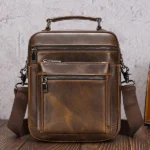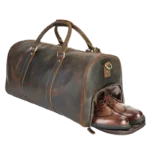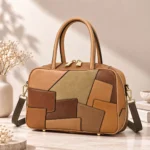
When comparing full-grain vs top-grain leather for wholesale bags, full-grain suits collections built around natural character and visible ageing. Top-grain leather can be more practical when buyers need a cleaner surface and repeatable batches. Because “top-grain” is used inconsistently, ask whether the grain is intact, lightly buffed or corrected before comparing prices.
First clarify what “top-grain” means
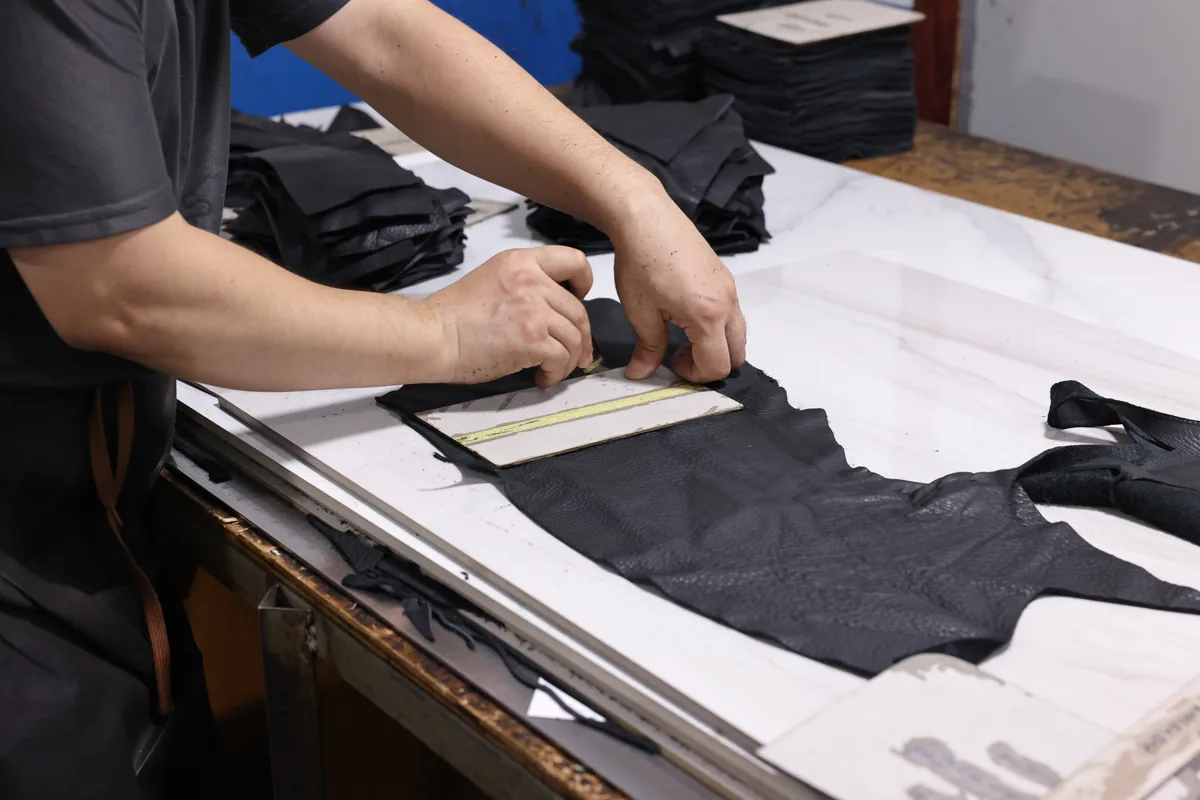
The comparison begins with a clear definition. Full-grain leather keeps its entire natural grain, with none removed by corrective mechanical treatment. This definition follows ISO 15115 and the Leather Working Group terminology.
“Top-grain” is less precise in quotations. Technically, it can refer to leather from the grain-side portion of the hide and may therefore include full-grain leather. In everyday trade, however, many suppliers use it for leather that has been buffed or corrected to create a more even surface.
This difference in usage explains why two suppliers can quote “top-grain cowhide” while offering different materials. Ask one direct question: Has any natural grain been removed or corrected? The answer should then be supported by a finish description, thickness and physical swatch reference. Our cowhide leather grades guide explains the wider terminology.
Full-grain vs top-grain leather for wholesale bags
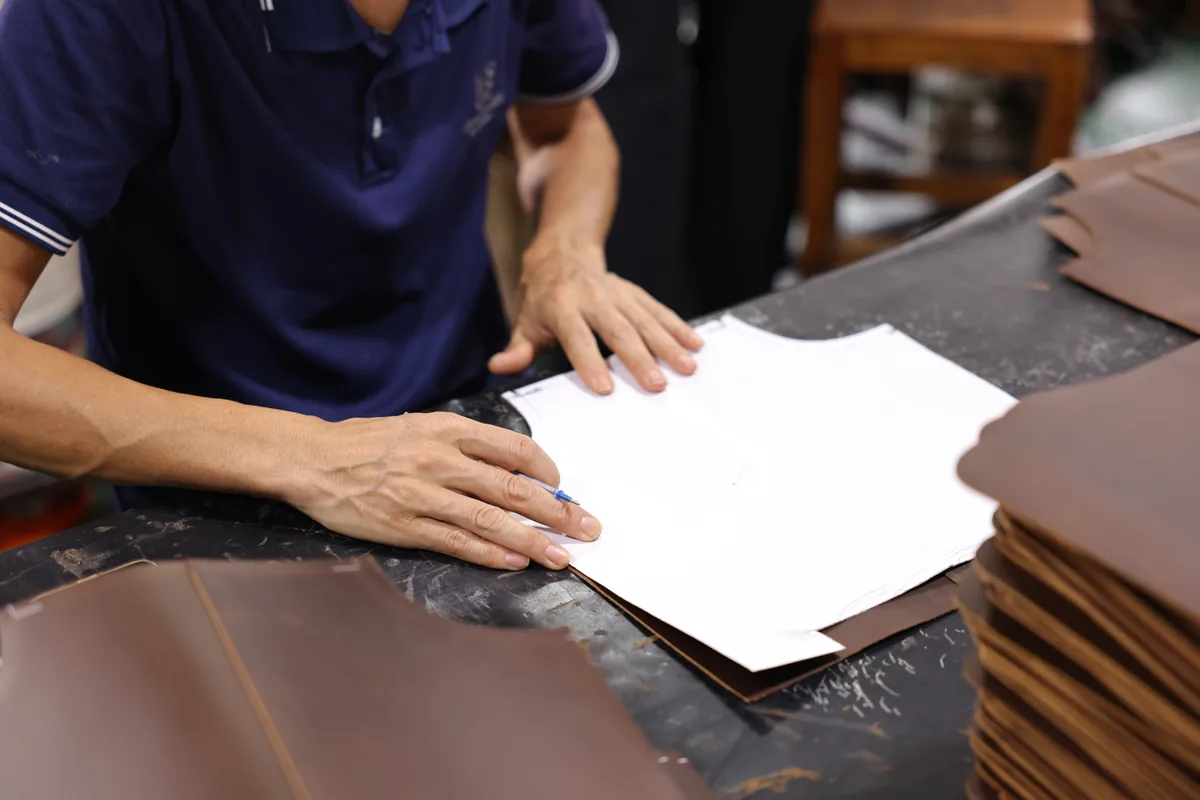
With the terminology clarified, the materials can be compared on a consistent basis. The table below uses “top-grain” in its common buying sense: grain-side leather that has received some surface correction and a more uniform finish. Buyers should put that meaning into the specification instead of relying on the label alone.
| Buying factor | Full-grain leather | Corrected top-grain leather |
|---|---|---|
| Surface | Intact natural grain; pores and marks may show | Buffed or corrected for an even finish |
| Batch appearance | More variation between hides and panels | More consistent colour and grain effect |
| Ageing | Natural change and patina support the story | Finish keeps a controlled appearance |
| Cutting decision | Select panels around agreed natural marks | More areas may meet a uniform standard |
| Suitable positioning | Heritage, artisan and premium collections | Structured, contemporary and volume collections |
| Buyer approval | Approve variation, finish and panel placement | Approve correction, embossing and hand feel |
The table describes material behaviour, but neither column guarantees a good bag. The next decision is whether the thickness, temper and finish work with the intended structure and reinforcement.
Match the leather to the bag and sales channel
For example, a pull-up full-grain cowhide can suit a vintage briefcase, travel bag or relaxed tote because natural variation supports the design. A structured fashion handbag may need a smoother surface and more predictable colour, in which case corrected grain can serve the brief more reliably.
The sales channel also matters. Boutiques can explain natural markings in person, while online sellers need photographs and copy that set the same expectation. Corporate gift orders often value identical presentation.
Why pay for full-grain character and then reject every natural mark? Equally, why choose a uniform finish for a collection built around natural ageing? The answer connects the leather to the customer, retail position and bag structure. Marrant’s wholesale leather bag planning guide shows how to organise styles and colours before ordering.
Bulk production changes the material decision
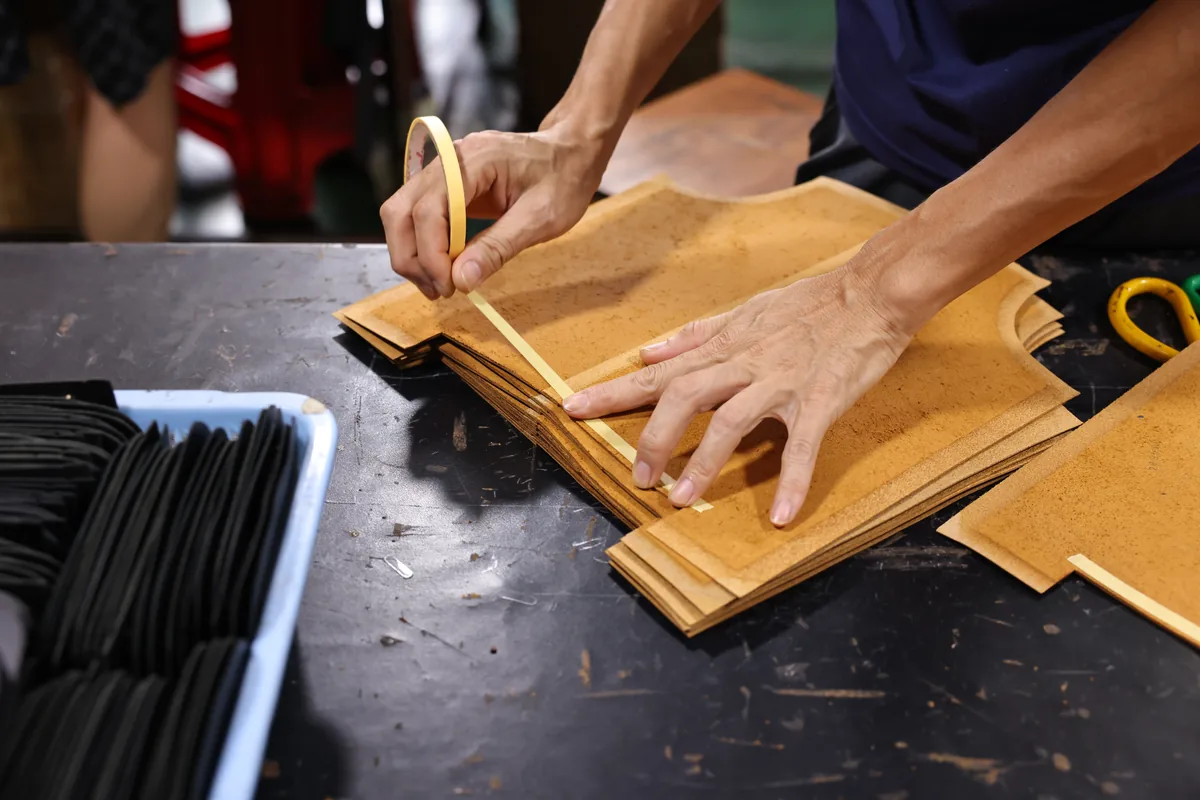
After the leather is matched to the product, test the decision at production scale. One swatch cannot represent a batch because hides contain different grain, stretch and natural marks. Requiring identical panels means more sorting and fewer acceptable cutting areas, which can affect consumption and price.
Corrected top-grain leather is more uniform, but its finish needs control. Bulk leather should match the approved gloss, embossing, colour, hand feel and flex behaviour; one stock hide does not prove repeatable supply.
Keep those controls with the order record for repeat production: the swatch, finish, target thickness and visual range. If the original article becomes unavailable, approve its replacement before cutting.
Approve the leather before sampling and bulk cutting
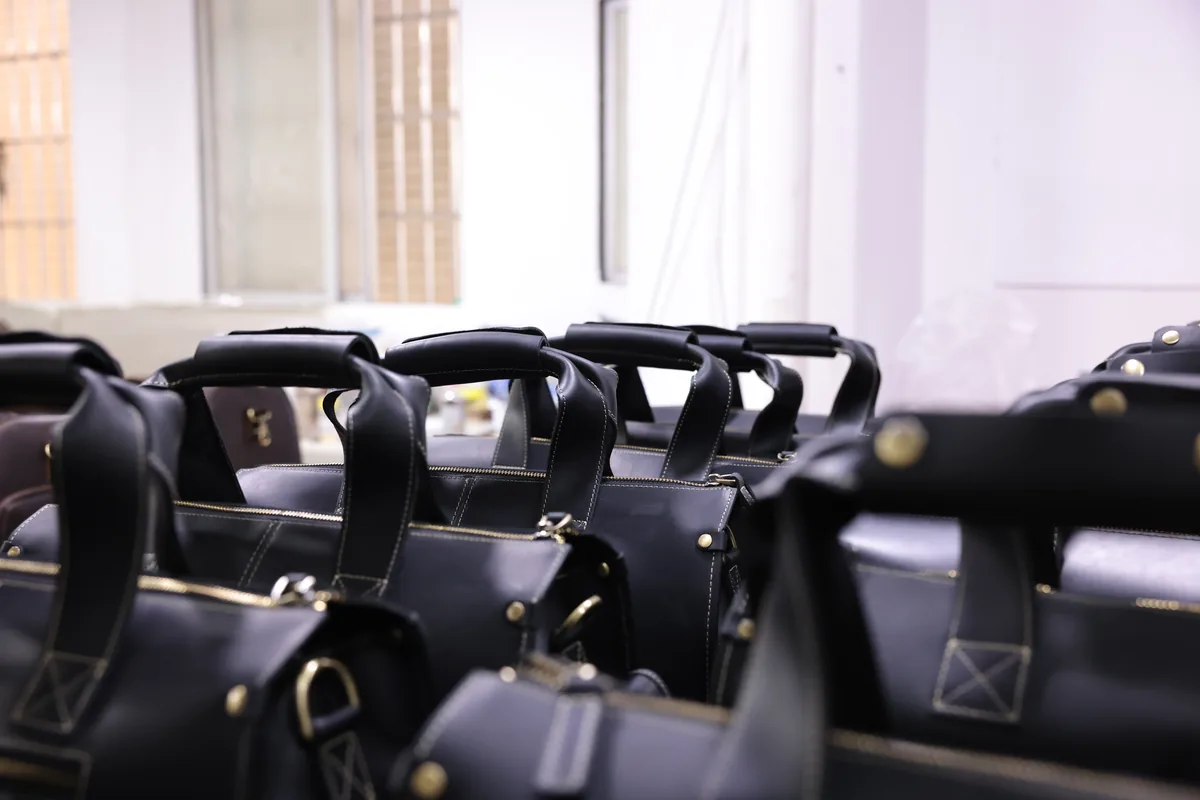
The production risks above are easiest to control before sampling begins. Use a short material-approval gate before the factory makes the first sample:
- confirm whether the natural grain is intact, buffed or corrected;
- record colour, thickness range, temper and surface finish;
- agree which scars, wrinkles and shade differences are acceptable;
- check dry and damp rubbing where colour transfer is a concern;
- bend the swatch to inspect the finish; and
- identify which panels require the closest visual match.
After sample approval, repeat the check when bulk leather arrives. The sample proves the design; the incoming check confirms production starts with the agreed leather. Marrant’s OEM customization process connects both approvals with bulk production.
Write a specification the factory can repeat
After approval, the same decisions need to be recorded in language the factory can repeat. “Brown top-grain leather” is not a production specification. A useful line might read: *grain-side cowhide, lightly corrected surface, semi-aniline brown finish, approved master swatch, target thickness confirmed by panel, natural shade range subject to buyer-approved limit.*
For full-grain leather, the specification should state that corrective buffing is not allowed and should define acceptable natural marks. For corrected leather, it should identify the correction, embossing and finish rather than hiding them behind a premium-sounding name.
Connect the specification to construction because body panels, handles and gussets may need different thickness or temper. Label approved swatches and retain the final sample so later quotations and repeat orders begin from the same reference.
Frequently Asked Questions
Q1: Is full-grain leather always better for wholesale leather bags?
No. Full-grain leather suits products that benefit from natural grain and visible ageing. Corrected top-grain leather can be more suitable for structured bags, uniform colours and collections that require a consistent appearance. The best choice must match the design, customer expectation and price position.
Q2: How can a wholesale buyer verify top-grain leather before bulk production?
Ask whether the surface has been buffed or corrected, then approve a labelled physical swatch with the finish, thickness, colour and grain effect recorded. Compare incoming bulk leather with that reference before cutting. Do not rely only on the words “top-grain” in a quotation.
Q3: Which leather is easier to keep consistent across repeat orders?
Corrected top-grain leather usually offers more visual uniformity, but repeatability still depends on the tannery article, colour lot and finish controls. Full-grain leather can also be reordered successfully when the buyer approves a realistic range for natural markings and shade variation. To review material options for your collection, contact Marrant’s factory team.
Discuss Your Wholesale Leather Bag Project on WhatsApp
Conclusion: specify the leather, not just the label
Both materials can produce wholesale bags. Choose according to the design, target price, ageing and acceptable variation. Define the surface treatment, approve a reference and connect it to construction and bulk inspection. A clear specification supports accurate quotations and repeatable future orders.