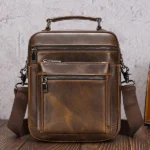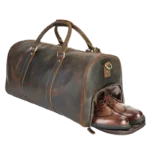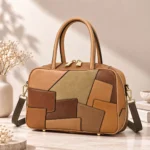
Marrant is a leather bag factory in Guangzhou’s Baiyun District, providing sampling, OEM, ODM, private-label and bulk-production support for overseas brands, wholesalers and importers. Why do buyers look for a leather bag factory Guangzhou? The city combines experienced bag makers with nearby leather, lining, hardware, packaging and processing suppliers. A suitable factory can coordinate these resources for the buyer, turn a product brief into a workable sample and manage the approved specification through production. The buyer does not need to find every zipper, buckle or leather supplier alone.
Why buyers choose a leather bag factory in Guangzhou
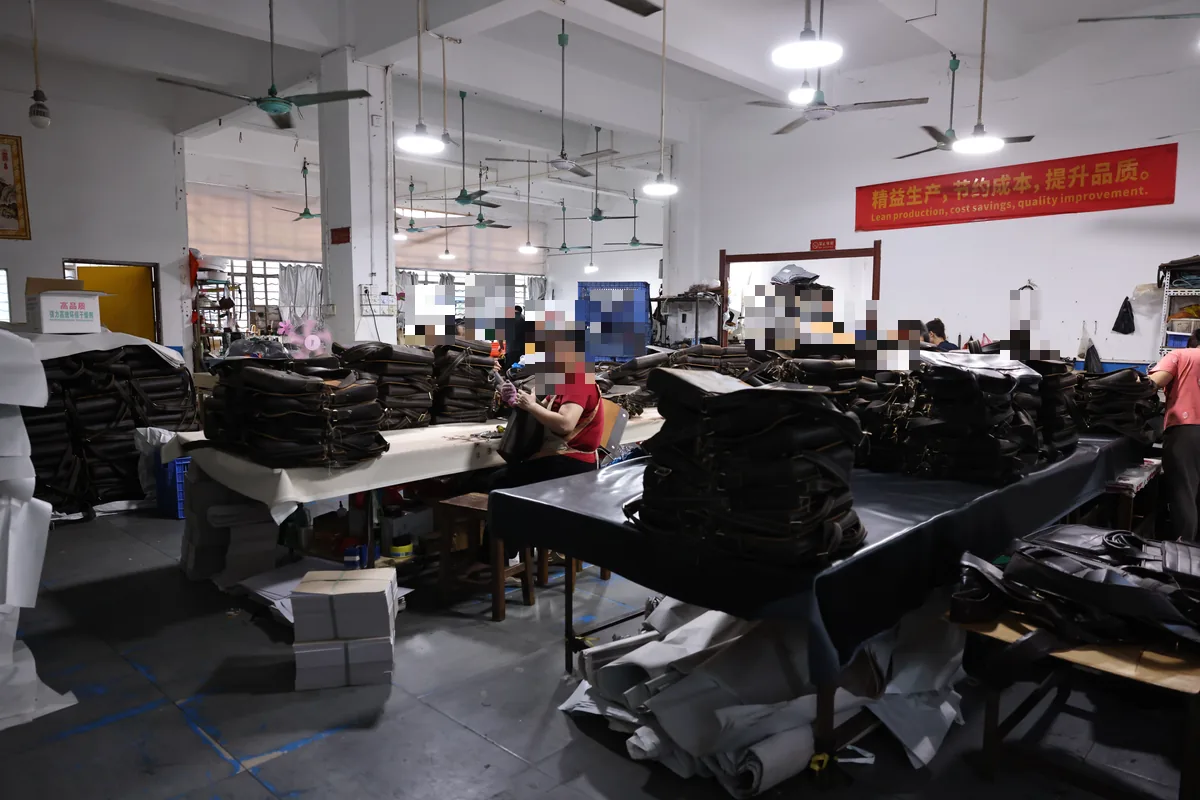
Guangzhou has a long-established leather-goods supply chain. Shiling, in Guangzhou’s Huadu District, is widely associated with the city’s reputation as a “Capital of Leather Goods.” The Guangzhou municipal government identifies leather as one of Huadu’s major industrial clusters and describes Shiling as a large leather-industry base.
That concentration matters in practical ways. Bag factories can reach leather dealers, lining suppliers, zipper and hardware vendors, edge-paint processors, logo workshops and packaging suppliers without building a new supply chain for every project. When a sample needs a different buckle finish or a softer lining, the factory can usually compare alternatives and return with options more efficiently.
Marrant is located in Guangzhou’s Baiyun District. From here, we can coordinate factory work with the wider Guangzhou material and accessory network. Buyers can also combine a factory visit with material review and sample confirmation in one sourcing trip.
What the right Guangzhou factory handles for the buyer
A buyer should provide the commercial direction: bag type, target customer, dimensions, functions, quantity, target price range and required delivery window. The factory then translates that brief into materials, construction and production steps.
| Project need | What the factory can coordinate | What the buyer approves |
|---|---|---|
| Main material | Leather type, thickness, colour, hand feel and available grades | Swatch, appearance and performance direction |
| Hardware | Zippers, buckles, hooks, rivets and plating finishes | Shape, colour, function and approved sample |
| Internal materials | Lining, foam, reinforcement, thread and pocket construction | Organisation, feel and durability expectations |
| Branding | Logo method, leather patch, metal logo, hangtag and label | Artwork, size, placement and colour |
| Packaging | Dust bag, tissue, polybag, carton and shipping marks | Brand presentation and packing specification |
This is one of the main reasons to work with a real bag factory rather than buying separate components yourself. The factory checks whether the selected leather can be skived and stitched as planned, whether the hardware fits the strap width, and whether the lining works with the internal structure. One attractive component can still create a poor bag if it does not work with the rest of the construction.
How Guangzhou’s supply chain supports custom development
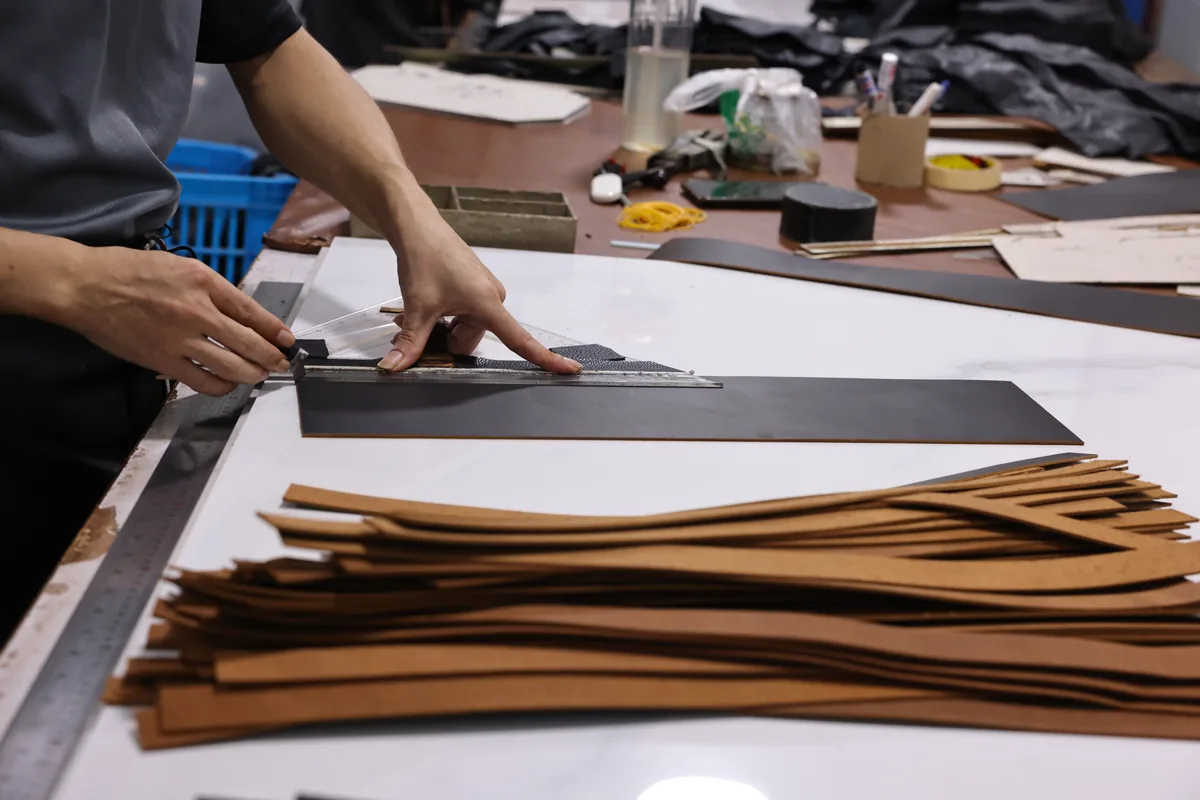
Suppose a brand wants a structured leather tote with a laptop pocket and antique-brass hardware. The factory can first review a mature construction or drawing, then propose leather thickness, reinforcement, lining and hardware options. After the buyer chooses the direction, the factory obtains samples, builds the prototype and records the approved combination in the bill of materials.
If the first leather makes the body too soft, the answer may involve both material and pattern changes. If a buckle is too heavy, the factory can look for another finish or construction instead of asking the buyer to search unknown vendors. If a colour is unavailable at the required quantity, the factory can present realistic alternatives before production begins.
The buyer still controls the final decision. Material substitutions, finish changes and structural revisions should receive written approval. The advantage is that the factory does the supplier coordination and technical matching, while the buyer reviews clear options rather than managing several unrelated vendors.
What a suitable factory solves beyond material sourcing
The right factory reduces the gaps between design, sample and bulk production. It can identify a construction risk before cutting, check whether the logo size suits the available panel, arrange material and hardware samples, and keep the approved version as the production reference.
Before approving bulk production, connect five items:
- the sealed sample and its version;
- the final measurement sheet and bill of materials;
- the approved leather, lining, hardware and colour references;
- the production and inspection checkpoints; and
- the final branding and packing specification.
Marrant’s OEM customisation guide explains how these decisions move from quotation through sampling and production.
How to choose a Guangzhou leather bag factory
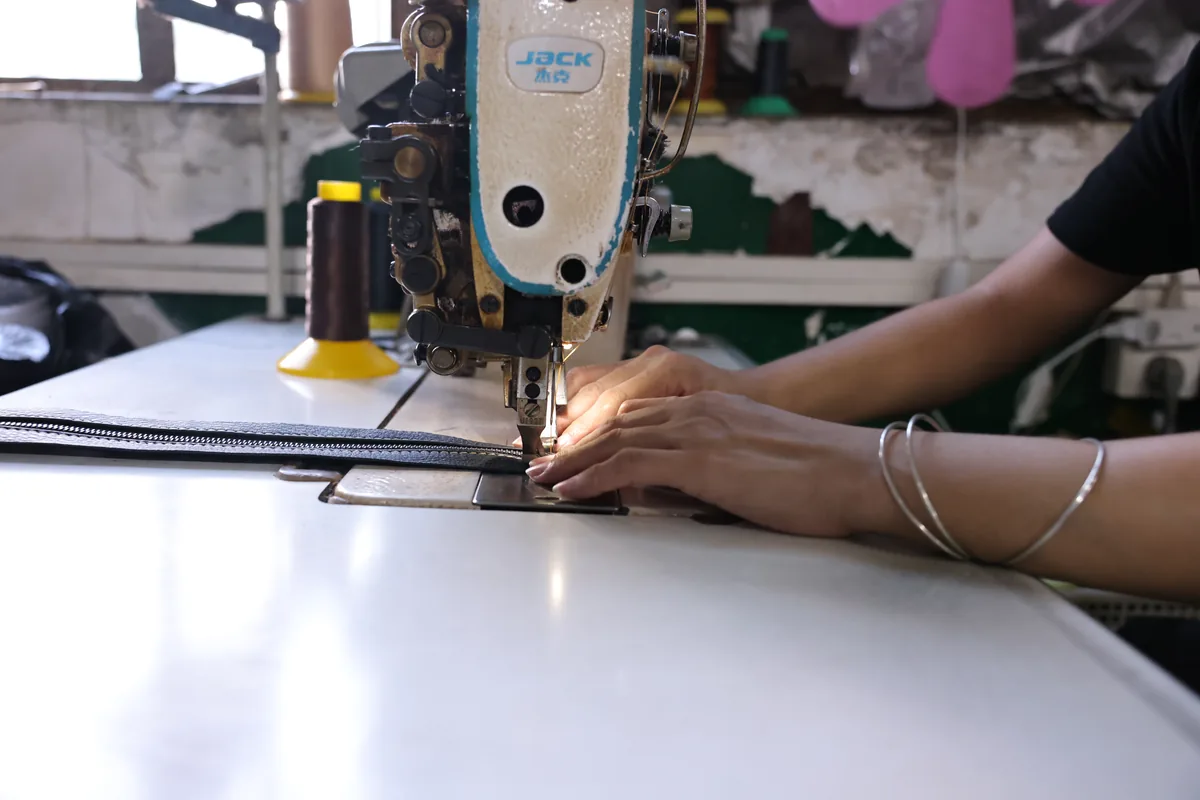
Do not choose by address or showroom photographs alone. Ask the factory to show a product with construction similar to yours and explain how it was made. A practical discussion about leather thickness, seam allowance, reinforcement and hardware attachment reveals more than a long catalogue.
Use this checklist:
- Confirm that the company issuing the quotation is responsible for production and quality follow-up.
- Check whether the factory has experience with your bag category and material.
- Ask who sources leather, hardware, lining, labels and packaging.
- Review a sample against written measurements and material references.
- Record which processes are completed in-house and which are coordinated outside.
- Require written approval before material or construction substitutions.
- Confirm how defects, rework, packing and shipment release are handled.
You can read Marrant’s company profile and compare Guangzhou with other regions in our China leather-bag industry clusters guide.
Frequently Asked Questions
Q1: Why are many leather bag factories located in Guangzhou?
Guangzhou has a mature network of leather, lining, hardware, packaging and specialist processing suppliers. Shiling’s leather-goods cluster also contributes to the city’s “Capital of Leather Goods” reputation. This network helps factories compare materials, develop samples and coordinate production efficiently. Buyers should still evaluate each factory’s category experience, sample quality and production control.
Q2: Do buyers need to source leather and hardware themselves?
Usually, no. A capable Guangzhou leather bag factory can source leather, lining, zippers, buckles, reinforcement, labels and packaging according to the product brief. The factory should present suitable options and explain their effect on cost, appearance and construction. The buyer approves the final swatches, hardware samples and written specifications before production.
Q3: What information should I send a Guangzhou leather bag factory?
Send the bag type, reference images or drawings, target dimensions, required functions, preferred material, branding method, estimated quantity, target market and expected delivery time. If some details are undecided, say so. A suitable factory can propose workable materials and construction choices, then confirm them through sampling. To discuss a project, contact Marrant with the information already available.
Discuss Your Guangzhou Leather Bag Project on WhatsApp
Conclusion: use Guangzhou’s supply chain through the right factory
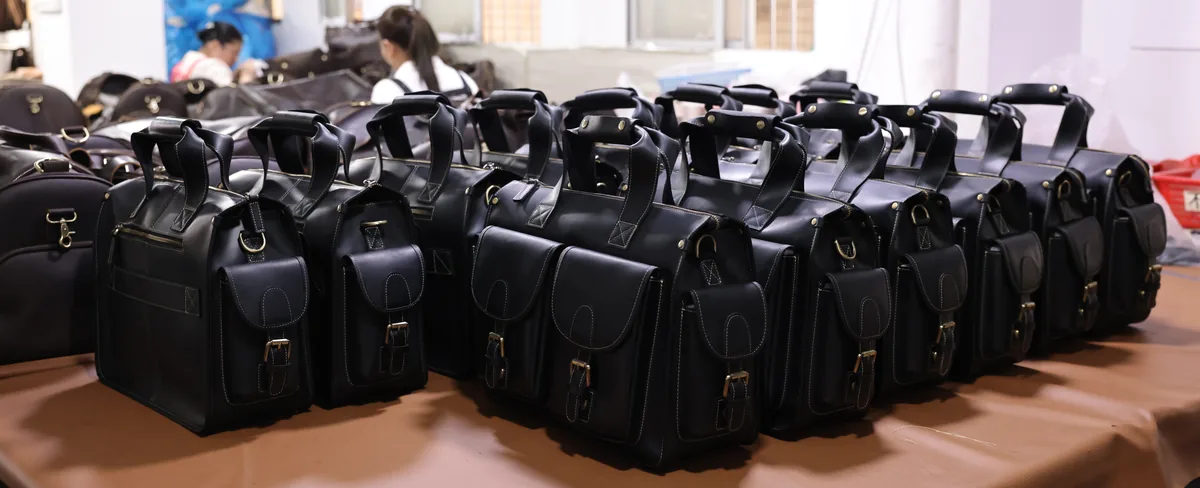
Guangzhou gives leather-bag buyers access to experienced production and a dense network of material and accessory suppliers. The real value appears when a suitable factory brings those resources together. It can source leather and hardware, test how the parts work together, correct the sample and control the approved details during bulk production. The buyer keeps approval authority without having to manage every supplier separately. That is the practical reason to choose a qualified leather bag factory in Guangzhou.