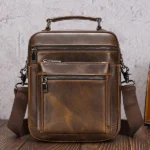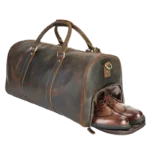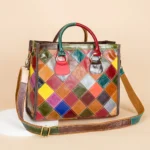
Choosing a leather briefcase manufacturer is not simply a matter of comparing leather names and unit prices. Two briefcases may look nearly identical in a product photo while using completely different handle reinforcements, frame materials, hardware and internal construction.
For importers, private-label brands and corporate gift buyers, the most important questions are:
- What materials are actually included in the bill of materials?
- How are the handle, shoulder-strap anchors and other stress points reinforced?
- How will the factory keep bulk production consistent with the approved sample?
China’s established leather-goods supply chains include Guangzhou and Dongguan. Guangzhou Marrant Leather Co., Ltd. is a Guangzhou-based OEM and ODM supplier serving wholesale and custom leather-bag projects. Buyers can review the company’s leather briefcase wholesale catalog before requesting a project-specific quotation.
Quick answer: A reliable briefcase supplier should be able to define the leather, lining, reinforcement, hardware, stitching, tolerances, inspection plan and packaging—not just show an attractive sample.
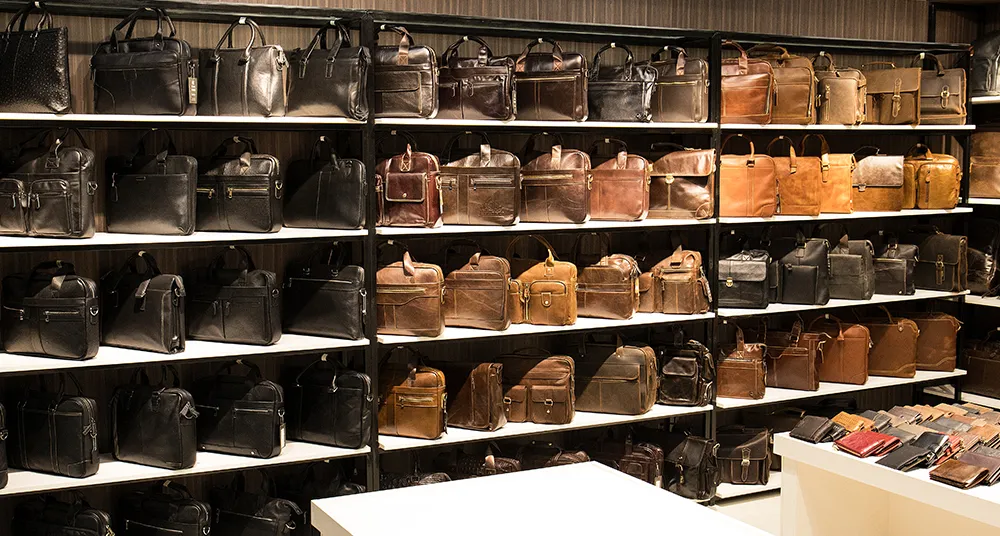
Why a Good Sample Can Still Become a Bad Bulk Order
A sample can look convincing even when its internal engineering is weak. Many failures only appear after the bag is loaded and used repeatedly. Typical examples include:
- loose or detached handles;
- deformed panels;
- plating wear on locks and buckles;
- broken shoulder-strap anchors;
- cracked edge paint;
- lining separation;
- inconsistent leather color across a production batch.
These problems are rarely explained by the outer leather alone. A premium hide cannot compensate for an under-reinforced handle, unsuitable board material or weak hardware attachment. For a broader explanation of how construction affects service life, read Marrant’s genuine leather bag lifespan and testing guide.
The Anatomy of a Business-Grade Leather Briefcase
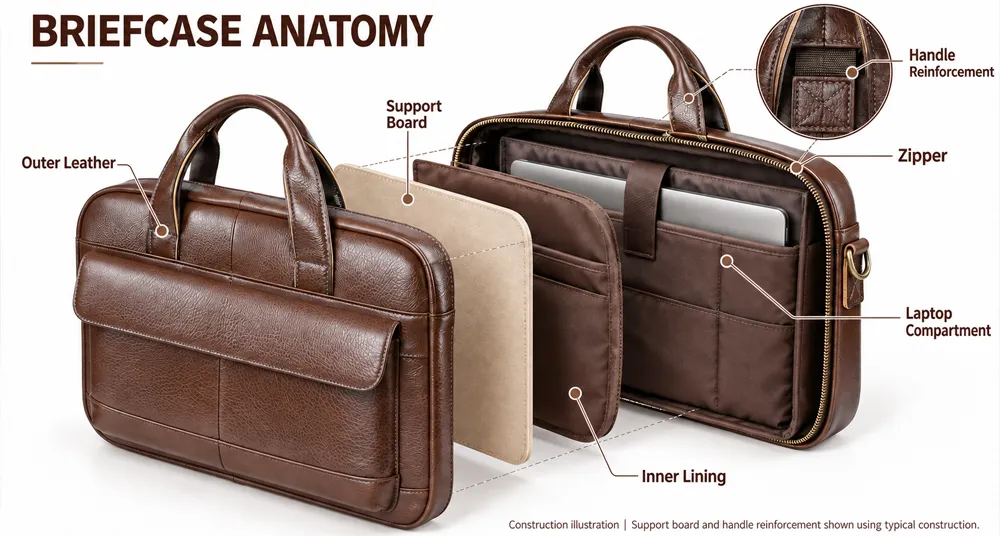
The following areas should be specified before sample approval.
| Component | What the buyer should confirm | Common sourcing risk |
|---|---|---|
| Outer leather | Leather type, finish, thickness range and acceptable natural variation | A heavily coated or embossed material is described only as “genuine leather” |
| Lining | Fiber content, color, abrasion resistance and cleanability | Low-cost lining tears, transfers color or separates from backing |
| Reinforcement | Material, thickness, moisture behavior and placement | Paper-based board absorbs moisture or loses shape |
| Handle attachment | Reinforcement patch, rivet or screw specification, stitch path and load expectation | The handle relies mainly on adhesive or decorative stitching |
| Locks and hardware | Base metal, plating color, coating requirement and opening-cycle expectation | Thin components deform or the finish wears unevenly |
| Zipper | Brand or approved equivalent, size, slider and opening performance | An unapproved zipper is substituted during bulk production |
| Stitching | Thread specification, stitch appearance, backstitching and stress-point reinforcement | Skipped stitches, inconsistent spacing or inadequate reinforcement |
| Edge finish | Edge-paint system, number of coats, curing and flex performance | Cracking, peeling or tackiness after heat and humidity exposure |
There is no universal stitch count or leather thickness that makes every briefcase “business grade.” A slim laptop briefcase and a structured attaché case need different materials and seam engineering. The approved sample and controlled specification should define the correct values for each design.

Match the Briefcase to the Buyer
Lawyers and Legal Teams
Legal users often need a structured bag that remains professional when loaded with files, a laptop and accessories. Check the handle construction, lock reliability, document organization and whether the case remains balanced when carried.
Banking, Finance and Consulting Teams
These buyers often prefer restrained styling, lower weight and organized storage. Confirm laptop dimensions, charger pockets, document sections, hardware finish and empty-bag weight.
Corporate Gift Buyers
Corporate programs require consistent appearance across the full order. Pay particular attention to color tolerances, logo placement, packaging, individual identification and repeat-order material availability. Marrant’s leather bag customization guide explains available branding options such as embossing, laser marking, metal logos, foil stamping and custom packaging.
Travel-Focused Professionals
Consultants, sales teams and frequent travelers may need a trolley sleeve, detachable shoulder strap, protected laptop compartment and lighter internal structure. Test the bag while it is loaded, not only while it is empty.
Institutional Procurement
Institutions usually prioritize consistency, traceability and documentation over fashion details. Specifications should cover labeling, batch identification, packaging, inspection records and replacement terms.
What Determines the Factory Price?
The word “leather” is not enough to calculate a meaningful price. A quotation can change substantially according to:
- leather type, usable cutting yield and finish;
- leather thickness and panel size;
- handle and panel reinforcement;
- standard or custom hardware;
- laptop padding and internal dividers;
- lining and edge-finishing systems;
- logo application;
- gift packaging;
- order quantity;
- testing and inspection requirements;
- trade terms and delivery destination.
Ask each supplier to quote against the same specification and Incoterm. Avoid comparing an EXW price with an FOB or delivered price as if they cover the same costs.
Practical Price-Tier Comparison
| Positioning | Typical specification direction | Suitable projects |
|---|---|---|
| Entry business | Standard materials, existing hardware and basic organization | Promotional programs and market testing |
| Professional mid-range | Controlled grain leather, reinforced handles, laptop protection and upgraded hardware | Business brands, lawyers and consultants |
| Premium custom | Selected hides, proprietary structure, custom hardware and presentation packaging | Premium labels and executive gifting |
Do not publish a fixed factory price range unless it is tied to a dated specification, quantity and trade term. A project-specific quotation is more credible than a broad price promise.

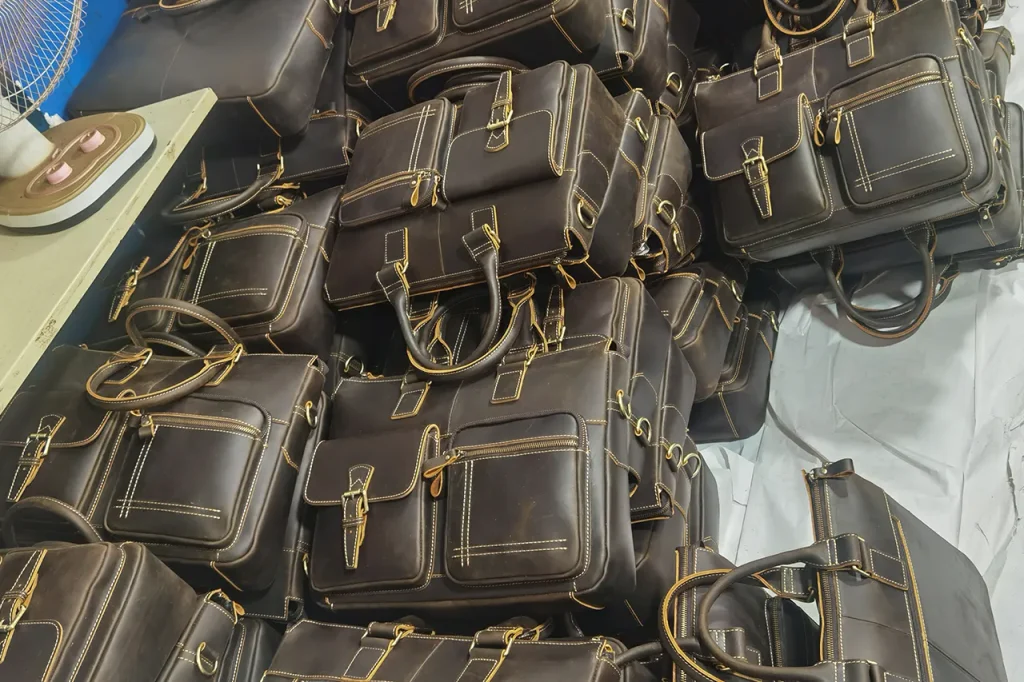
Three Sourcing Risks Buyers Often Miss
1. The Sample and Production Line Are Not Controlled to the Same Standard
A senior sample maker may build the prototype, while a separate line produces the order. Reduce this risk by requesting:
- a signed or sealed approval sample;
- a controlled bill of materials;
- measurable tolerances;
- first-piece approval;
- in-process inspection records;
- pre-shipment inspection;
- written approval before any material substitution.
Marrant describes its general sampling and production workflow in the complete guide to custom leather bags. The exact requirements for a briefcase order should still be written into the quotation and purchase agreement.
2. A Low MOQ Is Quoted Without Explaining the Limitations
A low minimum order quantity can be useful for testing a market, but it may restrict:
- leather colors;
- hardware choices;
- exclusive molds;
- lining development;
- custom packaging;
- unit pricing.
Ask separately for the MOQ of an existing style, a color change, a structural modification and fully custom hardware. Marrant’s published factory information distinguishes between existing-design orders and more extensive OEM/ODM development; confirm the applicable MOQ for the selected briefcase before ordering through the factory contact page.
3. Branding Is Confused With Absolute Anti-Counterfeiting
Embossed logos, serial plates, batch codes and QR-linked product pages can improve identification and traceability. They cannot guarantee that a design will never be copied.
Use these features to support channel control, warranty handling and batch tracking:
- embossed or debossed logo;
- custom metal nameplate;
- serialized label;
- batch code;
- custom lining;
- proprietary hardware;
- QR-linked care or verification page.
How to Evaluate an OEM Leather Briefcase Factory
Step 1: Review the Factory’s Actual Scope
Confirm whether the supplier handles pattern development, sampling, cutting, stitching, assembly, inspection and packaging directly or outsources key stages. Review its equipment, current work-in-progress and examples of bulk production—not only showroom samples.
You can review Marrant’s published background and service scope on the About Marrant manufacturer page.
Step 2: Build a Comparable Request for Quotation
Send every candidate factory the same information:
- drawings, measurements or reference sample;
- target leather and finish;
- laptop compartment dimensions;
- hardware material and finish;
- lining and reinforcement requirements;
- branding method;
- packaging;
- estimated quantity;
- destination market;
- inspection and testing requirements;
- Incoterm;
- target schedule.
A supplier that cannot explain the major material and construction assumptions behind its quotation creates avoidable risk.
Step 3: Approve Materials Before the Finished Sample
Approve leather swatches, lining, thread, edge color, zipper and hardware finish before the complete prototype. Record approved items with photos, supplier codes and physical samples where possible.
Step 4: Define Inspection and Acceptance Rules
The purchase specification should define critical, major and minor defects, along with the chosen sampling plan. For lot-by-lot inspection, buyers may use an agreed AQL-based approach derived from standards such as ISO 2859-1, provided the inspection level and acceptance limits are written into the order documents.
Independent inspection firms can also conduct production monitoring or pre-shipment checks. For example, QIMA’s pre-shipment inspection overview explains that inspections are performed against the buyer’s agreed specifications. Naming an inspection company is not a substitute for defining what must be checked.
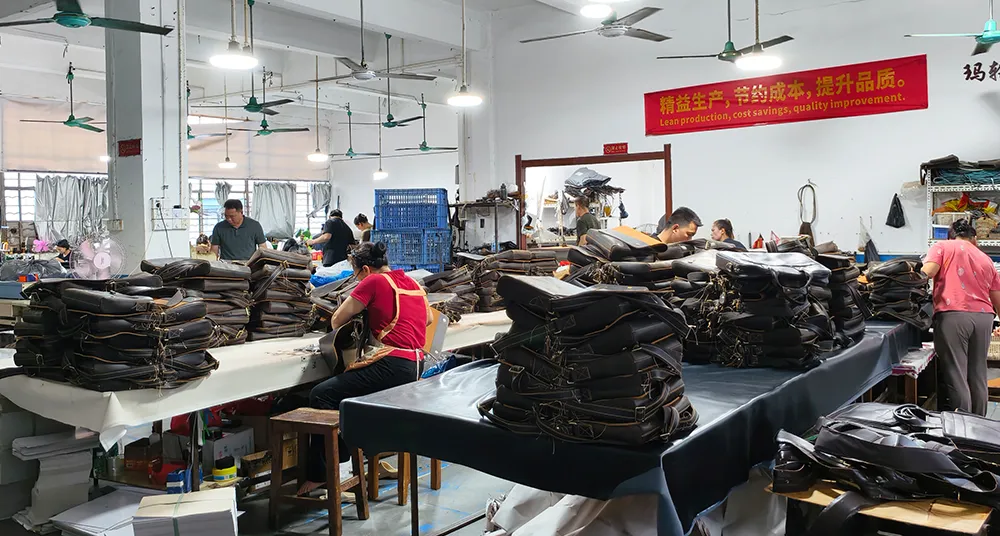
Suggested Briefcase Quality-Control Checklist
Before shipment, inspect at least the following:
- overall dimensions and empty weight;
- leather type and approved appearance range;
- panel-to-panel color consistency;
- handle alignment and reinforcement;
- shoulder-strap anchor security;
- lock, buckle and zipper operation;
- stitch continuity and stress-point reinforcement;
- edge-paint finish and curing;
- laptop compartment dimensions and padding;
- lining cleanliness and attachment;
- logo position, size and orientation;
- carton quantity, labeling and moisture protection.
Tests and acceptance levels must match the intended use. Do not present a marketing claim such as “heavy duty” without defining the load, cycle count and test method behind it.
Frequently Asked Questions
Q1. What is the typical MOQ for a custom leather briefcase?
MOQ depends on whether the buyer selects an existing style, changes only the logo or color, modifies the structure, or develops proprietary hardware. Existing designs generally support lower quantities than fully custom projects. Request a written MOQ for the exact configuration instead of relying on a site-wide number.
Q2. How can I prevent the bulk order from differing from the sample?
Keep a signed or sealed approval sample, control the bill of materials, define tolerances, prohibit unapproved substitutions and arrange first-piece, in-process and pre-shipment checks. Photographing the sample alone is not enough because internal materials may not be visible.
Q3. How long does custom logo development take?
Timing depends on the method. A simple embossing die is usually faster to develop than proprietary metal hardware or a multi-process logo. Ask the factory to separate mold development, sample approval and production lead time in the schedule.
Q4. Is full-grain leather always better for a briefcase?
Not automatically. Full-grain leather can offer natural character and strong long-term potential, while corrected-grain leather may provide more uniform color and appearance across a corporate order. The best choice depends on product positioning, finish, structure, budget and the buyer’s tolerance for natural variation.
Q5. How do I verify that a supplier is a real manufacturer?
Review the production floor, material storage, work-in-progress, QC records and recent bulk-order evidence. Match the business entity and factory address against contracts, invoices and any claimed certificates. A showroom alone does not prove manufacturing capability.
Final Buying Advice
The best leather briefcase manufacturer is not simply the supplier offering the lowest unit price. It is the supplier that can explain the material specification, stress-point construction, bulk-production controls and inspection process clearly—and then record those details in the order documents.
Before placing an order, make sure the factory can answer:
- Exactly which materials will be used?
- How are the handle and other load-bearing points reinforced?
- How will the bulk order be checked against the approved sample?
If you are comparing an OEM leather briefcase factory or planning a custom leather briefcase China project, review Marrant’s briefcase catalog. For technical development, use our wholesale leather laptop bag specification guide and OEM messenger bag specification guide, then contact the Guangzhou factory with your dimensions, quantity, material, branding and packaging requirements.