Marrant is a leather bag manufacturer for Amazon sellers that need product development, private-label branding, bulk production and packing support from one factory. The practical starting point is not an Amazon listing URL. It is a version-controlled product brief that connects every customer-facing claim—material, dimensions, pockets, strap length and included accessories—to a measurable factory requirement. Marrant can then sample and manufacture the bag, apply buyer-supplied labels and prepare agreed packaging, while the seller remains responsible for the listing, marketplace eligibility and current Amazon requirements.
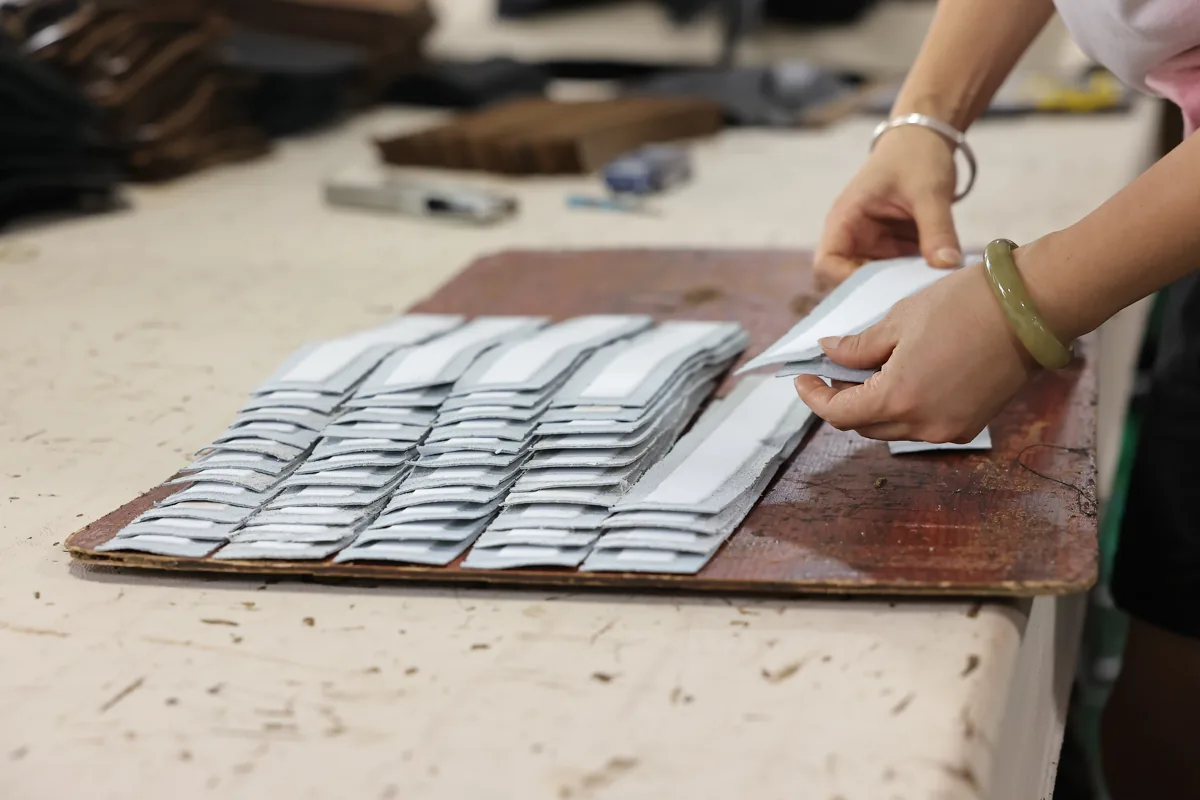
What an Amazon-ready leather bag order means
An “Amazon-ready” order is a manufacturing order whose product, unit packaging and shipment data match the seller’s approved plan. It does not mean a factory can guarantee listing approval, reviews or sales. Amazon sellers control their accounts, product identifiers and shipment plans; the manufacturer controls whether the approved bag and packing instructions are reproduced consistently.
This division matters. A beautiful sample can still create trouble if the listing promises a 15-inch laptop compartment but the usable opening is smaller. Who catches that before inventory reaches a fulfilment centre? The specification should.
Read Marrant’s manufacturing background for the company context. For an Amazon project, the useful question is whether the factory can turn listing language into inspection points.
Convert listing claims into factory checks
Draft the product page and the manufacturing brief together. A phrase such as “adjustable shoulder strap” needs a minimum and maximum usable length. “Genuine leather” needs an agreed leather type, colour standard and approved surface character. Industry talk rarely says this plainly: adjectives are not inspection instructions.
| Customer-facing claim | Factory specification | Approval evidence |
|---|---|---|
| Fits a stated laptop size | Internal opening, usable compartment width and closure clearance | Device-fit check or approved gauge dimensions |
| Adjustable strap | Strap material, width, shortest and longest usable length, hardware finish | Measured approved sample and hardware reference |
| Multiple storage pockets | Pocket count, position, opening and zipper direction | Marked interior drawing plus sample photographs |
| Gift-ready presentation | Dust bag, insert, hang tag, unit package and label positions | Complete packed-unit sample |
Keep claims factual. Natural leather varies in grain and tone, so the approved tolerance should describe acceptable variation instead of promising an identical printed surface. The same logic applies to handmade edge paint and stitching: define what buyers will receive and what inspectors will reject.
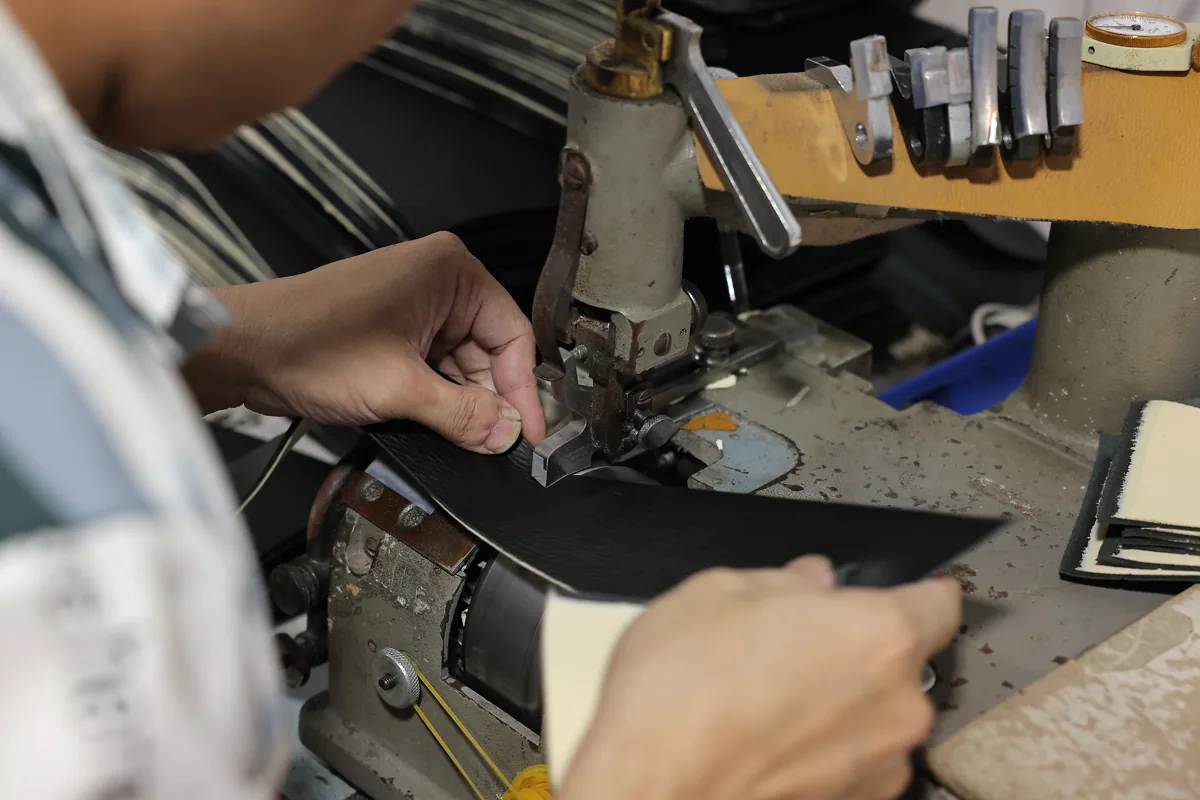
Build the SKU matrix before sampling
Amazon variations can multiply a simple design quickly. Two colours and two sizes create four sellable versions, each with its own product data and inventory risk. Give every version a factory code from the start. The code should follow the sample, purchase order, barcode file, packing list and carton mark.
| Control field | Record for every version | Why it matters |
|---|---|---|
| Product identity | Factory code, seller SKU and colour/size name | Prevents similar versions being mixed |
| Physical specification | Material, dimensions, weight target and included parts | Connects the listing to the supplied unit |
| Branding | Logo method, position, artwork revision and packaging copy | Keeps visible branding consistent |
| Packing data | Unit-pack method, barcode filename, carton quantity and carton mark | Supports receiving and shipment reconciliation |
Do not send a folder called “final” containing several competing label files. Use revision numbers and an approval date. If a colour name changes on the listing, decide whether the factory document changes too; otherwise two teams may use different names for the same SKU.
Approve the bag as a customer will use it
Sampling should cover more than appearance. Load the bag with its intended contents. Open the main zipper repeatedly, adjust the strap, use the internal pockets and check whether the base holds its intended shape. Compare the packed dimensions with the unpacked product because compression can mark leather, deform a structured body or press hardware against the surface.
For private-label details, review Marrant’s private-label leather bag process. Confirm logo scale on the actual leather and inspect the complete packed unit, not an isolated logo mock-up. A millimetre-level artwork decision can look very different once it sits beside a zipper or seam.
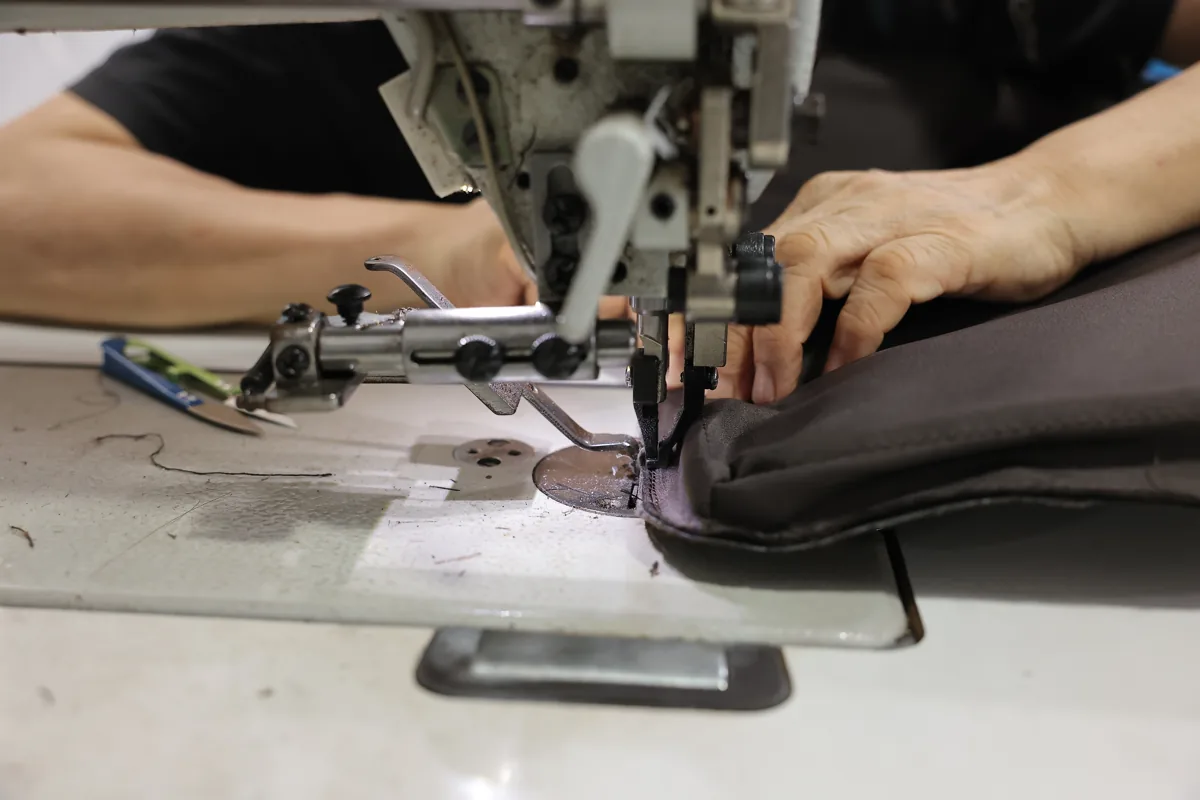
Make packaging and barcode work a controlled handoff
Amazon’s current FBA guidance says units need suitable preparation and scannable identification; applicable barcode and packaging rules depend on the product and fulfilment route. The seller should download the final label files and instructions from the relevant account, then send the approved files to the factory. Marrant can place supplied labels and pack to the confirmed brief, but should not guess an FNSKU, reuse a label from another SKU or decide marketplace eligibility.
Amazon also advises placing labels on a smooth, flat surface and keeping required barcodes readable on the outside of additional packaging. Treat label position as part of the packed-unit approval. Photograph one labelled unit per version, then check carton quantities against the packing list. See Amazon’s official FBA preparation guide and GTIN guide, and verify instructions inside Seller Central before shipment.
Inspect by version and preserve reorder evidence
A bulk check should represent every colour and size, not only the largest line. Check dimensions, leather appearance, hardware finish, zipper function, stitching, logo placement, included accessories and unit packaging against the approved reference. Record failures by SKU so a correction can target the affected version.
After approval, keep a sealed reference sample, bill of materials, colour reference, artwork revision and packing specification. Reorders often fail quietly when a familiar style receives a new lining, hardware batch or carton arrangement without a formal revision. Marrant’s OEM workflow guide explains the wider sampling-to-production sequence.
Before requesting a quotation, send this checklist:
- Bag category, target marketplace and fulfilment route
- Reference images, drawing or selected base style
- Material, colour, dimensions and functional requirements
- Quantity for every sellable version
- Logo artwork, packaging components and revision numbers
- Buyer-supplied barcode files and exact placement instructions
- Required inspection evidence, carton data and destination
Frequently Asked Questions
Q1: Can Marrant apply FNSKU labels and prepare leather bags for Amazon FBA?
Marrant can apply buyer-supplied labels and follow an agreed unit-packing brief. The seller must provide the correct final label for every SKU, confirm the current requirements for the marketplace and shipment, and approve the labelled packed sample before production packing.
Q2: Is a small opening order suitable for testing an Amazon leather bag?
A focused opening assortment can reduce the number of variables, but feasibility depends on the style, material, colour, branding and quantity for each version. Ask Marrant to review the complete SKU matrix rather than relying on one total-unit figure. No single minimum applies to every custom configuration.
Q3: What should an Amazon seller send to a leather bag manufacturer for a quotation?
Send the selected style or design reference, material, dimensions, colours, quantity by version, logo method, accessories, packaging, barcode responsibility, carton needs, destination and target timing. Contact Marrant’s factory team with this information so the quotation can state what is included.
Discuss Your Amazon Leather Bag Project on WhatsApp
Conclusion: connect the listing to the production record
The right leather bag manufacturer for Amazon sellers makes each promise traceable. Define the product by version, approve the bag in use, control label and packaging files, inspect every SKU and preserve the evidence needed for reorders. That record gives the factory a clear target and gives the seller a practical basis for checking inventory before it reaches customers.