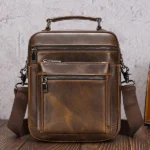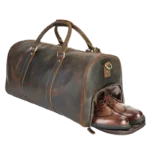
Carry the same laptop, water bottle, charger and documents in two different bags and they can feel completely different on your shoulder. That is because what you actually feel is not just the weight of the items. The bag itself brings its own weight, the strap presses into your body, the whole thing shifts as you walk, and the center of gravity decides how much of that load lands on one side of you. Two bags can look alike and still leave you far more tired by the end of the day.
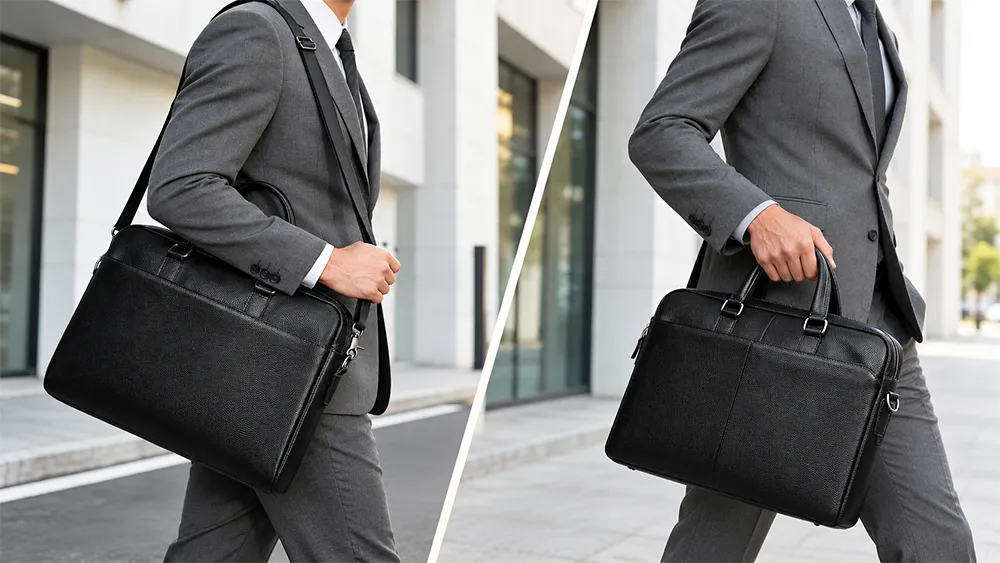
For wholesale buyers this is worth more attention than it usually gets. “Will it fit my laptop” is only the start. When you develop a wholesale leather work bag or a custom order, the real question is how the empty structure, the strap and the interior behave once the bag is loaded.
Buyers comparing different formats can first review our wholesale leather briefcase collection to understand the available work-bag structures and carrying options.
Why Empty Bag Weight Matters
Leather, hardware, lining, bottom boards, extra reinforcement and layered compartments all add weight to an empty bag. Some bags feel heavy in the hand before anything goes inside. Add a laptop and a bottle and the total climbs quickly, and your shoulder notices within an hour.
Here is where factory thinking differs from what many buyers assume. Thicker does not automatically mean better. Full-grain leather looks reassuring and lasts, but piling on heavier hide, chunky metal fittings and several internal layers to “look sturdy” can quietly turn a work bag into a burden. Development is a balance between structure, appearance and finished weight. We trim weight where it does not weaken the build and keep it where it protects the laptop and holds the shape. A bag should feel solid, but it should not ask you to carry the materials twice. If you are comparing options, our genuine leather bag size guide is a useful place to start before you settle on dimensions.
Shoulder Strap Width Is Only Part of the Answer
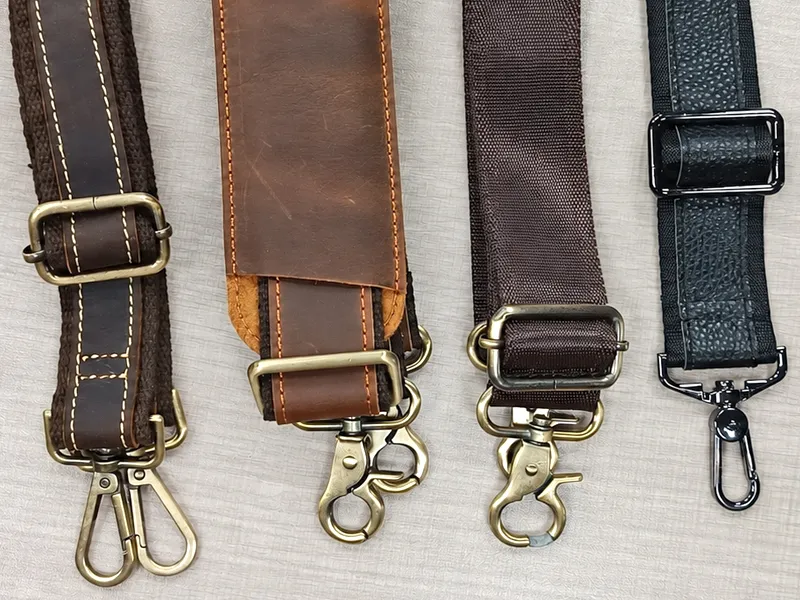
A wider strap spreads pressure over a larger contact area, which genuinely helps. But width alone does not guarantee comfort, and this is where buyers often get caught out. Hold two bags with the same strap width and one sits comfortably while the other digs in.
The difference comes from smaller details. Is the edge stiff enough to leave a red line after ten minutes? Does a raised seam sit right where the strap curves over your shoulder? Does the strap twist or roll because the leather is too soft or the lining pulls? Does the slider or buckle land on the shoulder instead of above it? And is the strap long enough for how the bag is actually worn, with a jacket and without one?
The connection points matter too. Where the strap meets the body changes how the bag hangs and how the load pulls. Our leather bag quality standards cover exactly these points, and we check all of them during sampling, because a strap that looks fine in a photo can behave very differently on a shoulder.
For stitching, strap attachments and hardware inspection, refer to our leather bag quality standards before approving the production sample.
Center of Gravity and Bag Movement
If two bags carry the same load, why does the one sitting closer to the body usually feel easier to manage?
Because stability is part of comfort. When the bag sits close to your hip or side it moves with you. When the strap is too long and the bag drops below the hip it swings with every step, and your shoulder does extra work just to hold it steady. A thick body that stands far out from you, or an outer pocket loaded with heavy items, pushes the center of gravity outward and creates a constant downward pull. The more it swings, the heavier it feels.
Length is not a style choice. It changes how the weight transfers to your body. Keep the bag closer and the same load feels noticeably lighter.
Interior Layout Changes How the Load Feels
More compartments do not automatically mean a better bag. The real question is where the heavy items sit.
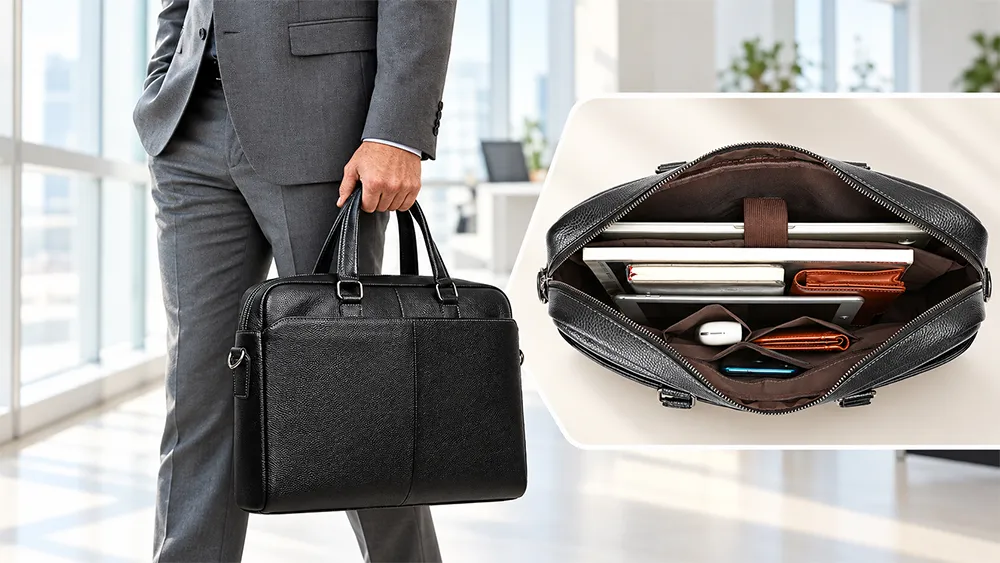
A laptop or tablet packed flat against your body keeps the center of gravity inboard and the bag stable. A water bottle and power bank crammed into the outermost pocket pull the load outward and make the whole bag want to tip. Small items dumped at the bottom drag the bag down and squash the shape.
In OEM development of custom leather laptop bags, the position of the computer compartment, the thickness of its padding and the layout of internal pockets all affect both the balance and the usable space. We place the laptop close to the wearer, keep the bottle upright near the middle, and give the charger and power bank fixed pockets instead of letting them roll around. The interior is designed around real loading, not around making a spec sheet look fuller.
A Practical Loaded-Sample Test for Wholesale Buyers
Too many wholesale leather work bags get judged empty, or from a product photo. An empty bag rarely reveals how the weight, strap and capacity relate once it is loaded.
A better approach is simple. Load the sample with what your target market actually carries, a laptop, charger, water bottle, documents and personal items. Put everything in the pocket it is meant for. Then wear the bag for a few minutes rather than twenty seconds and watch what happens.
| Check | What to Test | Warning Sign |
|---|---|---|
| Empty weight | Weigh the bag before loading | Already heavy before anything is added |
| Shoulder strap fit | Wear at your usual length, with thin and thick layers | Edge digs in, seam rubs, slider sits on shoulder |
| Loaded balance | Load laptop, bottle, charger, files | Bag tilts to one side or sags forward |
| Laptop compartment position | Check where the laptop sits against your body | Compartment pulls the bag away from you |
| Walking stability | Walk for a few minutes with the full load | Body swings, strap twists, weight shifts |
| Strap and hardware placement | Check where the buckle and connections sit | Hardware presses into shoulder or neck |
| Ease of access | Open and close the main compartment while loaded | The items you use most are buried or awkward |
No laboratory data is needed for this. It is realistic loading plus a short walk. If a bag cannot pass this basic check at the sample stage, it will not improve by the time it reaches production.
What Buyers Should Specify in an OEM Brief
When you move from a general idea to a custom order, whether that is a wholesale line or custom leather laptop bags, the brief should cover more than dimensions. It helps to set out the intended use, the items you expect to carry and an acceptable finished weight range. Note the usable laptop size, the strap width and adjustment range, and where the internal pockets should sit. Think about the weight of the hardware and ask for reinforced connections at the handle and strap points. Finally, include a loaded-sample test as part of the approval step.
Getting specific on these points early saves time later. Buyers who order wholesale leather work bags or wholesale leather shoulder bags in volume often find that a small change in the brief, like a lighter bottom board or a repositioned pocket, makes a real difference to how the final product feels. For a look at how a factory develops this kind of piece from brief to sample, our custom leather bags page is a good starting point.
Quick Buyer Checklist
Keep it short.
- Check the empty weight before anything else.
- Adjust the strap to the length you will actually wear.
- Load the bag with your normal commuter items.
- Check the balance, the sway and any strap twisting.
- Note the structural changes you want before approving production.
Frequently Asked Questions
Q1: Why can two leather work bags with the same load feel different?
The items are identical, but each bag adds its own weight, and the strap, balance and interior layout change how that load reaches your body. A heavy empty structure, a strap that presses into the shoulder, or a center of gravity sitting far out will make the same laptop and bottle feel heavier. Comfort comes from the whole structure, not just from what you put inside.
Q2: Are wider shoulder straps always more comfortable?
Not by themselves. A wider strap spreads pressure, but stiffness, raised seams, twisting and poorly placed hardware can still cause discomfort. A strap that rolls or digs in at the edge can feel worse than a narrower one that sits cleanly. Comfort depends on the strap’s edge, its connection to the bag and how it fits the wearer, not only on its width.
Q3: What should wholesale buyers test before approving a commuter bag sample?
Test the empty weight, then load the bag with the laptop, charger, water bottle and documents your market actually carries. Wear it at your normal strap length and walk for a few minutes. Watch for tilting, swaying, strap twisting and hardware pressing into the shoulder. These checks happen before production, while the structure can still be changed.
Conclusion
Capacity only tells you whether something fits. It says nothing about how the bag feels on a shoulder for eight hours. Wholesale buyers should look at empty weight, the strap, the center of gravity, the interior layout and the loaded stability while the sample is still on the table. Marrant Leather Goods can evaluate leather, structure, shoulder straps, compartment layout and branding requirements during sample development for wholesale and OEM projects.
If you are developing a new commuter or laptop bag, our custom leather bag development guide explains how specifications move from the initial brief to sampling and bulk production.