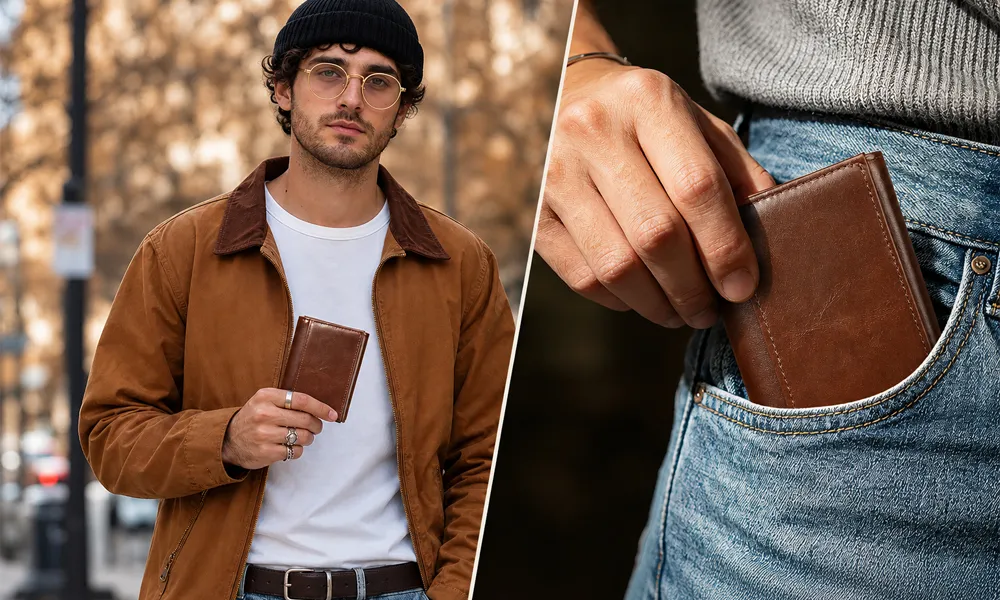
Before ordering wholesale leather travel wallets, buyers should confirm the intended contents, internal layout, leather specification, closure, optional RFID shielding, MOQ, branding, approved sample, quality checks and commercial terms. A travel wallet may need to hold a passport, boarding pass, cards and different currencies, so its structure cannot be evaluated in the same way as a standard bifold wallet.
The following ten questions help importers, retailers, travel-accessory brands and corporate gift buyers define the product before sampling or bulk production begins.
Four common travel wallet formats buyers may consider are compared below.
| Travel Wallet Type | Typical Contents | Main Advantage | What the Buyer Should Confirm |
|---|---|---|---|
| Slim passport wallet | 1 passport, 2–4 cards, small bill pocket | Low profile, fits easily into jacket pockets | Exact closed dimensions and passport fit for target markets |
| Long travel document wallet | Multiple passports, full-length banknotes, boarding passes | Keeps all flat documents in one continuous piece | Internal divider count and maximum unfolded length |
| Zip-around travel wallet | Full perimeter zipper, coins, keys, SIM cards | Contains loose items securely during use | Zipper brand and pocket arrangement inside the seal |
| Family travel wallet | Multiple passports and shared travel documents | Designed for group travel use | Loaded thickness, slot spacing and whether the wallet closes correctly |
What Is the Travel Wallet Designed to Carry?
Map all items the end user will place inside before finalising the pattern. A wallet sized only for a passport and two cards will warp stitching, stretch leather and wear out the closure prematurely if later overloaded with extra boarding passes, SIM tools or small change. Defining every intended item first eliminates most avoidable layout revisions early in the project.
How Is a Travel Wallet Different From a Passport Holder?
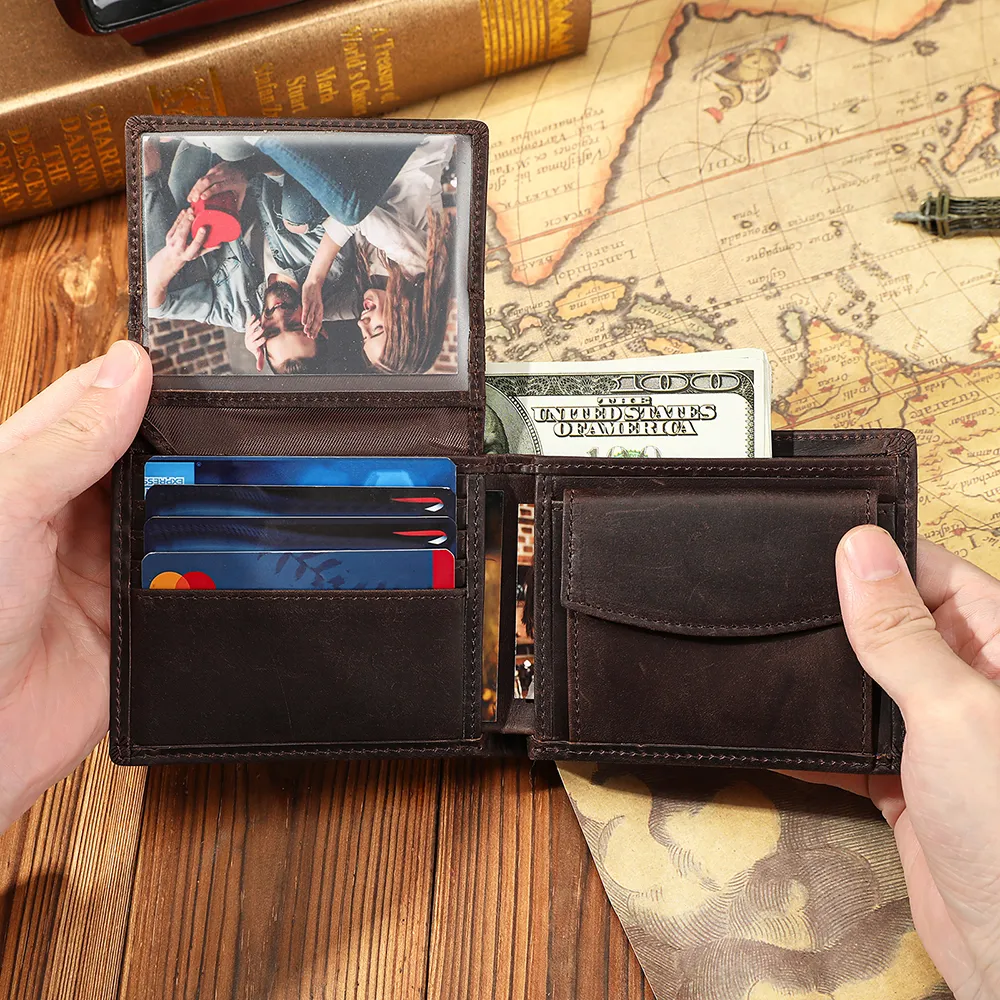
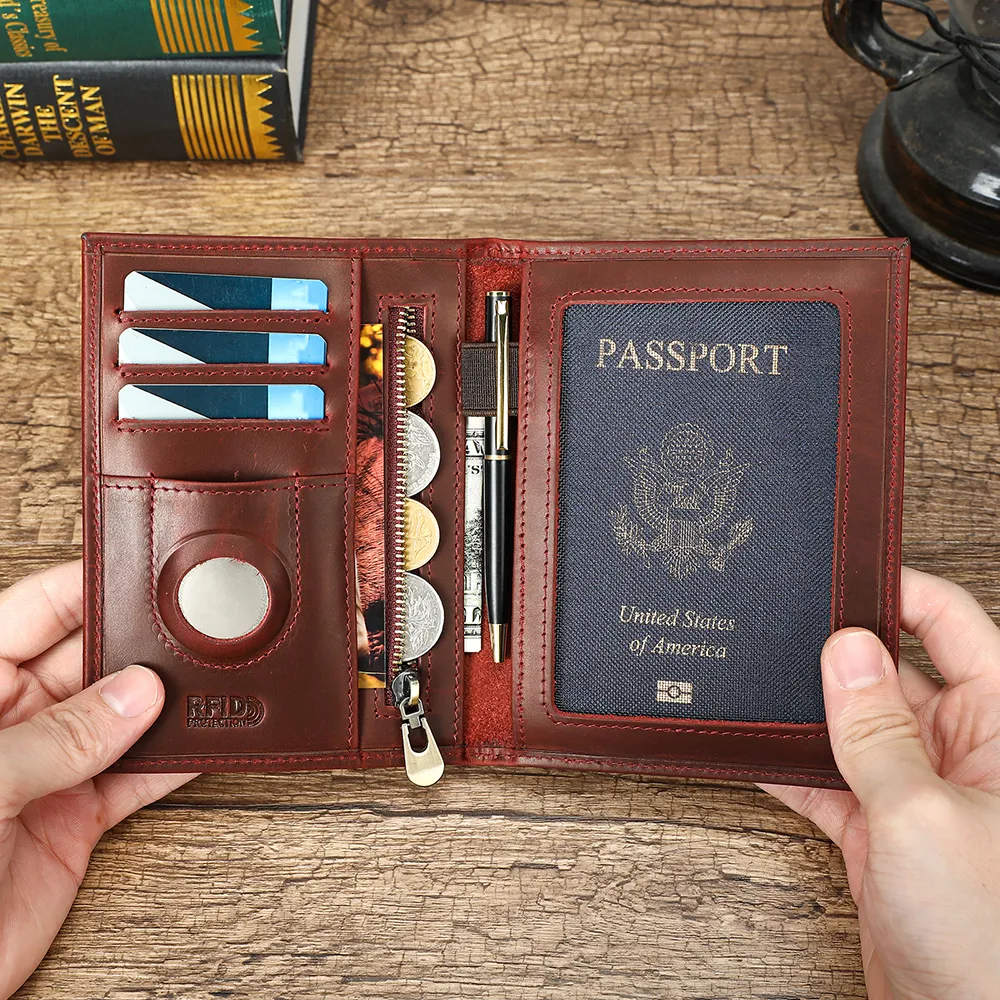
Many buyers use these terms interchangeably during initial sourcing, but they serve different functional priorities. A leather travel passport holder is usually built around one single passport, with very limited additional slots. A full travel document wallet is structured as an organizer, with dedicated space for multiple document types a standard passport holder does not need to accommodate. This distinction directly affects material consumption, pattern making, unit cost and final retail positioning. For an example of the organizer format, see our zipped genuine leather travel wallet.
Which Leather and Construction Suit the Target Market?
Leather selection shapes the entire project. Full-grain leather retains the natural surface grain of the hide, but its performance in daily use still depends on thickness, finish, colour treatment and how the end user handles the product. Crazy Horse leather describes a waxed or oiled pull-up finish and vintage appearance. Buyers should separately confirm the cowhide layer, leather thickness, surface treatment, colour and acceptable batch variation. Other material options exist at different price points, but this guide focuses on genuine leather travel wallet construction. Before approving the material, buyers should verify the leather specification against a written description and physical reference.
What Internal Layout Does the Buyer Need?
Layout decisions are easy to overlook until the first sample arrives. Confirm whether the design requires a dedicated passport slot, full-length bill compartments for mixed currency sizes, hidden pockets for small valuables, or external quick access slots for transit cards. Small differences in slot width can determine whether a passport slides in smoothly or feels too tight in daily use. It is also good practice to verify that all pockets remain functional when the wallet is at its planned maximum fill level.
Is RFID Shielding Required for This Product?
RFID shielding is an optional requirement for some travel retail and corporate gift programs, and not a default feature. If it is specified for the order, buyers should confirm which compartments are protected, the tested frequency range, the position of the shielding material and whether supporting documentation is available for the proposed construction. The feature is not included by default on all leather travel wallet models, so it should be stated clearly in the initial specification rather than assumed.
What Does the MOQ Apply To?
The MOQ for custom travel wallets depends on the style, colour split, leather availability, hardware, branding method and packaging requirements. Buyers should confirm whether the quoted minimum applies per style, per colour or per customisation variant rather than assuming it covers the entire order. Our guide explains how factories calculate MOQ across different production requirements. The final quantity should be confirmed with the factory after the full product specification has been reviewed.
Which Logo and Private-Label Options Are Available?
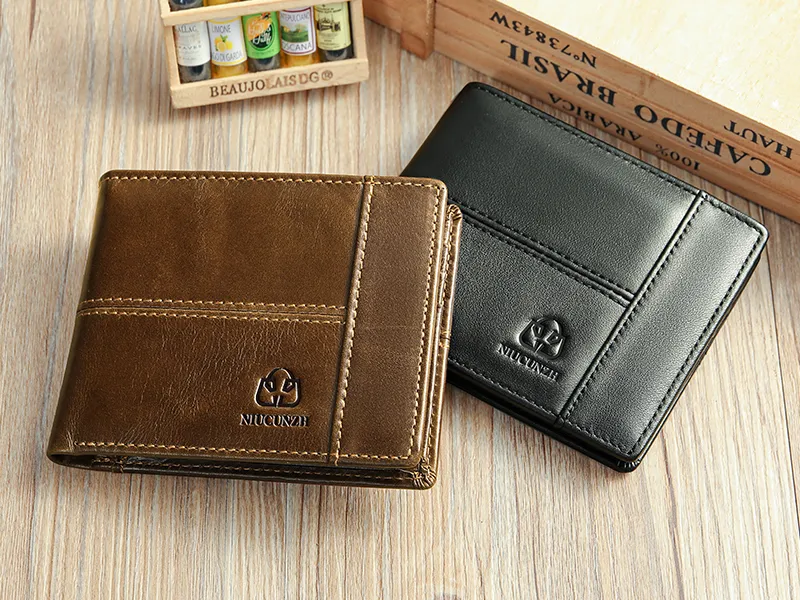
Leather travel wallets support a range of branding methods, including hot stamping, foil stamping, laser engraving, embossing and debossing. The branding method can affect feasibility, suitable placement, setup cost and sample requirements. Record the agreed maximum logo dimensions, available placement areas, logo tooling or setup fees, and whether custom hang tags, inner lining printing or branded packaging can be added alongside the main logo.
What Should Be Confirmed on the Physical Sample?
Buyers should approve a physical pre-production sample before bulk production begins. The final approved sample should reflect the agreed leather, hardware, stitching, dimensions, branding and construction. The sample review should cover dimensions, pocket access, closure, stitching, edge finishing, logo and loaded shape, rather than relying only on 2D design files. Small differences that are invisible on screen become immediately obvious once the physical sample is reviewed. Buyers can use this leather bag sample approval checklist to record material, dimensions, branding, construction and finishing before production.
How Will Bulk Quality Be Checked?
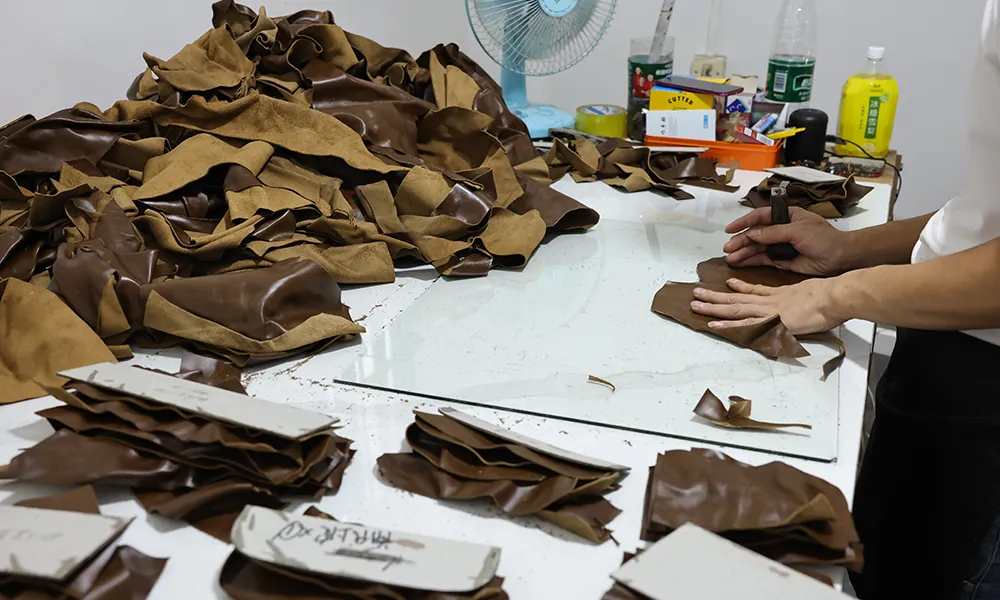
Before shipment, the factory inspects the order against the confirmed sample and specification. Typical checkpoints include stitching consistency, zipper movement, hardware attachment, leather surface, closure alignment, dimensions, branding, and full comparison with the approved sample. Third-party inspection requirements should be agreed before production and included in the order documents. The exact scope of quality checks can be adjusted based on project requirements.
What Production, Shipping and After-Sales Terms Apply?
Bulk production usually takes 15–30 working days after the deposit is received and the final sample is approved. Exact lead time varies based on order volume, leather availability and customisation complexity. Shipping methods, transit times and documentation requirements differ by destination country. Defects originating from the manufacturing process are handled according to the terms agreed in the formal order confirmation. All details including sample fees, allowed revision rounds, any possible sample fee deduction and final delivery schedule should be clarified with the dedicated contact for the specific project. Contact our factory team with the intended style, quantity, colour split and custom requirements for a project-specific quotation.
Frequently Asked Questions
Q1: What is the difference between a travel wallet and a passport holder?
A: A passport holder is built primarily to carry one passport with minimal extra slots, while a travel wallet functions as a full organizer for passports, boarding passes, cash and multiple cards.
Q2: Can leather travel wallets be customized with a logo and internal layout?
A: Yes. Logo methods, embossing and layout modifications are all supported, though final feasibility and minimums depend on the specific style and project scope.
Q3: What should a buyer approve before bulk production?
A: A pre-production sample made with the agreed leather, hardware and pattern, plus written confirmation of all specification details, should be approved before mass production begins.
Conclusion
Buyers should first define product use case, structure, leather grade, customisation scope and sample standards, then confirm all commercial terms with the supplier. This clear alignment allows the factory to issue an accurate quotation and carry every agreed requirement through all stages of bulk production for custom leather travel wallets.