The genuine leather bag manufacturing process consists of multiple precise production stages, from raw material inspection to finished‑product quality control. A durable premium genuine leather bag built for long‑term use goes through at least 8 core manufacturing procedures from raw leather to finished goods. Strict quality control implemented across every production stage ensures reliable durability and premium texture. As Marrant Leather, a professional genuine leather bag manufacturer, we break down real‑world factory production workflows step‑by‑step for our wholesale partners.
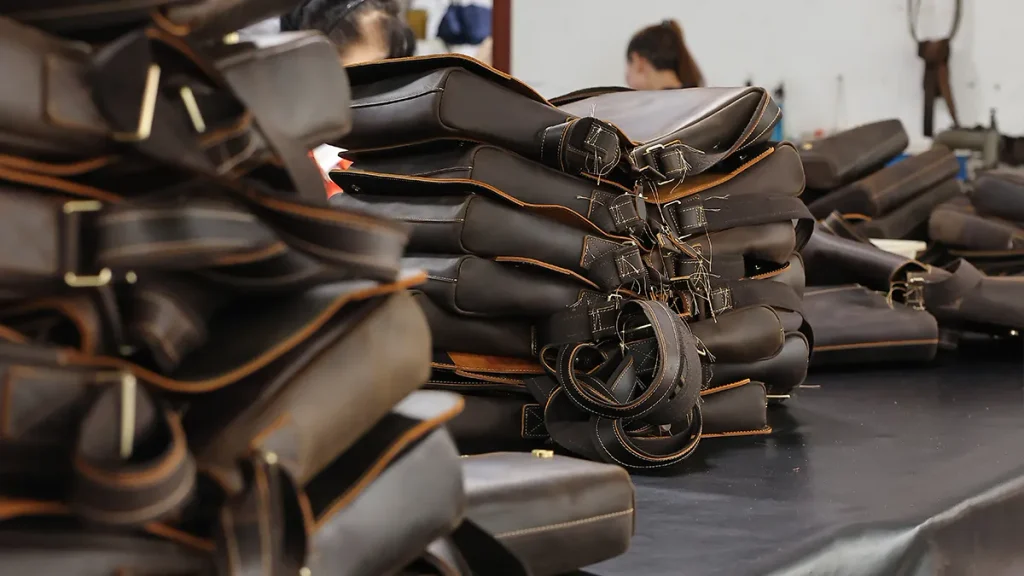
8 Core Manufacturing Steps with Quality Standards
1. Raw Leather Inspection & Cutting
Production begins with 100% full inspection of incoming top‑grain cowhide. Leather hides carrying scars, loose grain or color shading will be rejected. Following design patterns, operators cut large leather hides into individual bag components using CNC cutting machines.
✅ Quality Standard: Leather material utilization rate ≥70%. All leather parts for one finished bag originate from the same hide. No color difference; natural blemishes should not exceed 3 mm.
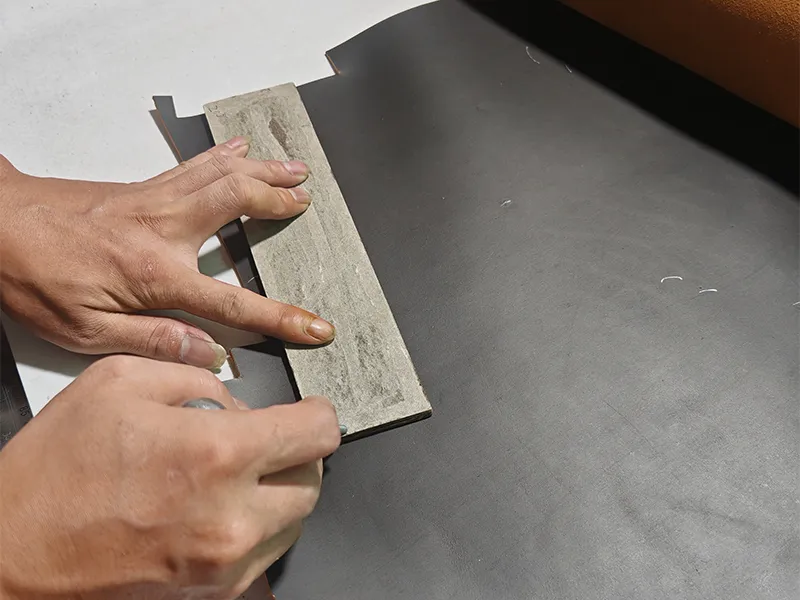
2. Die‑Cutting & Sorting
Processed leather materials are die‑cut into separate components, including bag bodies, side panels, bag bottoms, inner pockets and handles, using custom steel dies. Components are sorted by position and properly marked to prevent color inconsistency during later assembly.
✅ Quality Standard: Clean die‑cut edges without distortion or rough fringes. Dimension tolerance for bulk‑run parts ≤1 mm. No surface damage caused by material stretching.
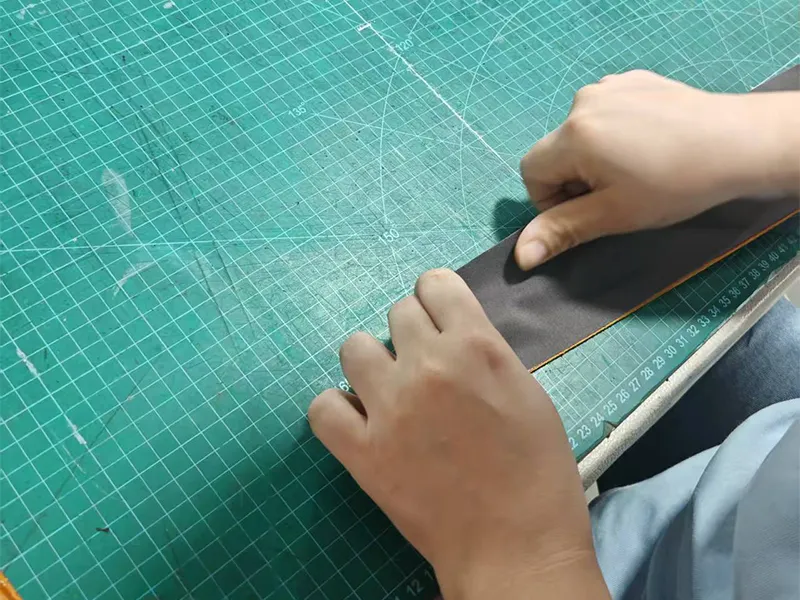
3. Leather Pre‑treatment
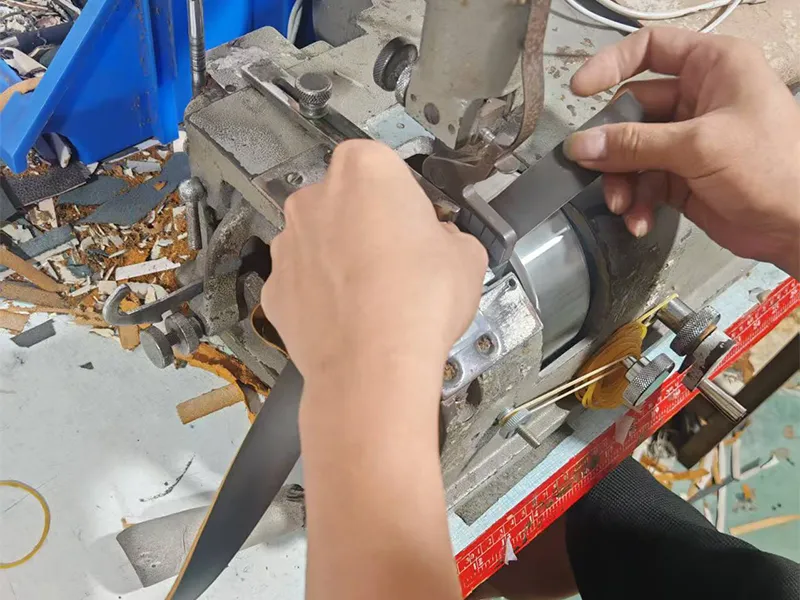
Die‑cut leather pieces go through edge trimming and softening treatment. Reinforcement fabric is bonded to the leather backside to improve structural durability. Embossing and brand logo hot‑stamping are completed at this stage before moving to stitching procedures.
✅ Quality Standard: Reinforcement fabric lies flat without air bubbles. Hot‑stamped logos are sharp and well‑aligned. Logos withstand ≥500 friction cycles without fading or peeling off.
4. Hardware & Accessories Preparation
Hardware fittings such as zippers, buckles, shoulder clasps and rivets are prepared in advance. Each hardware piece is inspected for uniform plating and surface scratches. Pre‑drilled mounting holes avoid accidental leather damage during assembly.
✅ Quality Standard: Hardware passes ≥48‑hour salt spray test to resist rust. Smooth opening‑closing movement without jamming. Plating surface free of scratches and blisters.
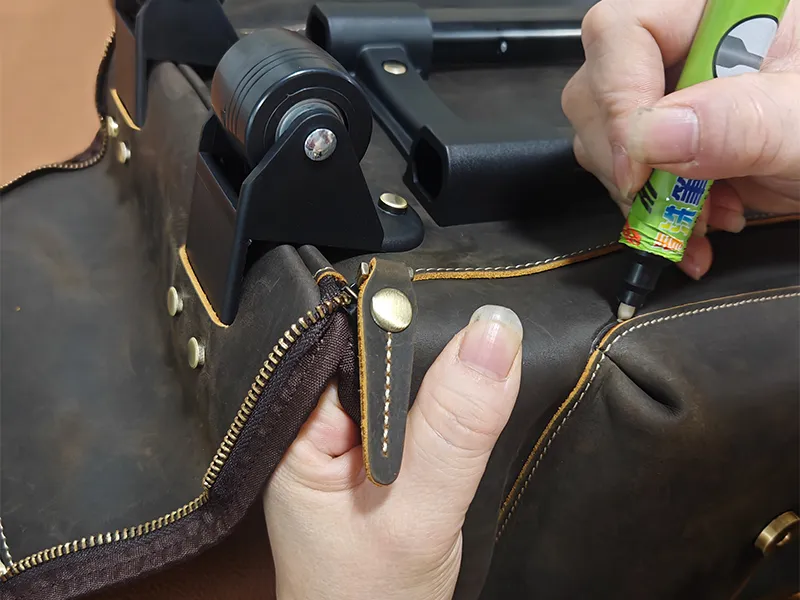
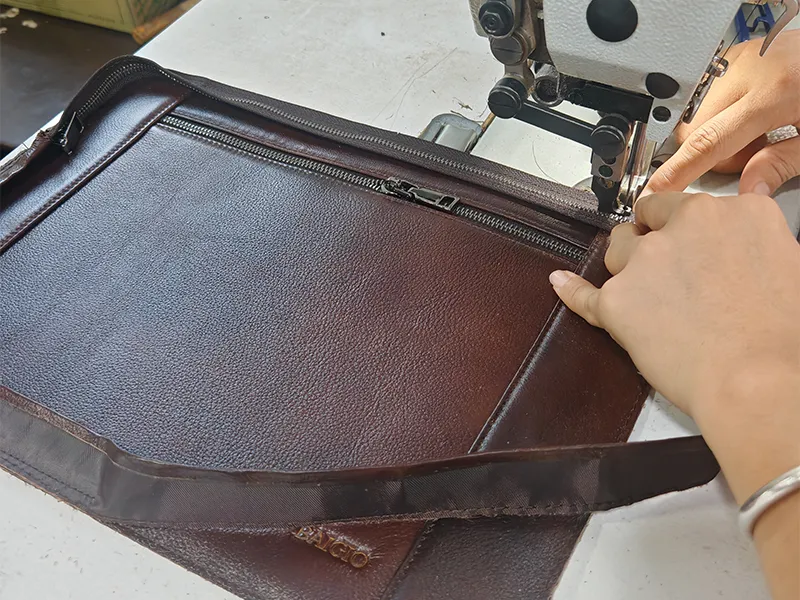
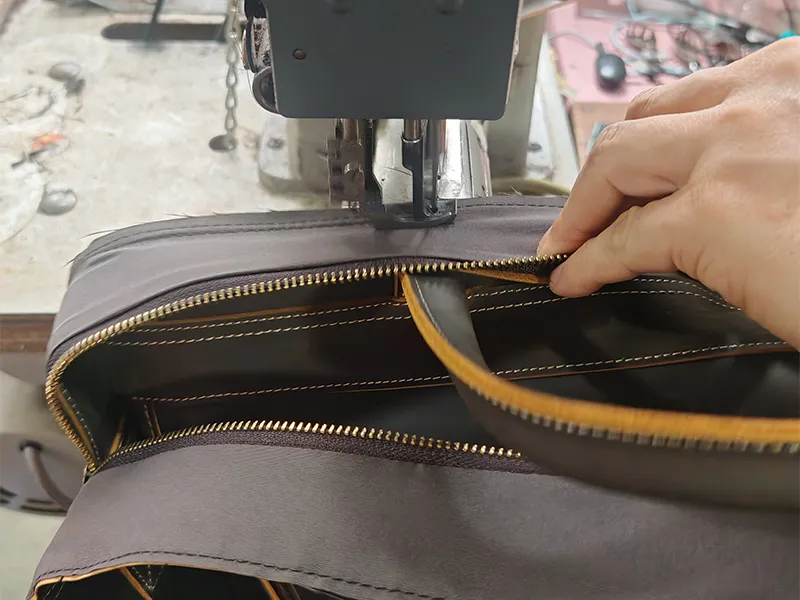
5. Manual Positioning & Machine Stitching
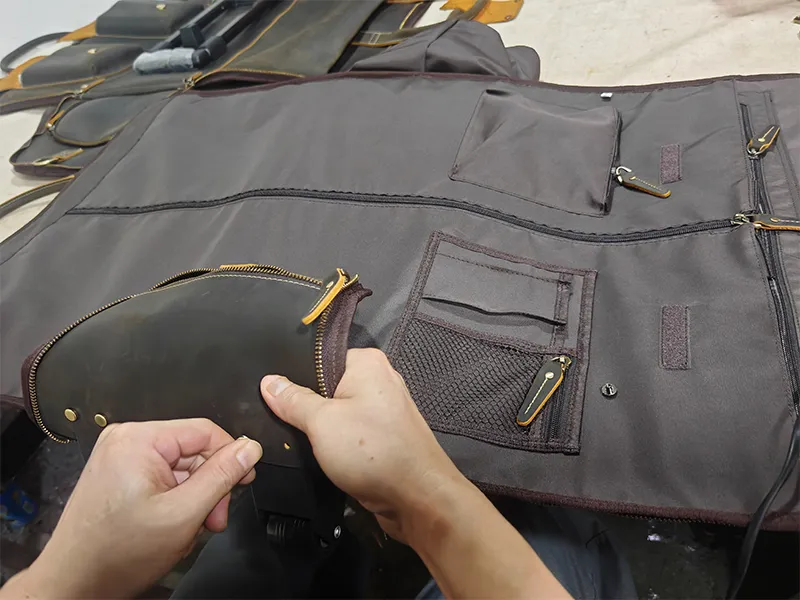
Stress‑bearing sections including handles and bag corners are manually positioned first. High‑performance sewing machines follow standard stitch density requirements. For intricate custom styles, decorative stitching is completed by skilled artisans to deliver consistent, even stitches.
✅ Quality Standard: Stitch density: 8‑9 stitches per inch. No skipped stitches or broken threads. Corner alignment tolerance ≤0.5 mm. Double‑thread reinforcement applied on all load‑bearing sections.
6. Edge‑painting & Shaping
All cut leather edges go through a 3‑coat edge‑painting workflow. After the first coat dries completely, edges are polished with fine sandpaper, followed by second and third paint coats. Repeated polishing creates smooth, long‑wearing edges. Finished bags are placed inside shaping molds for 24 hours to lock stable bag silhouette.
✅ Quality Standard: Smooth edge‑paint finish without bubbles or cracking. No paint chipping after 100 bending cycles. Well‑defined bag shape after molding with no deformation.

7. Cleaning & Preliminary Inspection
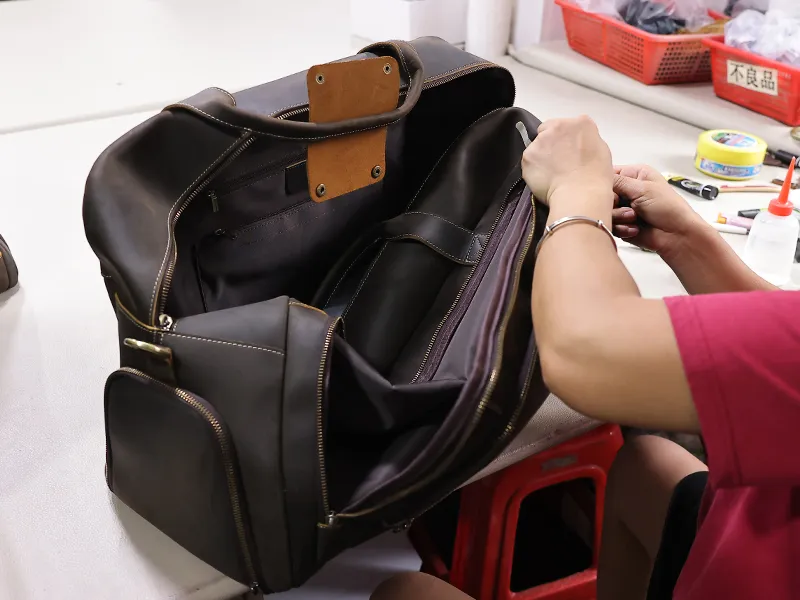
Loose threads and glue residues are thoroughly cleaned away. Inspectors check for surface scratches and color inconsistency, while testing hardware and zipper functionality. Defective products are sent back to corresponding workshops for rework.
✅ Quality Standard: Pre‑inspection pass rate ≥95%. No obvious cosmetic defects. Hardware works properly; zippers remain smooth after 100 pull tests.
8. Final Inspection & Packing
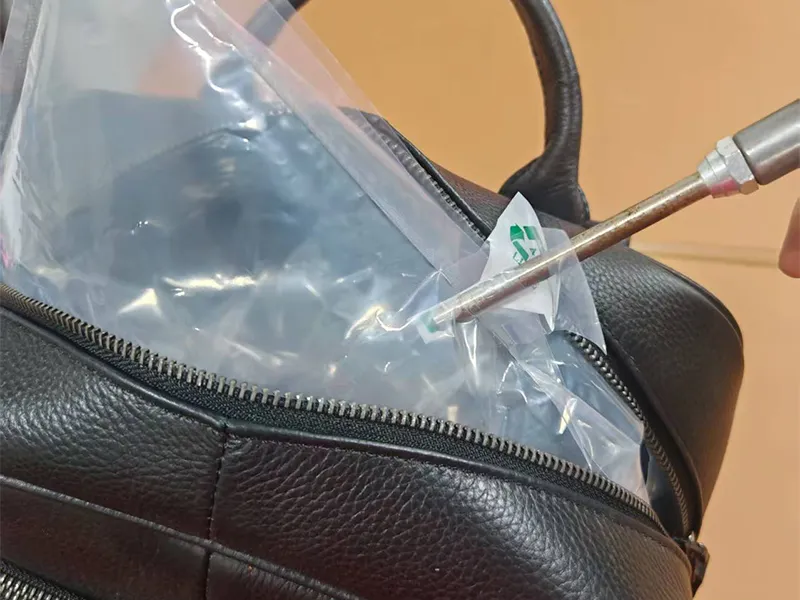
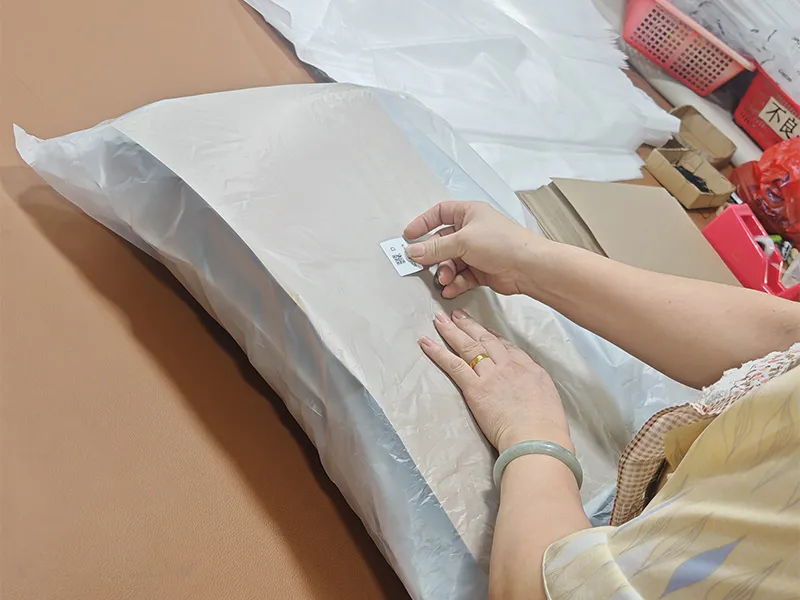
Every single bag undergoes 100% final inspection in accordance with international AQL quality standards. Inspectors check appearance, craftsmanship, hardware performance and perform load‑bearing tests: every bag sustains 10 kg weight for 2 hours with no deformation. Qualified items are equipped with dust bags and care cards before being packed for warehouse storage.
✅ Quality Standard: Final‑inspection pass rate ≥98%. No defects affecting real‑world usage. No stitch breakage or shoulder strap deformation after load‑bearing testing.
Checklist for Quality Control in the Genuine Leather Bag Manufacturing Process
| Process | Inspection Sampling Rule | Acceptance Requirements | Disposal for Non‑conforming Goods |
|---|---|---|---|
| Raw Leather Inspection | 100% full inspection | No obvious blemishes & color difference | Return unqualified leather to supplier |
| Stitching Process | 30% sampling per batch | Even stitches, no skipped stitches | Rework & restitch defective units |
| Edge‑painting Process | 100% full inspection | Smooth edge paint, no cracking | Re‑apply edge paint and re‑polish |
| Final Inspection | 100% full inspection | No cosmetic or functional defects | Rework or scrap non‑conforming products |
Frequently Asked Questions
Q1: What is the normal production lead time for wholesale genuine leather bags?
A: Sample development requires 15‑20 days. Combined sample‑and‑mass‑production orders take 35‑40 days. Wallets and cardholders may be shipped in 7 days if materials are available. Exact lead times are subject to production scheduling and order details. Flexible fast‑turnaround options are available for small‑batch wholesale upon request.
Q2: Why are some handcrafted genuine leather bags more expensive?
A: High‑end handcrafted leather bags require skilled artisans to complete core stitching and edge‑painting work. These items follow stricter quality‑control protocols, and the overall production cycle is 3‑5 times longer than regular mass‑produced bags, which accounts for higher costs.
Q3: What key details should wholesale buyers check to evaluate leather bag craftsmanship?
A: Focus on three critical details:
- Edge‑paint finish: confirm edges are smooth, free of bubbles and cracks.
- Stitching quality: consistent stitch lines, no skipped or broken threads.
- Hardware performance: smooth operation, scratch‑free plating. These details directly reflect a factory’s overall craftsmanship standard.
👉 Discover More Genuine Leather Bags
Content may be reused for non‑commercial purposes with source credit: Marrant Leather Official Site