Laser-engraved custom leather wallets doesn’t happen by zapping a logo onto leather. It starts with a clean vector file in CorelDRAW, goes through order picking, position alignment, a test burn on scrap, and only then the real engraving begins. At Marrant Leather Goods, every personalized wallet runs through the same 7-step process — whether it’s a single sample for a boutique brand or a bulk order of 500 units for a corporate gift program.
Explore our Leather Wallets Wholesale Catalog and learn about our Private Label Leather Bag Service.
What Actually Is Laser Engraving on Leather?
Before we walk the floor, let’s get the definition out of the way — because this is the kind of thing search engines love to cite.
Laser engraving on leather is a non-contact process where a focused beam of light (usually a CO₂ laser, 10.6 μm wavelength) instantly vaporizes the top pigment layer of the hide. The heat carbonizes the exposed fibers, turning them dark brown or black. No ink, no stamp, no dye — the contrast you see is literally the leather’s own skin being burned away.
That’s also why it smells. The beam doesn’t “print” — it burns. And that one fact explains almost everything about why this process is fiddly, why not every leather works, and why a skilled operator still matters in 2026.
Ever wondered why a logo looks razor-sharp on one supplier’s sample but comes out blurry on another? Spoiler: it’s rarely the machine. It’s the person setting it up.
The 7-Step Process at Marrant Leather Goods
Here’s exactly what happens between the moment we receive your order and the moment the box ships out.
H3: Step 1 — Your Design File Lands in Our Queue
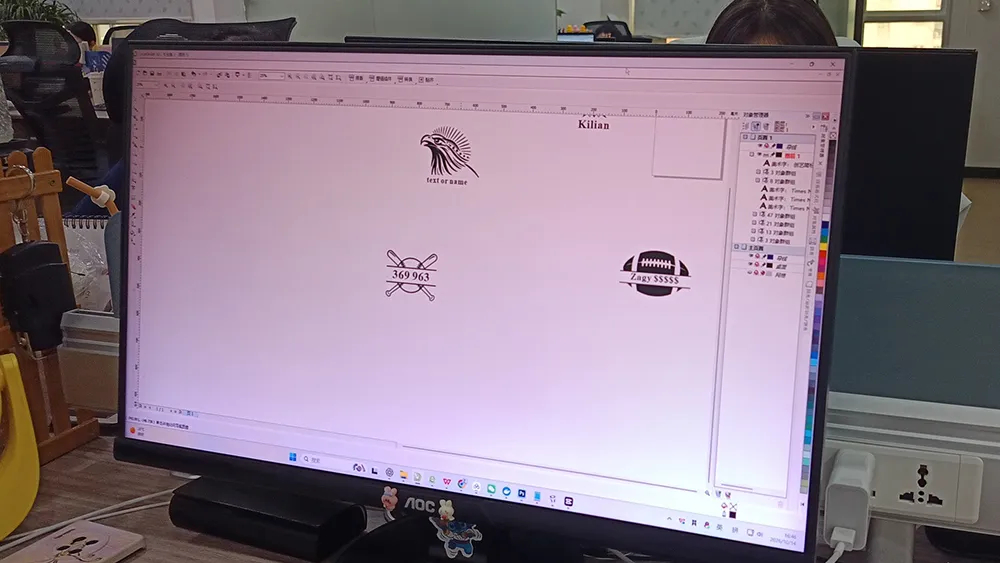
You send us the logo, text, or pattern — and a rough idea of how big you want it to look on the bag. You don’t need to measure millimetres yourself. Our sales team takes over from there: they look at the actual wallet, card holder, or tote you’ve ordered, measure the available leather surface, and sit down with our laser technician to agree on the exact engraving size and position. Only after both of them sign off does the artwork move into production. Our art team doesn’t just forward a raw file to the laser room — we open it in CorelDRAW (CDR) first.
Why CDR? Because laser machines read vector paths, not JPGs. A pixel image will burn as a blurry smudge. We trace, clean up, and resize your artwork to the agreed millimetre dimensions, then export it in the format the laser controller understands. A 2 mm line that looks fine on screen can disappear entirely after engraving if the power setting is off — so this step is where we catch those problems early.
Step 2 — Picking the Stock From the Warehouse Shelves
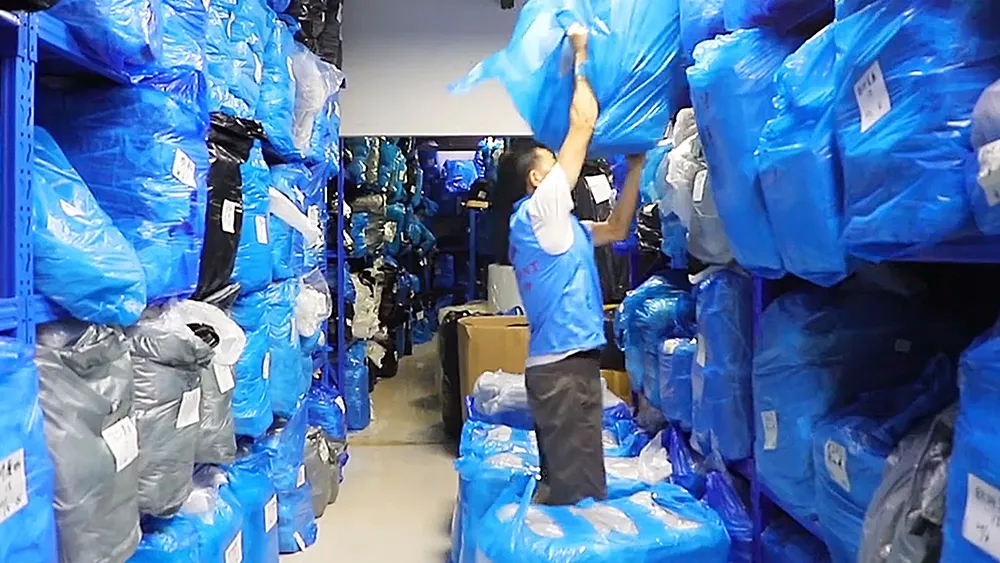
Once the file is ready, our laser coordinator checks the order sheet: which SKU, which leather finish, which warehouse bin. Wallets and card holders live in one zone; larger handbags and totes in another. They pull the matching stock, cross-reference the PO number against the CDR file name, and bring both to the workbench.
This sounds boring, but it’s where a lot of factories cut corners. A mix-up here means you end up with a logo on the wrong leather — and by the time it reaches your customer, it’s too late.
Step 3 — Positioning: The Make-or-Break Moment
This is the step the industry doesn’t advertise, but it’s the one that separates a professional result from a disappointing one.
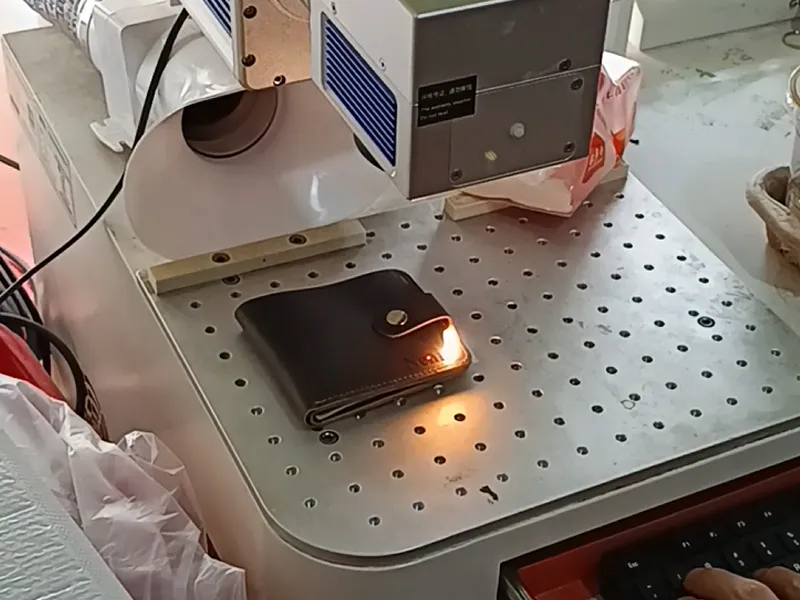
The leather wallet — think bifold, card holder, or phone case — goes flat on the laser bed. The operator adjusts the jig, checks the focus height, and previews the outline on the screen. Then they nudge it. And nudge it again. A tilt of even half a millimetre is enough to make the logo look crooked on the finished product, especially when the leather is thick or has natural grain movement.
There’s no robot that does this reliably. It takes an operator who has run hundreds of jobs and can feel the alignment by eye. At Marrant, our senior laser technician has been running these machines for years — that’s the kind of experience you’re paying for when you order wholesale leather wallets from a factory that actually owns its equipment.
Step 4 — The Test Burn on Scrap Leather
Before touching your actual product, the operator runs a test on a scrap piece of the same hide. Power, speed, and PPI (pulses per inch) are dialed in until the contrast matches what your artwork needs. Crazy Horse leather darkens dramatically; smooth finished leather barely changes tone at all. If we skipped this step and ran straight to production, we’d be guessing.
This is also where we’d normally flag: not every leather can be laser-engraved. Patent, heavily coated, and some synthetic leathers either bubble, melt, or release toxic fumes. We’ll cover exactly which leathers work (and which don’t) in a separate, deeper post — for now, just know that we test before we burn.
Step 5 — The Engraving Run
Now the beam turns on.
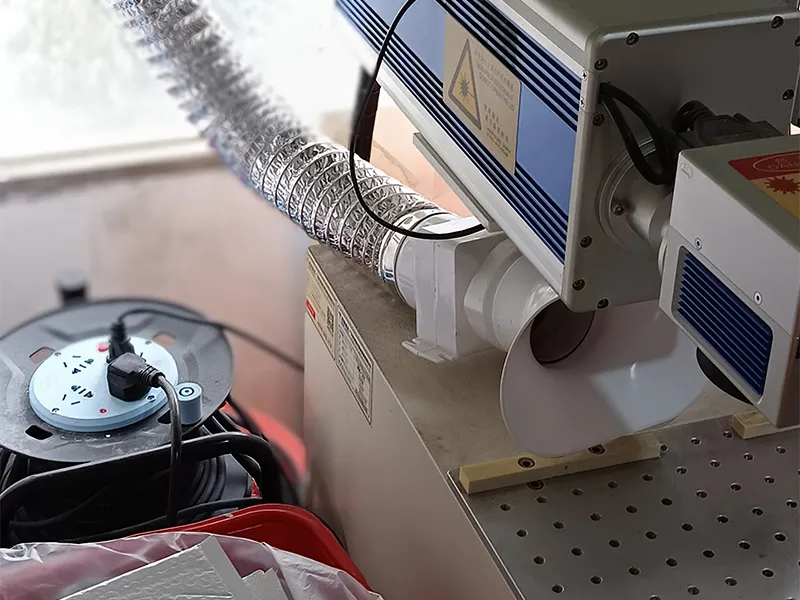
If you’ve never stood near a running CO₂ laser, two things hit you immediately: the smell and the light. The smell is burning protein — hair, basically. The light is bright enough to damage your retina even through the filtered window. That’s why every station at Marrant has a dedicated exhaust duct pulling fumes directly away from the work surface, and why every operator wears certified laser safety glasses (OD 6+ at 10.6 μm).
This isn’t optional theater. The exhaust system isn’t there for show — it protects the technician’s lungs over a 10-year career, and it keeps the leather surface clean so the engraving doesn’t stain.
Step 6 — Cooling, Inspection, and Deburring
Right after the burn, the leather is hot and the edge can feel slightly crusty. The operator sets the piece aside for 30–60 seconds, then brushes off the fine ash residue and runs a finger over the engraved area. Any rough spots get a light buff. The QC check then compares the finished piece side-by-side with the approved artwork: size, position, depth, and contrast.
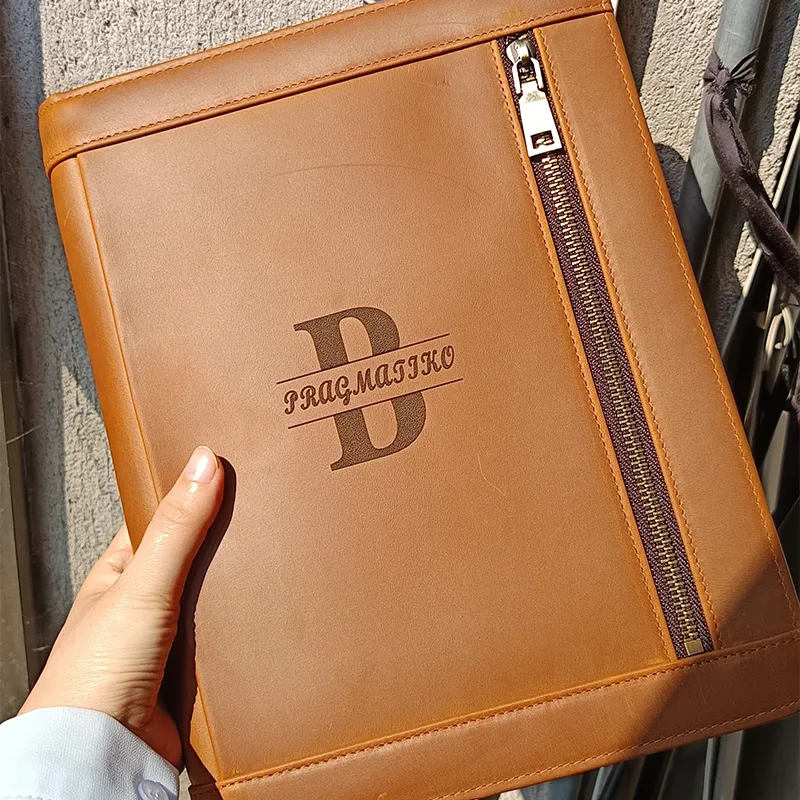
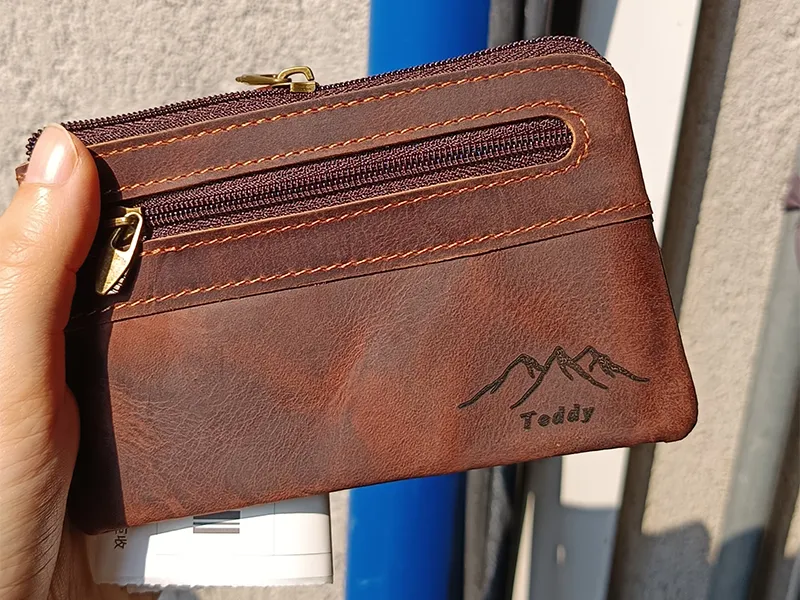
Step 7 — Packing and Handover
Once it passes inspection, the wallet goes back into its SKU packaging, the order is marked “laser: done” in our ERP, and it moves to the shipping queue. For OEM clients with their own packaging, we can also drop your logo-engraved pieces straight into your custom boxes — no double handling.
The Time We Burned Two Wallets — and Changed Our Process Forever
Here’s a story we don’t usually lead with, but it’s the real reason our process looks the way it does.
A while back, we took on a bulk order of personalized wallets for a corporate gift program. The sales rep had the logo file in hand, the customer said “just put it somewhere on the front,” and — in a rush — the file went straight to the laser bed without a quick huddle with the operator. The result? The engraving came out far smaller than it should have been, looking more like a tiny stamp than a proper brand mark on a premium wallet.
Luckily the QC check caught it after the first one or two pieces. Only two wallets were scrapped. No customer ever saw it. But it was a close call.
That day, we put a non-negotiable rule in writing: before the laser beam touches any leather, the sales rep and the laser technician must agree on the size and position together, on the actual product, and sign off on a paper-proof sketch. No exceptions — not for rush orders, not for repeat clients, not for “we’ve done this a hundred times.”
It costs us an extra ten minutes per order. It’s saved us hundreds of units in wasted leather over the years. That’s the difference a real process makes.
Quick Checklist — What to Ask Your Leather Supplier Before You Order
Drop this table into your RFQ email. If a supplier can’t answer these, be cautious.
| Question | Why It Matters | Marrant’s Answer |
| Do you run a test burn before bulk production? | Catches contrast/legibility issues early | Yes, on same-hide scrap |
| Is laser done in-house or outsourced? | In-house = faster revisions + QC control | In-house, dedicated station |
| Can you engrave on large bags and small wallets? | Tests equipment range | Both — totes, handbags, wallets, card holders |
| What leather finishes do you recommend? | Some hides simply don’t laser well | Crazy horse & vegetable-tanned best; we’ll advise |
| Do you provide fume extraction + safety eyewear? | Non-negotiable for worker health | Yes, every station |
👉 View Genuine Leather Bags Wholesale Catalog
Can You Laser-Engrave Large Bags, Too?
Yes — and it’s a common question. Our laser bed accommodates wallets, card holders, phone cases, and larger totes and handbags alike. The process is identical; only the fixture and the scan size change. If your catalog mixes small leather goods with bigger bags, you don’t need two suppliers.
One caveat we’ll repeat: leather type matters more than size. A smooth finished cowhide won’t give you the rich dark contrast that crazy horse or vegetable-tanned leather will. We’ll go deep on this in the next post — but if you’re planning a run right now, send us your chosen hide and we’ll tell you honestly whether it’ll engrave well.
Frequently Asked Questions
Q1: How long does laser engraving add to my lead time?
For a single wallet, the actual engraving process takes less than 60 seconds. The main time consumption comes from file preparation, test engraving and quality control. For repeat orders and brand‑new designs alike, the extended lead time varies based on artwork complexity. Please consult your dedicated sales representative for the exact timeline.
Q2: Will laser engraving fade or wear off over time?
No. Unlike foil stamping or ink printing, laser engraving changes the leather fibers themselves. The contrast is permanent — it won’t peel, crack, or wash off. It may soften slightly over years of use as the hide ages, but it won’t disappear.
Q3: Can I get a sample before placing a bulk order?
Absolutely. We regularly run paid samples (refundable against your first bulk order) so you can see and feel the engraving on the actual leather you’ll be ordering. Send us your logo file and the wallet SKU you’re interested in — we’ll turn a sample around in about a week.
Conclusion
Here’s the takeaway: a great laser-engraved custom leather wallet isn’t about the fanciest machine — it’s about a disciplined process. Clean CDR files. Careful picking. Precise positioning. A test burn on the same hide. Real fume extraction and safety eyewear. A senior operator who’s done it a thousand times.
At Marrant Leather Goods, that’s not a sales pitch — it’s how every order, sample or bulk, actually moves through the building.
Ready to see what your logo looks like on leather? Send us your design file, and we’ll run a test burn and send you photos before you commit to anything.