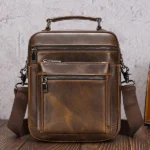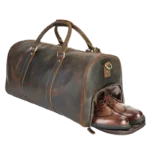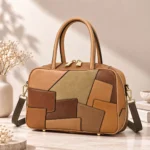
A leather bag OEM specification sheet is the working document that tells a factory exactly what to quote and build: the bag’s identity, dimensions, leather, components, construction, branding, packaging and approval requirements. Before sampling begins, every confirmed choice should be written down and every open choice should be clearly marked. Otherwise, the first sample tests the factory’s assumptions instead of the buyer’s product.
For a wholesale leather bag order, the sheet does not need to be elaborate. It needs clear drawings, numbered callouts, measurements and a bill of materials.
What an OEM specification sheet controls
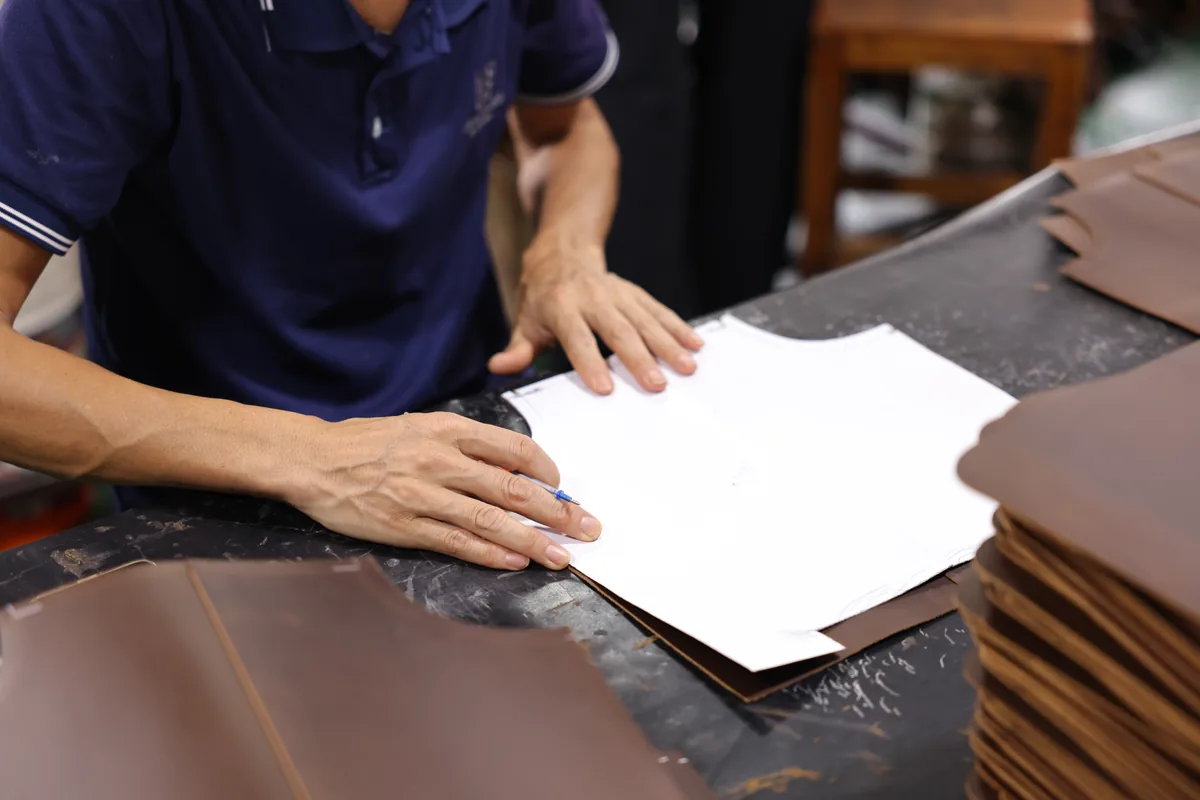
An OEM specification sheet, often included in a larger tech pack, is the shared production reference for one style. It connects quotation, pattern making, sourcing, sampling and inspection. It should carry a style code, revision number and date. The enquiry version records the starting requirements; the approved version should match the sealed sample. Calling three different files “final” is how old instructions return to the workshop.
| Document stage | What it should contain | Decision it supports |
|---|---|---|
| Quotation brief | Product use, drawings, target size, material direction, quantity and branding | Feasibility and comparable pricing |
| Sampling specification | Confirmed dimensions, materials, components, construction notes and open questions | First sample construction |
| Approved production specification | Final measurements, tolerances, approved references, packaging and revision record | Bulk production and inspection |
Marrant develops custom leather bags in China for wholesale buyers, with custom orders starting from 50 pieces. The specification lets our team check whether the leather, hardware and structure can be produced together.
Confirm these eight sections before sampling
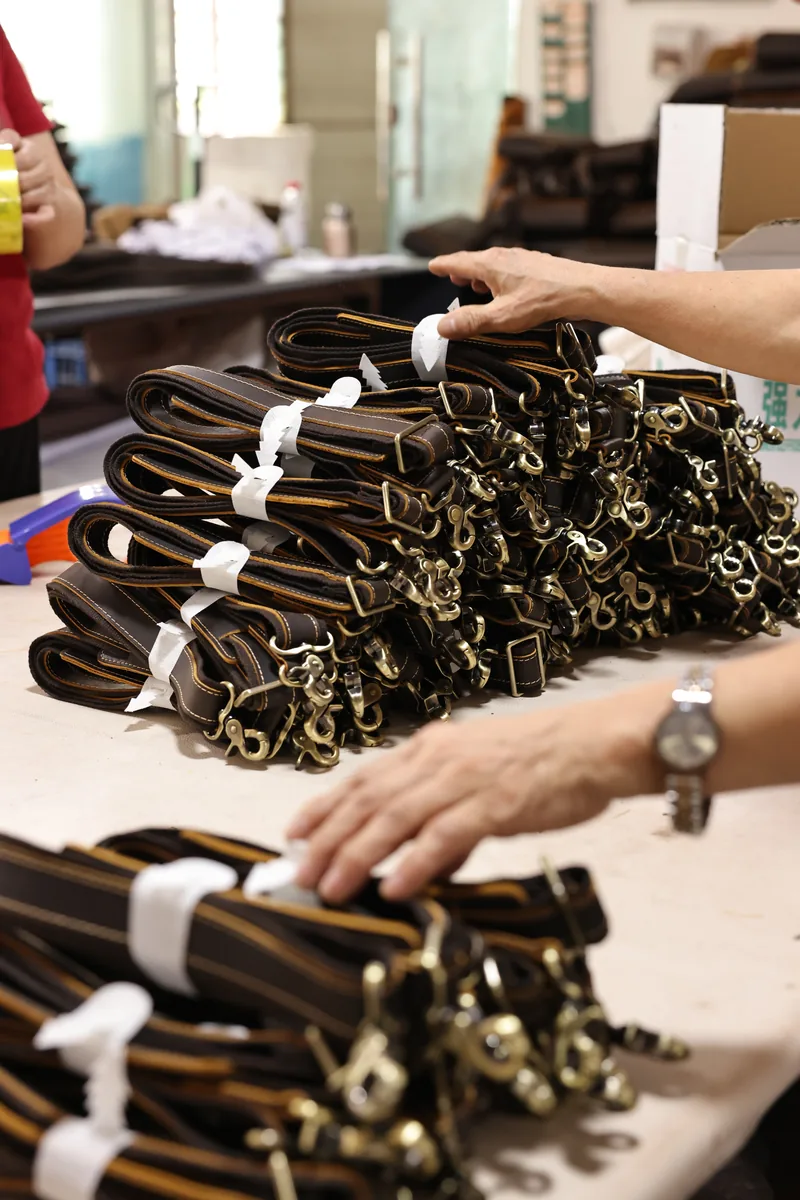
Start with a style code, intended use, quantity by colour and current revision. Then confirm the product itself:
- Drawings and views: show the front, back, side, base and interior; number pockets and detachable parts.
- Measurements: define body size, handle drop, strap range and pocket openings with measurement points and tolerances.
- Leather and lining: record type, finish, colour reference, thickness range and where each material is used.
- Hardware and zippers: list each component by size, quantity, material and finish; mark custom parts separately.
- Construction: identify reinforcement, edge treatment, panel joins and handle attachments.
- Branding: provide vector artwork, finished dimensions, method, colour and measured position.
- Packaging: specify tags, protective materials, bags, barcode responsibility and carton marks.
- Approval criteria: state what the buyer will measure, test or compare on the sample.
A photograph may show the silhouette, but can it reveal leather thickness under a folded edge or reinforcement inside a handle? It cannot.
Write leather and hardware as purchasable specifications
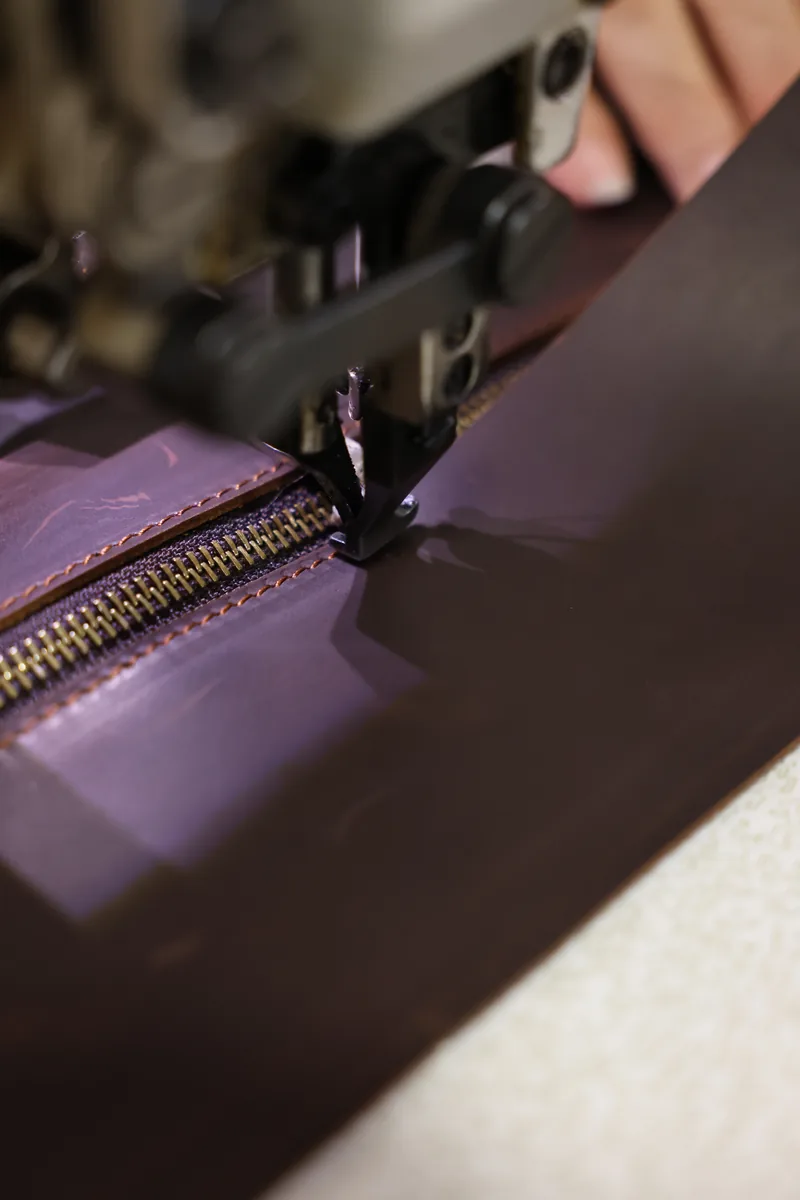
“Brown genuine leather” is not enough for sourcing. The same colour name can describe smooth, waxy or pebbled leather. Connect the written description to a physical swatch or approved supplier reference, then discuss acceptable variation in grain and tone.
Hardware needs the same treatment. Record component size and finish beside an approved sample or photograph. For a custom puller or logo plate, flag its tooling, minimum quantity and approval status before the bag sample is treated as final.
| Vague instruction | Sampling-ready instruction |
|---|---|
| Soft brown leather | Approved brown leather swatch, agreed finish and thickness range; body and handles listed separately |
| Gold zipper | Agreed zipper size, tape colour, tooth finish, puller shape and opening length |
| Strong handle | Handle width and drop, internal reinforcement and attachment method shown in a detail drawing |
| Small logo inside | Artwork revision, finished width, process and measured position on the internal leather label |
Industry talk rarely says this plainly: the factory can help source leather, lining, zippers and fittings, but it still needs the buyer to approve the result. Supplier assistance removes the need to search for every component yourself; it does not remove the need for a written reference.
Turn construction notes into visible sample checks
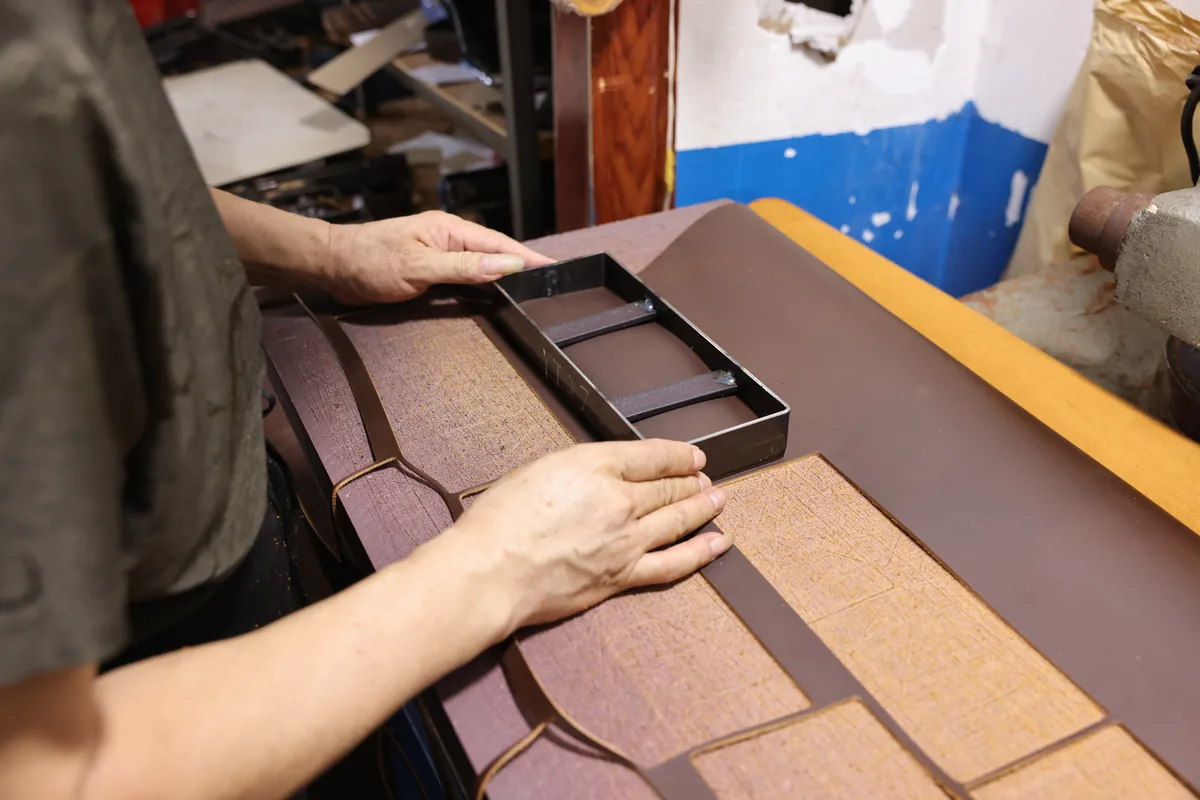
Construction notes should explain what an exterior view cannot show: reinforcement, edge treatment, pocket attachment and seams that must avoid bulk. For a laptop compartment or bottle pocket, specify usable internal space as well as outer dimensions.
During sample review, measure the agreed points, load the handles, open every zipper and check hardware and logo placement. Compare the actual leather and lining with the approved references under normal light.
Record comments against the same callout numbers used in the specification. “Move the pocket up 15 mm” is actionable; “the inside feels wrong” is not. The wider leather bag OEM process explains how these decisions move from development into bulk production.
Freeze the approved version before bulk production
Update the sheet after each sampling round and keep a short revision log: what changed, who approved it and when. Remove superseded instructions instead of leaving contradictory notes on different pages.
Before authorising a wholesale leather bag OEM order, confirm:
- The approved physical sample and specification carry the same style and revision.
- Measurements and tolerances reflect the sample that was accepted.
- Leather, lining, hardware, logo and packaging references are attached or traceable.
- Remaining deviations are written and approved before production.
- Any substitution requires buyer review rather than a silent factory decision.
- Inspection checks use the final specification, not the original enquiry.
The goal is repeatability. A sample proves one bag can be made; a controlled specification helps the team reproduce the agreed bag across the order.
Frequently Asked Questions
Q1: What must be included in a leather bag OEM specification sheet before sampling?
Include the style code and revision, technical views, measurement points and tolerances, leather and lining references, a hardware and zipper list, construction details, logo artwork and placement, packaging instructions, quantity by colour and sample approval checks. Mark unresolved items as open rather than allowing the factory to guess.
Q2: Can a leather bag factory prepare the specification from a sketch or reference sample?
Yes. A capable factory can translate a sketch, reference bag or selected base style into patterns and a working specification, then help source suitable leather and components. The buyer should still confirm the resulting measurements, materials, branding and commercial scope before sampling because the factory’s interpretation becomes the basis of the sample.
Q3: What should buyers freeze after approving an OEM leather bag sample?
Freeze the final measurements, tolerances, bill of materials, construction notes, colour and finish references, logo files, packaging and approved-sample identity. Record any later change as a new revision and obtain approval before it reaches bulk production.
Discuss Your Leather Bag OEM Specification
Conclusion: give the sample room one clear source of truth
A leather bag OEM specification sheet gives the sample team one clear target. Confirm the eight sections, approve physical references and control every revision. Review Marrant’s manufacturing background and contact the factory with a drawing, reference product or tech pack. We can help organise missing production details before sampling.