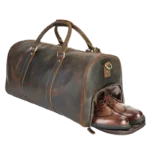
A leather bag factory capacity audit is the most important check you’ll run before placing a bulk order — and it’s also the one most wholesale buyers skip entirely. You’ve done the supplier dance a dozen times: you found a factory on Chinese B2B platform Alibaba, exchanged WhatsApp messages, received a few glossy photos of the showroom, and the sales rep assures you — “Yes, 5,000 pieces in 30 days, no problem.”
Here’s the question nobody asks until it’s too late: Can they actually do it?
A leather bag factory capacity audit is the single most underrated step in wholesale sourcing. Most buyers treat “capacity” as a number on a website. It isn’t. Capacity depends on sewing stations, leather-cutting efficiency, QC bottlenecks, raw material lead times, and whether the factory’s “200 workers” includes 150 people in administration and security.
Skip this audit, and you’ll get what an American brand we worked with got last year: a 2,000-piece backpack order promised in 45 days that arrived in 112. By the time the containers landed, the holiday season was over, and they were sitting on $180,000 of dead inventory.
This isn’t a theoretical checklist. These are the exact 7 capacity checks we run on every wholesale leather bag manufacturer before we let a client place a deposit.
What “Factory Capacity” Actually Means (And Why the Headline Number Is Worthless)
Let’s get one thing straight first. When a factory tells you “we have 300 workers,” that tells you approximately nothing about how many bags they can make per month.
The industry secret nobody tells you: The total headcount on a factory’s website has almost nothing to do with actual production capacity.
Here’s why:
- A 300-person factory might have only 80 sewing operators — the rest are cutting, QC, packaging, management, sales, security, and cafeteria staff.
- Of those 80 sewing operators, maybe 50 are assigned to bag production. The other 30 work on belts, wallets, or other small leather goods.
- And of those 50 bag sewers, how many are experienced enough to handle your specific design? A beginner takes 3x longer on a structured briefcase than a senior sewer with 10 years of experience.
Capacity isn’t headcount. Capacity is how many finished, QC-passed units of your specific product roll off the line per day.
And the only way to know that number is to audit it yourself.
The 7-Point Leather Bag Factory Capacity Audit Checklist
| Audit Dimension | What to Ask | What “Good” Looks Like | Red Flag |
|---|---|---|---|
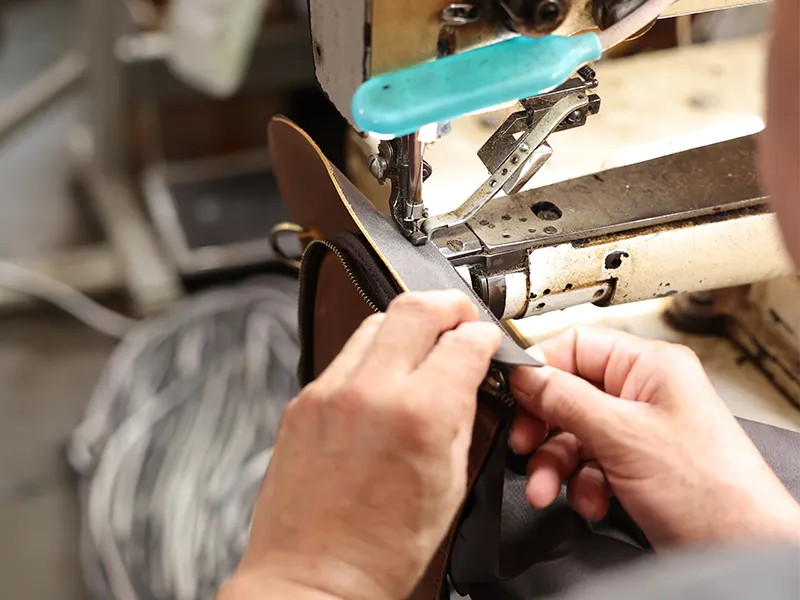
| 1. Sewing Stations (Active) | “How many sewing stations are currently assigned to bag production?” | 20+ dedicated bag-sewing stations, named product lines | “We have 200 workers total” — won’t give you the number |
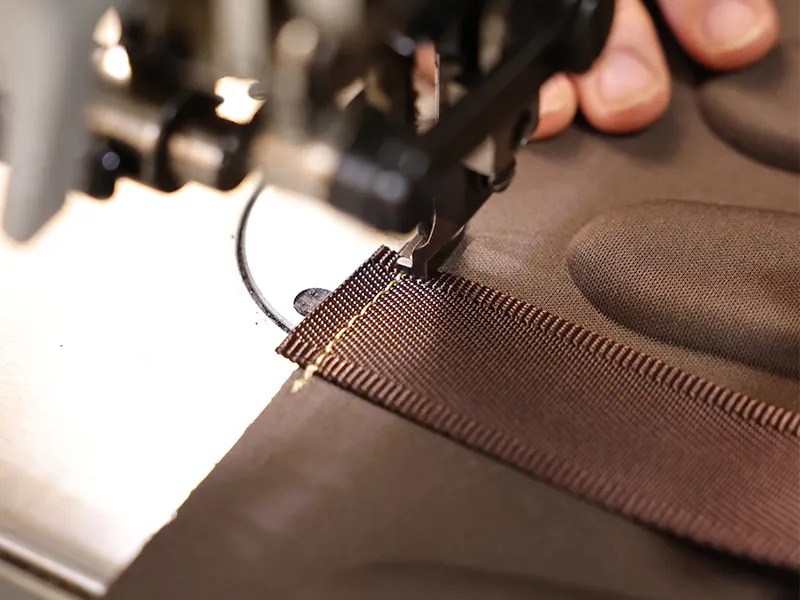
| 2. Daily Output Per Worker | “For a bag like mine, how many can one experienced sewer finish per day?” | 8–12 simple totes / 4–6 backpacks / 2–3 briefcases per day | Vague answers like “it depends” or “we’re very efficient” |
| 3. Cutting Capacity | “How many cutting tables do you have? What’s the daily leather yield?” | 3+ cutting tables, laser or clicker die cutting | Only manual cutting with a single team — bottleneck guaranteed |
| 4. QC Headcount vs. Production | “How many QC inspectors do you have per production line?” | 1 QC per 15–20 sewers, incoming + in-line + final inspection | “All our workers do QC” — means nobody does QC |
| 5. Raw Material Lead Time | “How long does it take to source the leather and hardware for my order?” | 7–14 days standard, 21–30 days custom | “We have everything in stock” — they don’t. Nobody does. |
| 6. Current Order Backlog | “What’s your production schedule look like for the next 60 days?” | Can tell you exactly which lines are free and when you’d start | Hesitation, deflection, or “we can start tomorrow” |
| 7. Subcontractor Usage | “Do you subcontract any part of production? Which steps?” | Clear: maybe packaging or hardware, core sewing in-house | “Everything is in-house” — stated too quickly. Almost certainly lying. |
These 7 dimensions together tell you the real capacity story. A factory that passes all 7 is one you can trust with a bulk leather bag production order. One that fails 3 or more? Walk away.
Check 1: Active Sewing Stations — The Only Number That Matters
Let’s drill into the most important check: active sewing stations dedicated to bag production.
Here’s the math we use. A mid-sized leather bag factory with 28 dedicated bag-sewing stations (this is a real number from our partner factory Marrant in Guangzhou) can produce roughly:
- 28 stations × 9 bags per worker per day (simple tote) = 252 bags per day
- 252 × 22 working days = ~5,500 bags per month
That’s for a simple design. For a structured backpack with multiple compartments, it’s more like 4–5 per worker per day, dropping monthly capacity to ~2,500–3,000.
A factory might tell you “we can do 10,000 pieces a month.” Run the math. 10,000 pieces = ~455 per day = ~50 sewing stations. If they can’t show you 50 active bag-sewing stations on a tour, the number is fiction.
Pro tip: Ask for sewing station count and shift rotations. A factory running one 8-hour shift has half the capacity of one running two shifts — but they’ll rarely volunteer that unprompted.
Check 2: Per-Worker Daily Output — The Speed Test
This is where the rubber meets the road. If you’re ordering 3,000 leather duffel bags and the factory says one worker finishes 15 per day, that’s either a lie or the quality is going to be catastrophic.
Realistic daily output for experienced leather bag sewers in Guangdong:
| Bag Type | Pieces per Worker per Day |
|---|---|
| Simple zip-top tote | 8–12 |
| Basic crossbody bag | 7–10 |
| Backpack (multi-compartment) | 4–6 |
| Structured briefcase | 2–4 |
| Weekend duffel bag | 3–5 |
| Small wallet / pouch | 15–25 |
If their numbers are 50% higher than this table, ask them to prove it. Send your tech pack and say: “Make one sample, time how long it takes, then tell me your daily rate based on actual data.”
Any factory that won’t do a timed sample run for a serious bulk order is not one you want to bet your delivery date on.
Check 3: Cutting Department Capacity — The Hidden Bottleneck
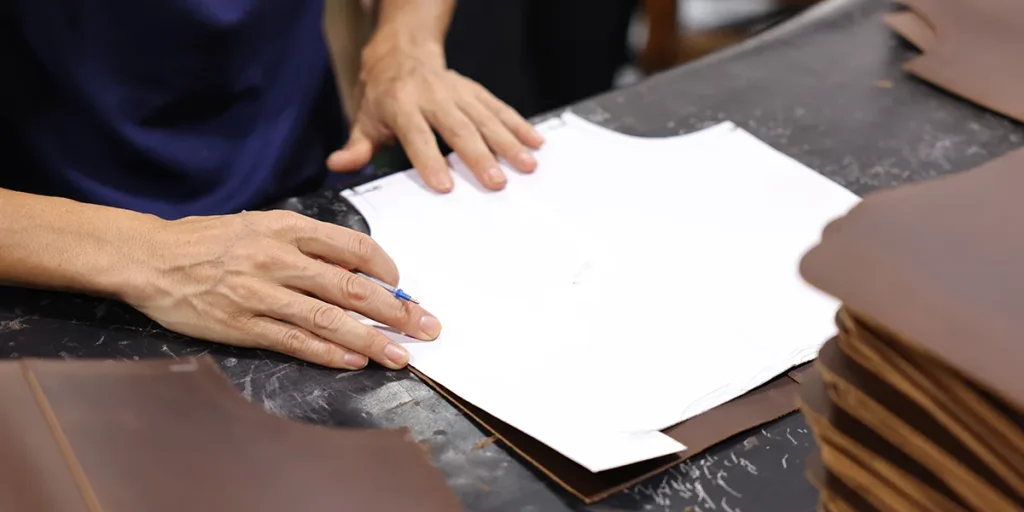
Most buyers never look at the cutting department. They should.
The cutting room is almost always the first bottleneck in leather bag production. Here’s why:
- You can train a new sewer in 2–3 months. You can’t train a master leather cutter in less than 2 years.
- Good leather is expensive. A bad cut wastes $50–$100 of hide. So cutting is slower, more careful, more skilled than sewing.
- Cutting has to batch by color and material. Three leather colors = three separate cutting runs.
When you do your audit, count the cutting tables. A factory with 28 sewing stations but only 2 cutting tables has a problem — those 2 tables can’t feed 28 stations fast enough.
The right ratio is roughly 1 cutting station per 10–12 sewing stations for bag production. Any worse than that, and your order will be waiting for cut pieces instead of being sewn.
Check 4: QC Capacity — Why “Fast” Means Nothing If Half the Order Is Defective
There’s a famous line in sourcing: “You can have it fast, cheap, or good — pick two.”
But here’s what most buyers miss: capacity without QC isn’t real capacity. If a factory can “produce” 5,000 bags a month but 15% fail QC, your actual capacity is 4,250. And the 750 defective ones? They’ll either ship them to you anyway or remake them, pushing your date back.
A proper leather bag factory capacity audit must include QC. What to look for:
- Incoming material inspection — leather checked for grain, thickness, and defects before cutting
- In-line QC — inspectors check work at the stations, not just at the end
- Final inspection — 100% check on stitching, hardware alignment, and finish
- AQL sampling — they should know what AQL 2.5 means and work with your inspector
Big red flag: “Every worker is responsible for their own QC.” Beautiful philosophy, practical disaster. When sewer pay is piece-rate, they have every incentive to go fast and zero incentive to catch their own mistakes.
Check 5: Raw Material Lead Time — The Clock Starts When Materials Arrive
This one trips up even experienced buyers.
You place an order on March 1 with a 45-day lead time. You expect delivery April 15. Here’s what actually happens:
- March 1–14: Factory “processes” your order and sources materials
- March 15: Leather and hardware finally arrive
- March 15 – April 30: Actual production
- May 5: Goods finally ship
That’s 65 days, not 45.
The 45-day clock only starts when all raw materials are in-house and approved.
During your audit, get specific:
- How long to source the specific leather you want? (Italian full-grain veg-tan = 30+ days. Domestic corrected grain = 7–14 days.)
- What about custom hardware? (Zippers, buckles, logo plates — custom dies add 2–3 weeks.)
- Do they have backup suppliers if the first one is delayed?
If you are aiming for a 30‑day turnaround for your order, custom materials should be avoided. Refer to Leather Bag OEM Manufacturer in China: From Specifications to Bulk Orders to review core steps for your OEM production workflow.
Check 6: Current Backlog — “We Can Start Tomorrow” Is a Bad Sign
Think about it. If a factory is genuinely good, they should be busy. Good factories have a 2–6 week backlog, not an empty calendar.
When a sales rep says “we can start production next week,” one of three things is true:
- It’s the slow season (post-Chinese New Year, or summer doldrums)
- They just lost a big client and have empty capacity
- They’re planning to subcontract your order to a smaller factory you’ve never heard of
None are disasters, but you need to know which one it is.
How to verify: ask for their production calendar. Not a vague “we’re about 60% booked” — ask to see which lines are running which orders for the next 60 days. A real factory will have a schedule they can show you (client names blurred, fine — the structure is what matters).
If they can’t or won’t show you the schedule, that’s information too.
Check 7: Subcontractor Usage — Everyone Does It. The Question Is How Much.
Let’s be honest: almost every factory subcontracts something.
Maybe it’s silk-screen printing. Maybe it’s metal hardware plating. Maybe it’s dust bags and packaging. That’s normal and fine — as long as you know about it and core production stays in-house.
What’s not fine: when the factory takes your order and your deposit, then farms the entire thing out to a workshop you’ve never audited with workers you’ve never seen.
During your capacity audit, ask directly: “Which parts of production do you subcontract, and which subcontractors do you use?”
Then verify on the tour. If they say all sewing is in-house but you see finished cut pieces being carried out the back door, that’s your answer.
For more on vetting suppliers and spotting subcontractor red flags, check out our wholesale leather bag supplier comparison guide.
How to Run a Capacity Audit Without Flying to China
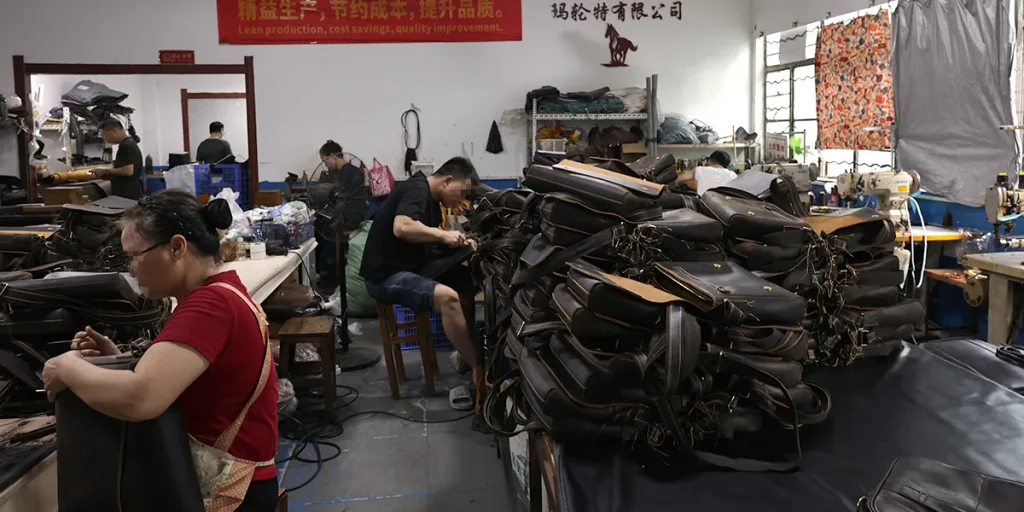
In 2026, you don’t need a 14-hour flight to audit a factory. Three ways to verify capacity remotely:
1. Live Video Factory Tour Ask for a live WhatsApp or Zoom video walkthrough. Tell them you want to see the sewing floor, cutting department, QC area, and material warehouse. A legitimate factory will do this without hesitation. One that makes excuses about “network issues” or “busy production” is hiding something.
2. Third-Party Audit Hire a local QC company — SGS, Bureau Veritas, or a local Guangzhou inspector — to do a factory audit for $200–$500. You’ll get a full report with photos and capacity analysis. Cheap insurance against a bad order.
3. Timed Sample Run Our favorite trick: pay for a sample, but demand exact timing for each step — cutting, sewing, QC. If they say one worker does 10 bags a day but the single sample takes 6 hours, you’ve caught them in a math problem.
Frequently Asked Questions
Q1: How long does a leather bag factory capacity audit take?
A: A thorough audit — video tour, document review, and sample timing — takes about 3–5 working days. With a third-party auditor, plan for 7–10 days total.
Q2: Can I trust the capacity numbers on a factory’s Alibaba or website profile?
A: Not really. Factory profiles on B2B platforms are marketing materials, not audit reports. The “annual production capacity” and “total employees” numbers are almost always inflated. Treat them as a starting point, not as fact.
Q3: What’s the minimum order size where a capacity audit is worth doing?
A: We recommend a formal audit for any order over 500 pieces or $10,000 in value. Below that, a live video tour and timed sample run are usually enough.
Conclusion
A leather bag factory capacity audit isn’t about being paranoid. It’s about respecting your own timeline, budget, and customers enough to verify what you’re told.
The 7 checks boil down to one core idea: Don’t take capacity on faith. Count it. Time it. Prove it.
If you’re sourcing leather bags and want to make sure your manufacturer can actually deliver on time, reach out to our team — we run these audits as part of every wholesale engagement.