A backpack back panel doesn’t make heat on its own. That sticky, warm patch on your shirt after a 20-minute commute? It happens because the bag sits pressed tight against your back the whole time. Air can’t circulate, so all the heat and sweat your body naturally puts off gets trapped right between you and the bag.
A lot of new product teams see mesh on a sample and think “that’s the fix” — but that top layer alone rarely solves the problem. If there’s a full, flat sheet of foam right under that mesh, the whole panel still squishes against your back and locks in all that damp, stale air.
Why Heat Builds Up Behind a Backpack
When you’re rushing to the office, running between client meetings, or hauling a full laptop bag across town, your body warms up and sweats just a little. The backpack covers most of your upper back, blocking the open air that would normally carry that moisture away.
The more you load it down, the harder the bag presses against your shirt. That closes up every tiny gap a breeze could slip through. Sweat can’t evaporate fast, so you end up with that familiar clammy spot on your back by midday. This isn’t a “leather bag problem” specifically. Any big, flat surface pushed firm against your back will trap heat the exact same way.
Three Common Backpack Back Panel Constructions
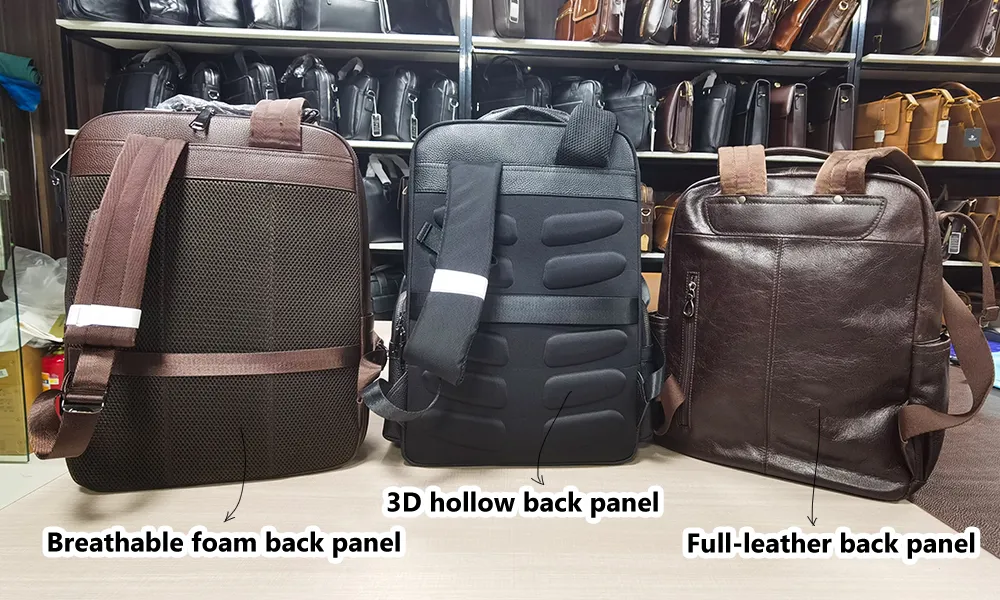
Most leather backpack factories stick to three main back panel setups for everyday work bags. The full leather panel looks clean, matches the rest of the bag perfectly, and is still a go-to for sleek, minimal business styles. The choice of backpack leather affects the appearance of a full leather panel, but the contact layout still matters. The catch is that it’s usually one unbroken, flat surface, so there’s almost no room for air to slide through.
The second option is honeycomb mesh over foam. That 3D mesh feels soft against clothes and wicks a little surface moisture away, but how well it works all comes down to how the foam under it is laid out. A solid, uncut sheet of foam behind the mesh won’t do much for airflow.
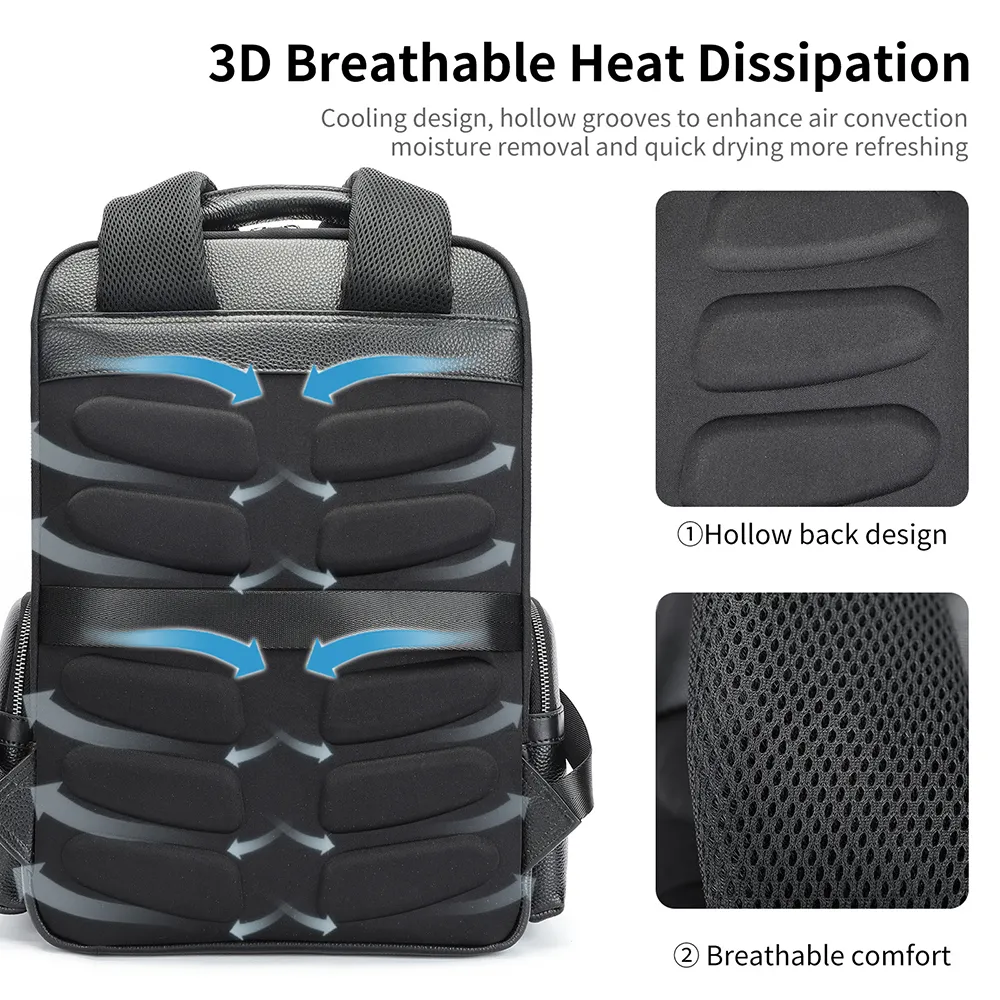
The third setup uses raised padded sections with grooves cut between them. These separate pads touch your back instead of one big flat surface, leaving open little paths for air to move. But these paths only work if they don’t get squashed shut once you stuff the bag full of a laptop, notebooks, and all your usual daily carry.
Why Mesh Alone Is Not Enough
Mesh looks like it should be super breathable, but the material under it decides if air can actually flow through. A leather backpack manufacturer often sees buyers ask for a quick mesh swap thinking that’s the whole fix. Then they get the sample, load it up, and realize the full foam sheet under the mesh squishes flat against their back the second they put any real weight in it.
Mesh does make the surface feel nicer and stops sweat from pooling in one tiny spot, but it can’t create airflow all by itself. If the foam is too thick, too dense, or just one unbroken slab, the bag will still seal right to your back and trap all that warmth. The real improvement comes from mixing a nice surface material with less full-on back contact, and actual empty space for air to move.
The Back Panel Must Still Carry the Load Properly
You don’t want to build a super vented panel that makes the whole bag wobbly and a pain to carry. If the padding is too soft, or cut up too much, the pack will swing around when you walk. That yanks all the weight away from your body and makes even a not-heavy bag feel like a chore to haul around all day.
You also have to watch that those raised padded bits don’t turn into hard pressure points digging into your shoulder blades or spine. The shoulder straps have to work with the back panel, not fight against it. If the foam is too thick, the whole bag sticks out too far from your back and feels bulky for no good reason. Before you lock in a new design, you can check out the Leather Backpack Manufacturer Checks to make sure you’re getting both airflow and stable carry.
Business Backpacks Need a Different Approach from Outdoor Packs
People buying a nice leather work bag don’t need the same extreme ventilation built for all-day hiking or fast bike commutes. Outdoor packs often use suspended mesh, stiff back plates, and big curved frames that hold the whole bag an inch or more away from your back. All those extra parts add weight, cost, and bulk that just doesn’t make sense for a short office commute.
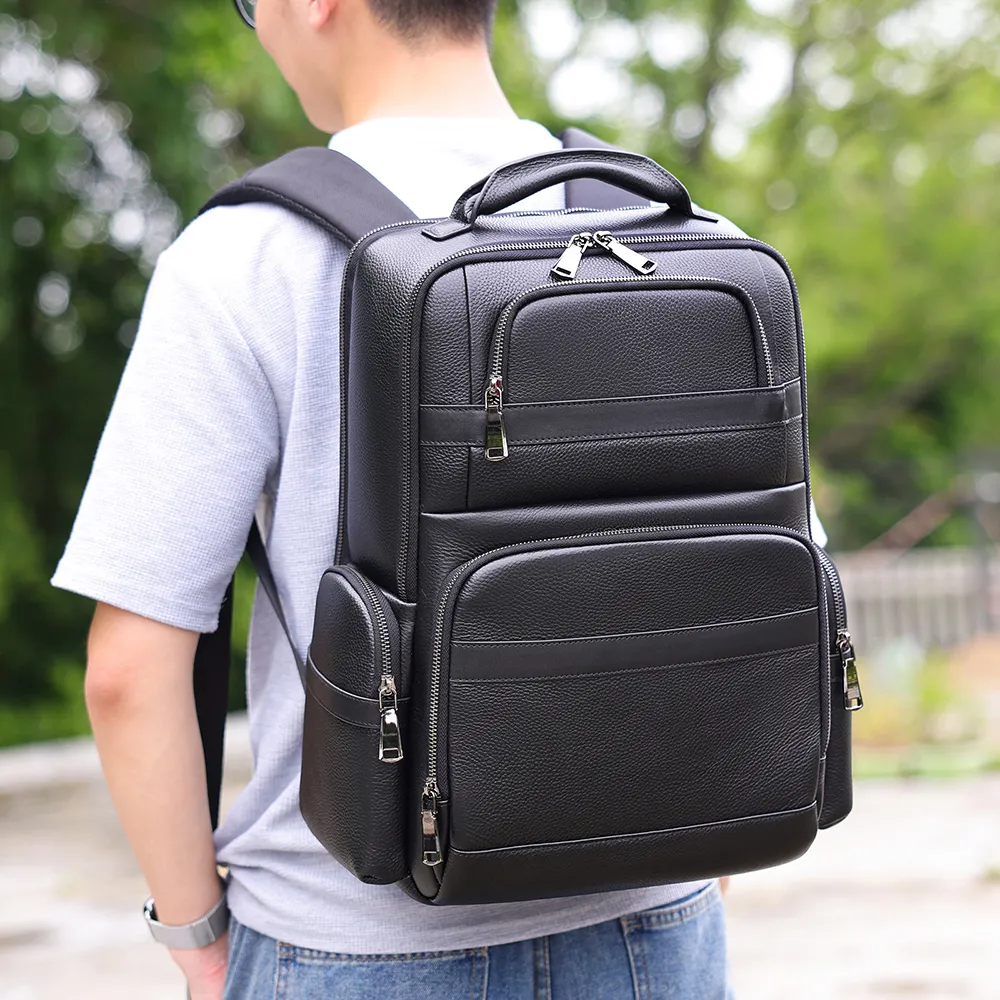
For most custom leather backpacks, the sweet spot is something simpler. You can go with honeycomb mesh over a reasonable thickness of foam, a few separate padded bumps, one central air groove, or even a leather panel with stitched-in lines that break up that full flat contact. A lot of teams also pair smooth leather shoulder straps with a mesh back panel. That way the bag still looks premium on the outside, but feels way less sticky on your commute.
A Practical Back Panel Comparison
| Back panel style | Main characteristic | Practical effect | Main limitation | Suitable direction |
|---|---|---|---|---|
| Full leather panel | Broad leather contact surface | Clean business appearance | Limited space for airflow | Small or business leather backpacks |
| Honeycomb mesh with foam | 3D mesh over soft padding | Softer contact and better moisture handling | Continuous foam may still trap heat | Daily and commuter backpacks |
| Segmented raised pads | Separate padded contact areas | Reduces continuous contact | Pad placement may create pressure points | Commuter and laptop backpacks |
| Recessed ventilation channels | Open paths between padded areas | Leaves room for air movement | Channels may close under load | Medium and larger backpacks |
| Suspended mesh and frame | Holds the pack away from the back | Maintains a larger air gap | Adds bulk, weight and complexity | Hiking and cycling packs |
What Research Can—and Cannot—Tell Buyers
A study from MDPI called A Study of Skin-Close Heat and Moisture with Different Types of Backpacks in Cycling found that back panels with actual air grooves or a steady gap between the bag and your back did a better job keeping the area near your skin cooler and less damp than old-style full-contact panels.
But the test was done with people riding bikes, so those exact results don’t translate straight to every casual daily leather backpack. What it does confirm is simple: if you cut down that big unbroken flat contact area, heat and moisture don’t get trapped as bad. No study proves any backpack panel can make you never sweat at all when you’re moving around.
How Buyers Should Test a Back Panel Sample
Testing an empty panel sitting on a table tells you almost nothing about how it will feel when a real user wears it. First, stuff the sample with the exact stuff people will actually carry: a laptop, a notebook, a water bottle, and all the little odds and ends they toss in their bags for work. Adjust the straps to the normal tightness most people use, then walk around with it for a while.
Check if those air grooves get squashed completely flat under the weight, if the raised pads dig into your back in weird spots, and if the whole bag wobbles around too much when you move. Also look at how the mesh rubs against your shirt, if it starts pilling easily, and if the foam pops back to its normal shape after you set the bag down.
For custom leather backpacks, this step catches all the annoying comfort issues before you run full production. Jot every note down clearly, and use the Leather Bag OEM Specification Sheet to lock in the exact build you signed off on.
What Buyers Should Confirm Before Sampling
A drawing that marks a little air channel on a piece of paper doesn’t mean that channel will still be there once you load the bag up. Before you ask for physical samples, write down every small detail that affects how the panel works. Note down what the bag will mostly be used for, how heavy it usually gets, and the biggest laptop it needs to fit.
Then confirm what material the back panel uses, if the part touching your back is leather or mesh, what kind of foam you’re using, and exactly where every groove goes. You should also note the size of the back panel, how the shoulder straps sit and how much padding they have, what test you’ll run on the sample, and the reference build the factory has to follow.
Make it clear no one can swap out materials without asking you first. For orders moving to bigger runs, this level of clarity saves you from wasting time remaking bulk leather backpacks. You can also flip through the Leather Backpacks Wholesale Catalog to see existing styles that already use these balanced, easy-to-wear panel setups.
Frequently Asked Questions
Q1: If I just pick a breathable mesh, will that stop my backpack from making the back sweat?
Mesh makes the surface feel nicer and spreads sweat out more evenly instead of letting it pool in one spot, but it can’t stop your body from making heat and sweat. The real difference comes from the foam under the mesh, how much of the panel is pressed flat to your back, and if those little air paths stay open when the bag is full. A mesh top over one solid sheet of foam will still trap heat right against you.
Q2: I thought leather back panels are always hotter than mesh ones. Is that actually true?
A flat, full leather panel usually leaves almost no room for air to move, but the surface material isn’t the whole story. Even in a backpack leather backpack design, the surface touching the body does not have to be leather; it may combine leather sections with mesh or segmented padding. A nice partial leather panel with stitched lines that break up the full flat contact can feel way less sticky than a cheap mesh panel glued over a solid slab of foam.
Q3: What’s the most practical check I should run before saying yes to a new back panel sample?
You have to test the panel with the bag fully loaded, straps adjusted to the normal position people actually wear. Walk around with it to feel how much of the panel is pressed flat to your back, if the air grooves stay open under weight, if any raised pads dig in uncomfortably, and if the bag swings around too much when you move. Also check how the mesh rubs against clothes, if the foam bounces back properly after use, and write down all your notes before you say yes. The Leather Bag Sample Approval Checklist is an easy way to make sure you don’t skip these little real-world checks.
If you’re working on new leather backpack designs and want to talk through back panel layouts, how the weight sits, and sample testing before you lock in the final build, you can reach out directly to chat through your project.
Conclusion
A back panel can’t stop your body from making heat and sweat. Good design just cuts down on all that unnecessary full-on flat contact, and leaves tiny spaces for air to move through without making the bag wobbly or unnecessarily bulky.
A fully loaded sample, carried around like a real user would use it, is the easiest practical way to make sure those little air paths don’t get squashed shut and the panel feels right. No design can make you never sweat on a warm day, but small smart choices around how the padding is laid out and where the empty spaces go make a huge difference in how nice the bag feels through a normal workday.