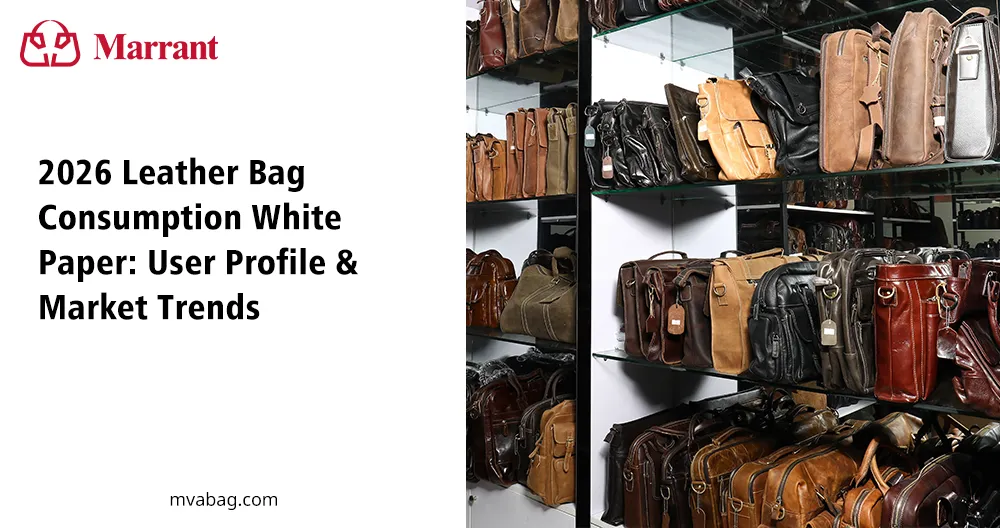
Genuine leather bags are favored by consumers for their durable texture, natural texture and classic aesthetics. However, the leather bag industry is flooded with vague marketing and misleading promotion tactics. Many shoppers spend the budget of high-end genuine leather bags but end up with low-grade, crack-prone and peeling leather products.
This professional genuine leather bag buying guide is designed to help all consumers shop smart and avoid mainstream shopping pitfalls when purchasing leather bags. This guide remains completely neutral and objective, targeting universal industry routines rather than specific brands or merchants. We have sorted out 8 typical genuine leather bag buying scams and actionable judgment standards, clearly distinguishing the differences between high-quality leather and inferior leather bags. Both novice buyers and leather bag enthusiasts can learn how to pick a qualified genuine leather bag and avoid common shopping pitfalls.
Genuine Leather Bag Buying Guide: 8 Common Industry Scams & Practical Avoidance Methods
Scam 1: Confusing Leather Concepts — Labeling Split Leather & Recycled Leather as Pure Genuine Leather
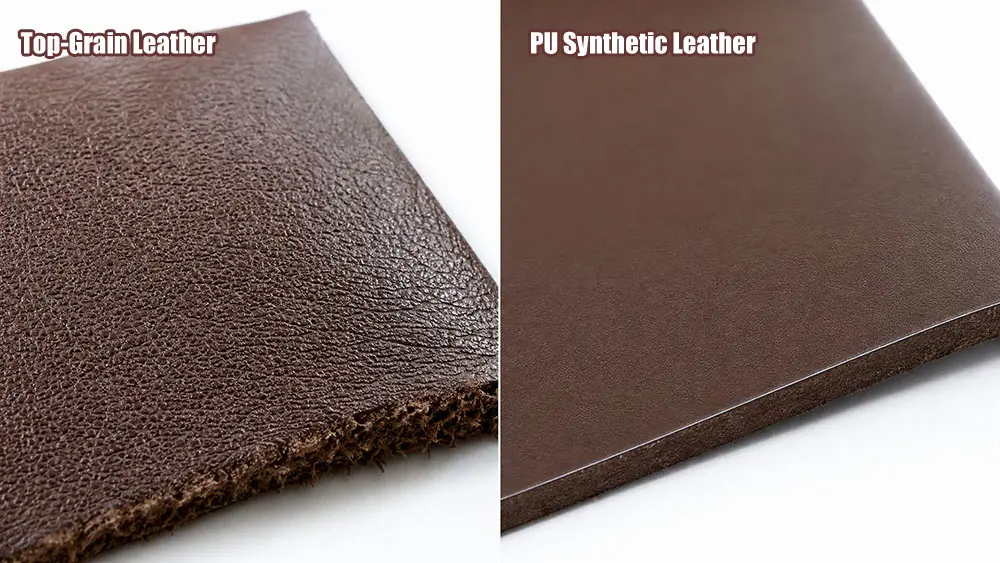
Scam Details: In the industry, split leather and recycled leather are categorized as genuine leather in a broad sense. Many merchants deliberately omit leather grade information and only mark “genuine leather” on product pages or tags, misleading customers into believing they are buying top-grain leather bags. Recycled leather is pressed with crushed leather scraps, with far worse durability and texture than standard top-grain leather.
Anti-scam Judgment Standards
1. Check complete product labels and parameter descriptions. Prioritize products clearly marked with top-grain leather, split leather or recycled leather; avoid products with only the vague “genuine leather” label.
2. Authentic top-grain leather has natural, irregular pores on the surface, while most split leather is covered with a composite film with no original leather pores visible.
Scam 2: Hype of “Imported Leather” Without Disclosing Leather Grade
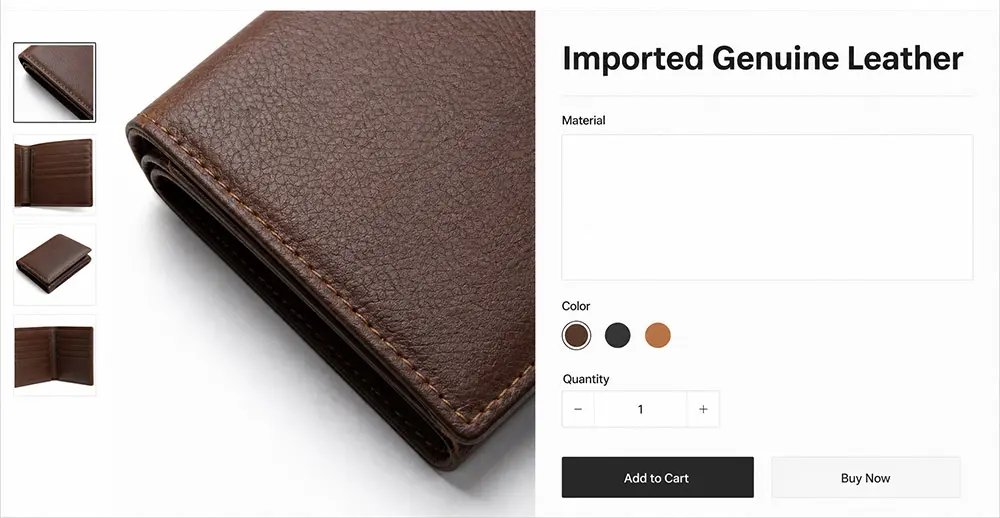
Scam Details: Many sellers heavily promote “imported genuine leather” as a selling point, but do not specify whether it is imported top-grain leather or low-grade imported split leather. The origin of leather does not equal quality, and inferior imported leather still suffers from peeling and cracking problems.
Anti-scam Judgment Standards
1. Never take “imported leather” as the primary buying standard. Leather grade is always the core factor determining bag quality.
2. Confirm the leather grade first, then refer to the leather origin as a secondary reference condition.
Scam 3: Faux Special Leather Craft — Coated PU Imitating Wax Leather & Crazy Horse Leather
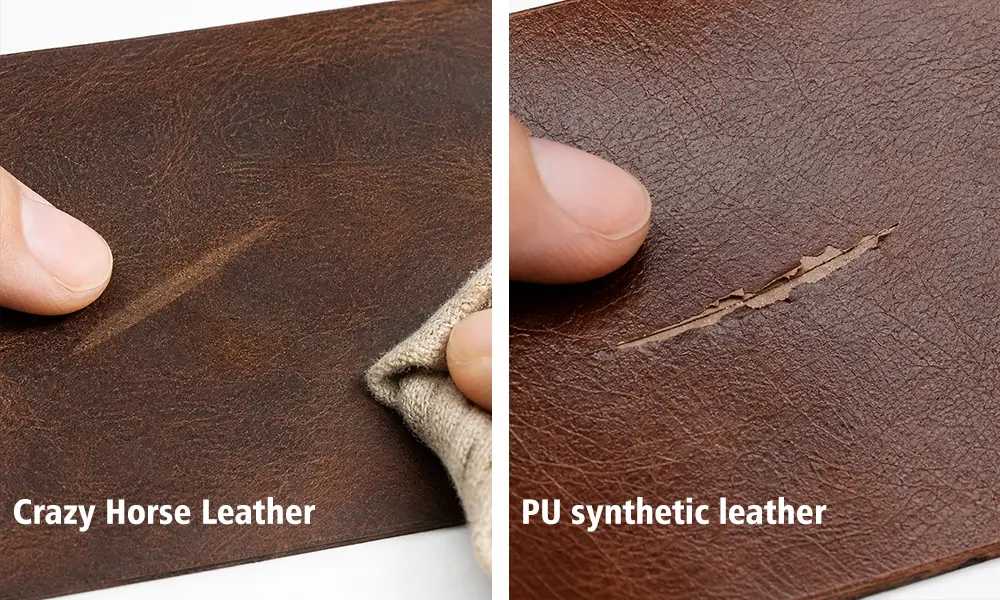
Scam Details: Wax leather and crazy horse leather are high-quality top-grain leather crafts. Unscrupulous merchants use PU coating with pressed simulated textures to counterfeit special genuine leather, selling inferior faux leather bags at the price of craft genuine leather bags.
Anti-scam Judgment Standards
1. Real crazy horse leather produces reversible color-changing scratches when gently scraped, and the scratches fade after wiping; fake leather peels off directly after scraping.
2. Authentic wax leather has irregular natural textures, and no two parts of the leather have exactly the same grain.
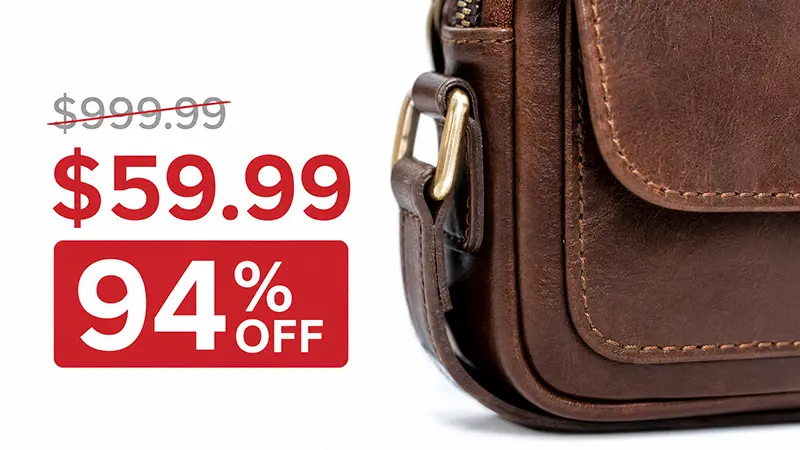
Scam 4: Falsely High Pricing & Fake Discounts to Create High-cost Performance Illusion
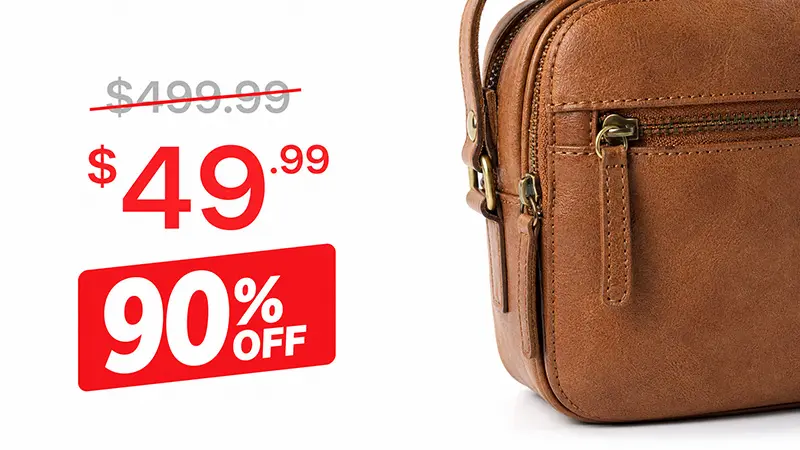
Scam Details: Merchants set artificially high original prices and offer long-term ultra-low discounts, making consumers feel like they are getting a high-quality genuine leather bag at a bargain. In fact, the leather material and overall workmanship of the product are mediocre or inferior.
Anti-scam Judgment Standards
1. Do not judge leather bag quality solely by discount intensity or price reduction range.
2. Evaluate comprehensively based on leather material, hardware accessories, stitching and lining quality instead of preferential policies.
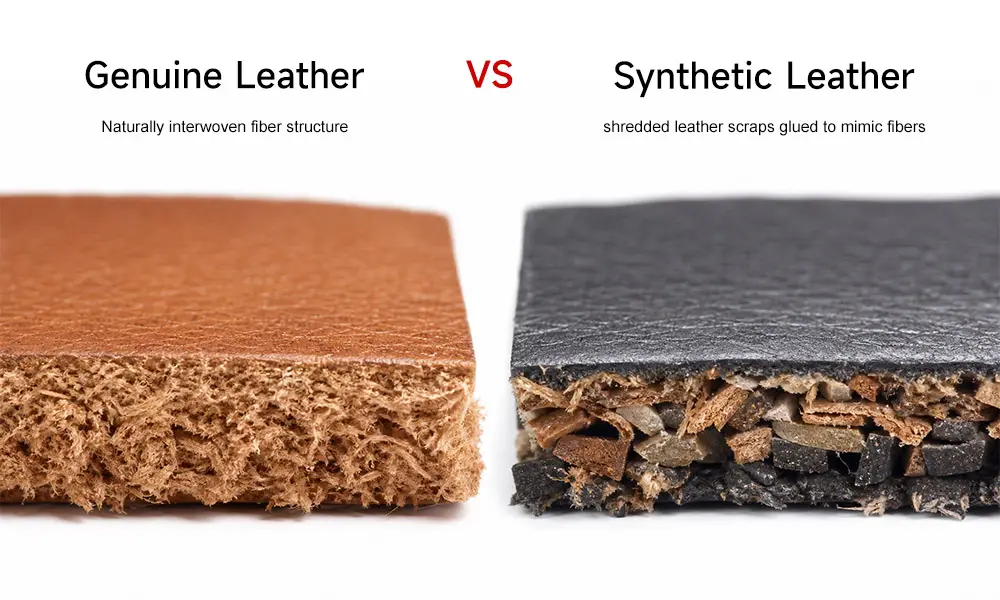
Scam 5: Misjudging Leather by Fiber Bottom — Composite Fake Leather With Artificial Leather Fiber
Scam Details: A common folk judgment method is that bags with leather fiber bottoms are genuine leather. However, modern composite technology allows PU faux leather to be pasted with crushed leather fibers on the bottom, confusing consumers’ basic identification.
Anti-scam Judgment Standards
1. The leather fiber bottom is only a reference condition, not a single standard for identifying genuine leather.
2. Verify comprehensively through leather surface pores, bending texture and leather smell to avoid single-judgment errors.
Scam 6: Inconsistent Sample Leather & Official Bag Material
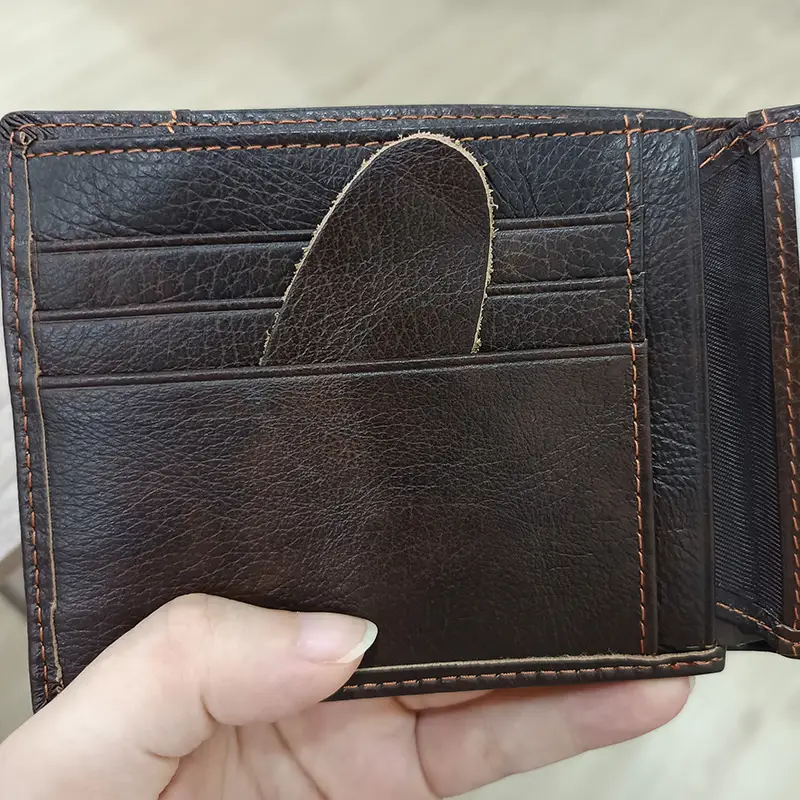
Scam Details: Many online stores provide high-quality top-grain leather samples for customers to check, but the official bags are made of low-grade split leather or composite leather, resulting in inconsistent sample and finished product quality.

Anti-scam Judgment Standards
1. After receiving the bag, compare the texture, feel and pores of the bag body with the provided leather sample.
2. Screenshot and save the product material description page before purchase to verify the actual product parameters.
Scam 7: Covering Inferior Leather Defects With “Natural Leather Flaws” Excuses
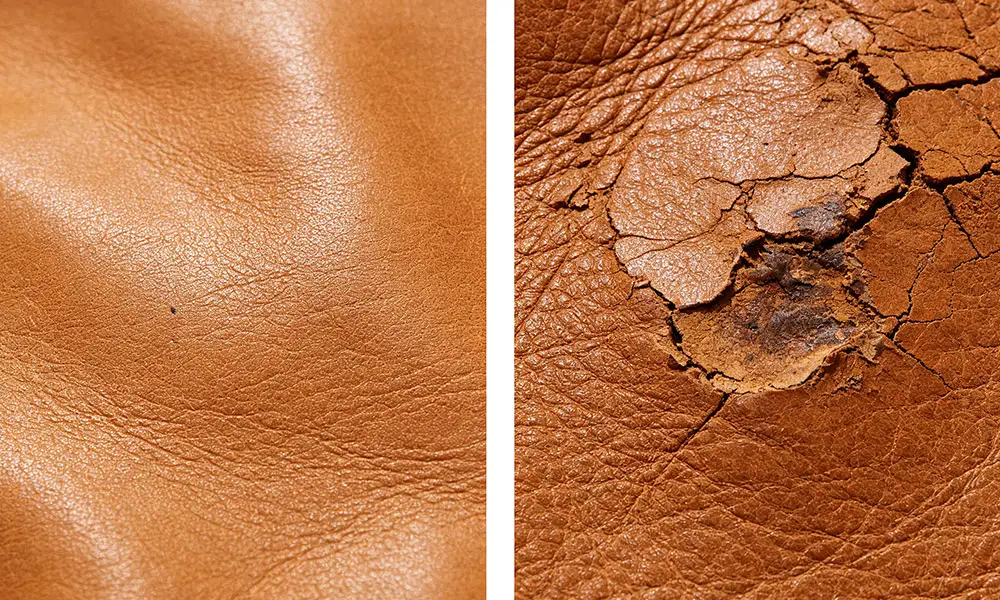
Scam Details: Natural genuine leather has a small number of growth lines and tiny flaws. Merchants take advantage of this to cover up inferior leather problems such as loose leather surface, thick coating, large-area scars and cracking, and mislead consumers into taking defective leather as normal natural leather.
Anti-scam Judgment Standards
1. Scattered tiny growth lines are normal natural features of genuine leather; large-area peeling, loose surface and overly thick coating are inferior quality problems.
2. High-quality genuine leather only has a small number of local minor flaws, without full-body defective textures.
Scam 8: Overemphasizing Leather Material While Ignoring Hardware & Workmanship Defects
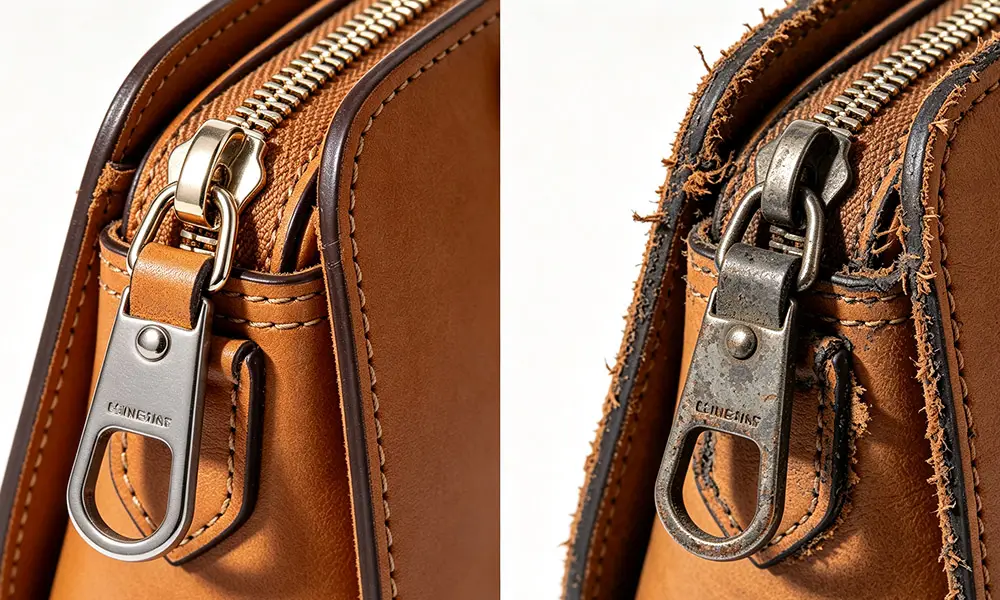
Scam Details: Merchants only promote the advantages of leather material but ignore inferior accessories and rough workmanship. Bags with qualified leather often have easily oxidized hardware, loose stitching and tearable lining, leading to a short service life.
Anti-scam Judgment Standards
1. Leather material is only one part of leather bag quality. Hardware, stitching, edge wrapping and lining must be inspected synchronously.
2. Qualified high-quality leather bags have uniform hardware plating, neat and dense stitching, and flat edge wrapping without burrs.
👉 Learn How to Identify Genuine Leather Bags
High-Quality Leather Bags VS Low-Grade Leather Bags: Core Difference Comparison Table
| Comparison Dimension | High-Quality Genuine Leather Bags (Top-Grain Leather) | Low-Grade Leather Bags (Coated Split Leather/Recycled Leather/Composite Leather) |
|---|---|---|
| Leather Pores | Natural and irregular pores with uneven distribution, no regular and repetitive arrangement | No visible original leather pores; covered by thick coating with fully mechanical and unified textures |
| Bending Performance | Natural soft wrinkles after bending, slow rebound after releasing, no white cracks or peeling | Surface whitening and cracking after bending, coating peeling off after repeated bending |
| Odor Feature | Light natural leather smell, no pungent chemical odor | Strong plastic smell and pungent chemical fragrance, almost no natural leather odor |
| Leather Texture | Random natural grain, no two leather parts are exactly the same, with a small number of natural growth lines | Highly unified and repetitive texture, lacking the randomness of natural leather |
| Durability | No peeling or cracking in daily use, forms unique natural patina over time | Coatings crack and peel in short-term use, especially damaged at corners and edges |
| Label Marking | Complete and clear marks of leather grade (top-grain cowhide/split cowhide) with detailed material parameters | Only marked with vague “genuine leather”, no specific grade and material explanation |
| Workmanship Details | Smooth edge wrapping, uniform stitching, anti-oxidation hardware, thick and wear-resistant lining | Rough edge wrapping, skipped stitches, easy-to-fade hardware, thin and fragile lining |
7 Universal Genuine Leather Bag Buying Standards (Suitable for Online & Offline Shopping)
1. Check Material Label: Reject vague single “genuine leather” marks. Prioritize products with clear leather grade labels such as top-grain leather.
2. Observe Leather Surface: Identify natural irregular pores and random textures; be wary of leather with overly thick coating covering original leather features.
3. Soft Bending Test: Gently bend the bag edge to check for surface whitening and cracking, judge coating firmness and leather toughness.
4. Smell the Odor: Qualified genuine leather has a faint natural leather smell; pungent plastic and chemical odors indicate inferior processed leather.
5. Inspect Overall Workmanship: comprehensively check stitching, edge wrapping, hardware and lining, as workmanship determines the overall service life of the leather bag.
6. Rationally View Marketing Concepts: Imported leather, wax leather and crazy horse leather are only craftsmanship or origin descriptions, not synonyms for high quality.
7. Comprehensive Multi-dimensional Judgment: Do not identify leather quality through a single feature; cross-verify with pores, texture, odor and workmanship to avoid misjudgment.
Frequently Asked Questions
Q1: Does “genuine leather” mean top-grain leather?
A: No. In the leather industry, genuine leather is a broad concept covering top-grain leather, split leather and recycled leather. The single mark of “genuine leather” cannot prove it is high-quality top-grain leather. Always check the specific leather grade before buying.
Q2: Are split leather bags worth buying?
A: Split leather is not inferior leather. It is a cost-effective choice for daily use. Its texture and durability are lower than top-grain leather due to surface coating treatment. Consumers only need to avoid paying the premium price of top-grain leather for split leather products.
Q3: Does a strange smell mean the leather bag is low-grade?
A: Not exactly. New genuine leather bags have a faint natural leather odor, which is normal. If the bag emits strong plastic, chemical or artificial fragrance, it adopts heavy chemical coating treatment and belongs to inferior leather products.
Q4: How to quickly identify a problematic genuine leather bag after online purchase?
A: First, check whether the physical label is consistent with the product page description. Second, observe leather pores and surface texture. Third, bend the edge to test toughness. Fourth, smell the leather odor and check hardware and stitching quality. Keep purchase screenshots as proof.
Q5: Are small scars on genuine leather bags quality defects?
A: Tiny scattered growth lines and minor scars are natural features of animal leather and do not affect quality. Large-area loose leather, cracking and full-body scars are typical inferior quality problems.
Q6: Do expensive leather bags always have better leather quality?
A: No. Leather bag prices include brand premium, design cost, marketing cost and craftsmanship cost. High-priced products also have marketing routines. Always judge quality by objective leather standards rather than price.
Need custom OEM leather bags in top‑grain material? Reach out to us to receive your factory‑direct wholesale quotation and price list.

Conclusion
The core of genuine leather bag shopping avoidance is to get rid of misleading marketing routines and rely on objective and professional judgment standards. By distinguishing the essential differences between high-quality genuine leather and low-grade leather materials, mastering the 8 common industry scams and universal buying rules, consumers can accurately identify qualified leather bags. Whether shopping online or in physical stores, you can easily choose durable, high-texture genuine leather bags and avoid all common buying pitfalls.