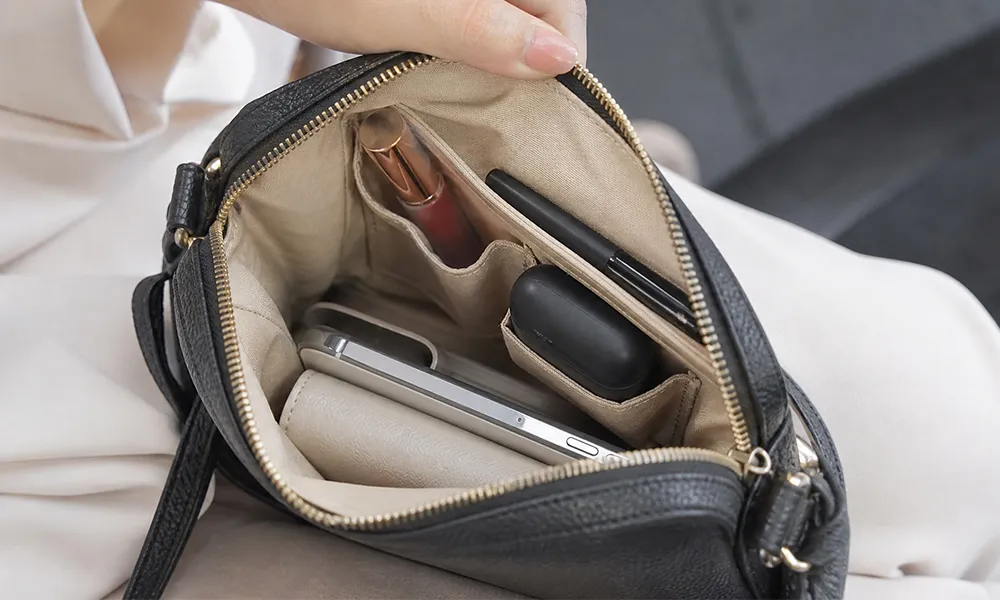
Handbag lining color sets the first impression a customer forms when opening the bag. It affects how easily the customer finds a lipstick, an eyebrow pencil or a wireless earbud case, and it makes stains obvious or easy to overlook. It should also work with the outer leather and make the interior feel deliberate rather than generic. For wholesale buyers, it is not a small detail to leave to the factory; it belongs in product planning, everyday use and sample approval.
Why Customers Notice the Interior So Quickly
When customers inspect a handbag, they usually do more than glance at the lining. They open the zip pocket, reach into the corners and check whether small items can be seen without emptying the bag. That short interaction often says more about the interior than a color name on a specification sheet. The lining also needs to sit naturally with the outer leather, the zipper tape and the inner pockets, not just match a swatch.
Light and Dark Linings Solve Different Problems
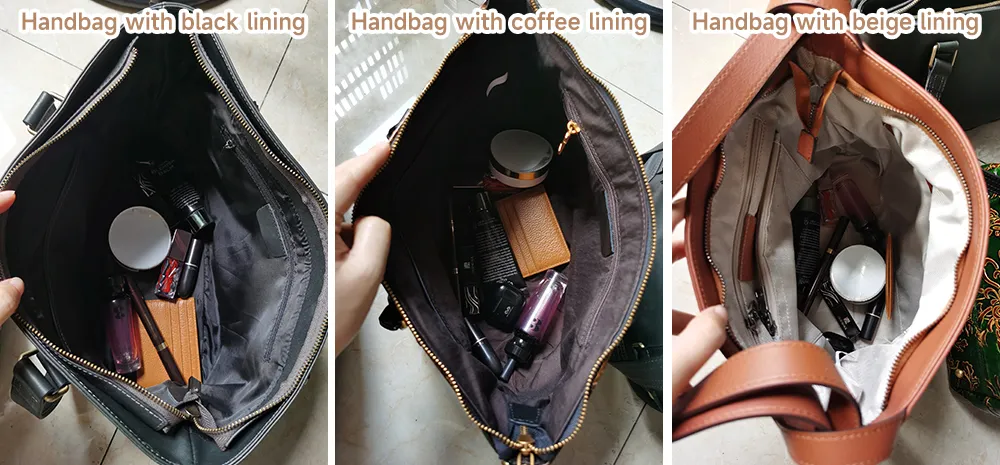
Light and medium linings make small items easier to find. Lipsticks, compact mirrors and wireless earbud cases are easier to spot against a light or medium-colored interior, and inspection is easier because dust, loose threads and stitching show up. White and cream interiors, by contrast, reveal ink, cosmetics and daily marks.
Dark linings hide some daily marks and suit all-black or tonal designs. But a dark lipstick tube, eyebrow pencil or small earbud case can easily disappear against a black lining, and deeply dyed lining fabrics may transfer color if rubbing fastness is inadequate.
In our own handbag projects, some customers have told us that dark linings, especially black ones, make small items difficult to find. This is one reason most of the women’s handbags we now produce use lighter interiors. Beige and medium coffee brown are common choices because they improve visibility without showing everyday marks as easily as white or cream.
This does not mean every women’s handbag needs a light lining. Black interiors still fit all-black designs, tonal colorways or products with a clear brand requirement.
Tonal or Contrast: What Should the Brand Choose?
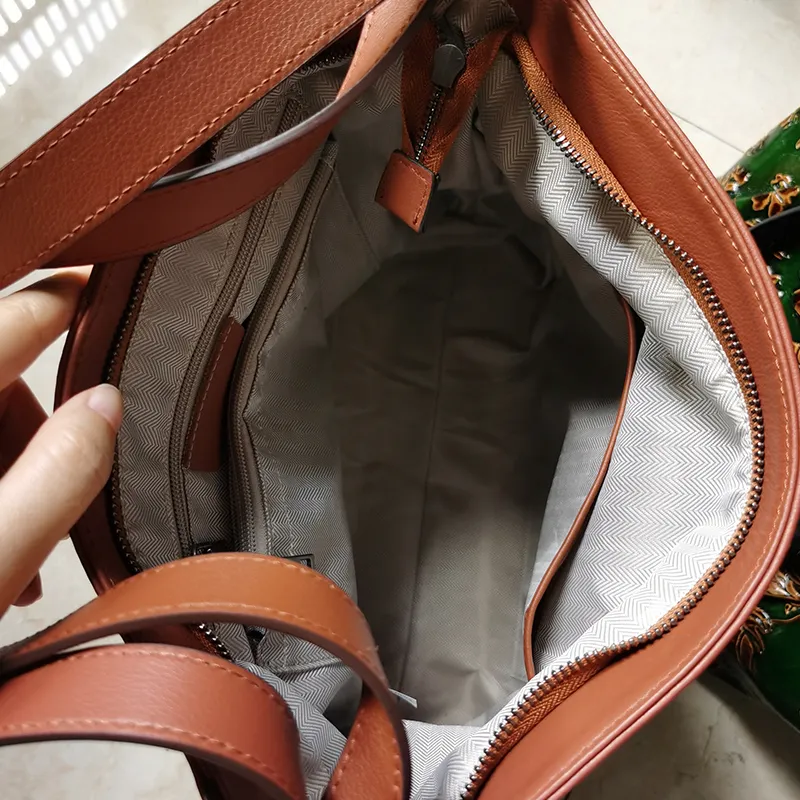
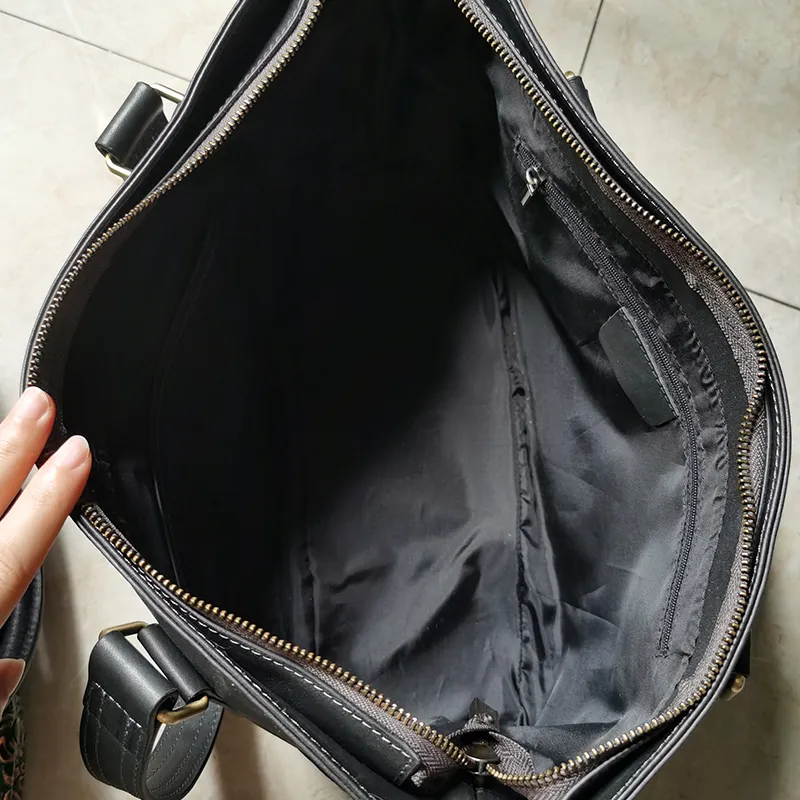
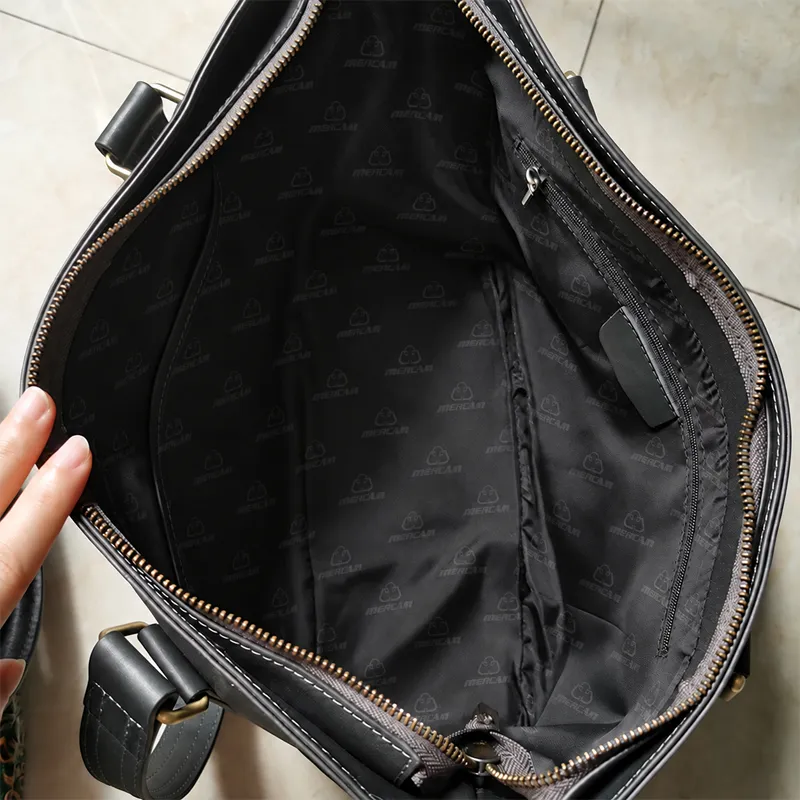
Three directions are common. A tonal lining creates a restrained, coordinated interior. A contrast lining is more noticeable when the bag opens and can become a recognizable part of the design. A signature lining uses a fixed brand color, print or jacquard that ties the bags together.
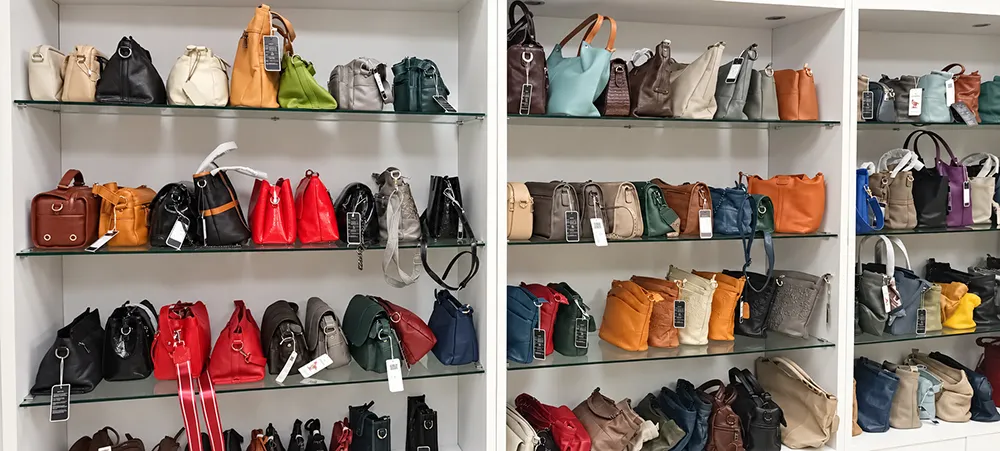
For a wholesale collection, the choice has to work across several styles and exterior colors. Buyers selecting styles from our Wholesale Women’s Leather Handbags catalog can discuss a separate lining plan for each exterior color. The interior also has to work with the zipper tape, thread, binding and label across the line. A custom handbag lining, printed or jacquard, changes sourcing, minimum order quantities and pricing, so plan it early.
Color Cannot Be Separated from Lining Material
Handbag lining color looks and feels different across materials. Cotton linings read natural and matte. Polyester varies in sheen and hand feel depending on the fabric. Suede-like linings shift how light or dark a color appears. Printed and jacquard linings need a check of pattern direction, repeat position and brand mark. Material thickness, flatness, pocket structure and stitching also shape a customer’s judgment. Color is an important part of the product, but not the only measure of quality.
Dark Colors Can Hide Marks but Still Need Testing
Hiding stains does not mean a lining cannot transfer color. A dark or highly saturated lining can rub against light-colored cosmetic pouches, card cases or fabric glasses cases inside the bag. ISO 105-X12 describes a method for checking textile color transfer under rubbing. It does not set one universal pass level for every handbag. The buyer and handbag manufacturer should agree on the relevant test conditions and acceptance criteria before bulk production. Record the agreed conditions in the Leather Bag Sample Approval Checklist so the sample is approved against the same standard.
A Practical Lining Color Comparison
| Lining color or approach | Customer experience | Practical advantage | Main concern | Suitable direction |
|---|---|---|---|---|
| Beige | Clear and neutral interior | Small items are easier to locate | Dirt and ink marks may be visible | Daily women’s handbags |
| Medium coffee brown | Good visibility without looking too light | More forgiving than white or cream | Must coordinate with the outer leather | Brown and warm-toned handbags |
| Black | Tonal and visually practical | Some daily marks are less obvious | Dark lipstick tubes, eyebrow pencils and other small items are harder to find | Black or tonal designs |
| Contrast color | Noticeable interior reveal | Can strengthen product recognition | Harder to coordinate across colorways | Fashion-led or gift products |
| Printed or jacquard lining | Strong private-label identity | Adds recognizable branding | Sourcing, pattern alignment and setup | Branded collections |
What Wholesale Buyers Should Approve Before Sampling
Before sampling, agree these points in writing:
- exterior leather color
- lining material
- physical lining color swatch
- zipper tape color
- interior thread and binding color
- pocket construction
- label or printed pattern direction
- color-transfer test requirement
- lining choice for each exterior colorway
- no material or color substitution without approval
Do not confirm lining color from a phone photo. Screens, light and surface change how a color reads. Approve against a physical swatch and a finished sample, then write the final lining details into the Leather Bag OEM Specification Sheet before bulk production.
Frequently Asked Questions
Q1: Should a handbag lining be light or dark?
There is no single answer that fits every handbag. Decide by visibility, how the bag will be used, the exterior color and the brand direction.
Q2: Does a custom lining color increase MOQ or production cost?
An available stock lining color may avoid custom-dyeing or printing costs, but availability depends on the material, supplier and order quantity. Custom dyeing, printing, jacquard or special materials may affect MOQ, sourcing and quotation.
Q3: How should buyers approve lining color before bulk production?
Confirm the physical color swatch, the material and a finished sample, and put the requirements in writing. A phone photo is not enough.
If you are planning an order for wholesale leather handbags or developing a collection of private label handbags, and want to settle lining color, material and sample requirements, our team at Marrant Leather Manufacturer works through these details before production.
Conclusion
Most of the women’s handbags we now produce use beige or coffee-brown interiors because customers can see their belongings more easily. Black still has a place when the design calls for a tonal look or a specific brand direction.
The practical choice is the color that works inside the finished bag, not the one that looks best on a screen. Approve it in the sample and record the final choice before production starts.