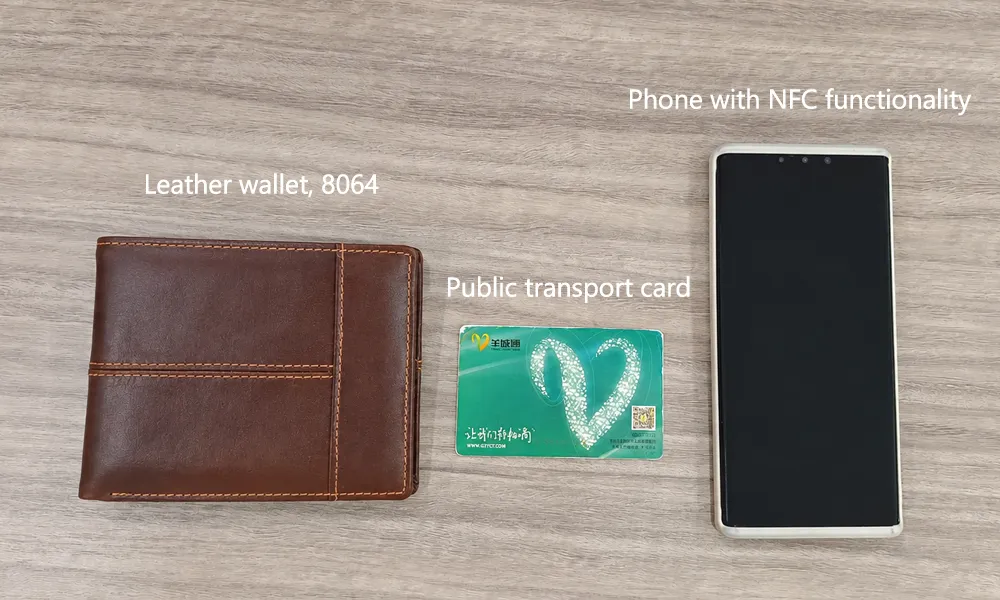
If you are buying RFID blocking leather wallets in bulk, start with a simple control test. Hold a bank card near your phone’s NFC area and make sure the phone detects it. This only works on phones with NFC capability; phones without NFC cannot run this scan. Then put the same card into the wallet, close it, and scan again from the same position. If the phone detects the bare card but not the card inside the wallet, the wallet is reducing the signal under those test conditions.
This is not a certification test, and it does not prove that the wallet blocks every RFID frequency. What it gives you is a quick way to compare samples, check different card slots, and decide whether more formal testing is needed before bulk production.
When you shop for wholesale leather wallets, if buyers test only the main card slot, they may miss differences in shielding coverage across inner pockets, fold areas and ID-window sections. Before you lock in your order, this phone method gives you a result you can discuss with the factory. You can review custom leather wallet specifications together with your factory to confirm which card compartments are intended to provide shielding and how the shielding material covers those areas. The same test works for bifold, trifold and money-clip wallets, but the card positions will change with the construction.
What Does an RFID-Blocking Wallet Actually Block?
RFID covers several frequency ranges and communication systems. NFC operates at a base frequency of 13.56 MHz, and many contactless payment, access and transit cards use technologies within this frequency range. However, whether a phone can detect a particular card also depends on the card protocol, phone hardware, operating system and reader application. The ISO/IEC 14443 family covers contactless proximity-card technology commonly associated with these applications.
A wallet that passes the 13.56 MHz test only cuts down signal transmission for this specific high-frequency band. It can’t automatically block low-frequency (LF) or ultra-high-frequency (UHF) RFID signals used for asset tracking and inventory tags. Be clear about what the result does—and does not—show. A positive phone scan only proves performance under your exact test conditions: the bank card model, NFC antenna position, reading distance, wallet tightness and card angle.
Phone screening is only a preliminary field check, not formal lab certification. Every phone model has different NFC antenna sensitivity, plus system limits that change how the reader behaves. Some apps only register that a card exists, without pulling full data. You only need to log “detected” or “not detected”; you don’t need to read card content.
A failed scan means very little if the phone could not read the bare card first. If the phone cannot stably pick up the card outside the wallet, stop the whole trial. Switch to another bank card or phone to rebuild your baseline first.
Does the RFID Wallet Test Change by Wallet Style?
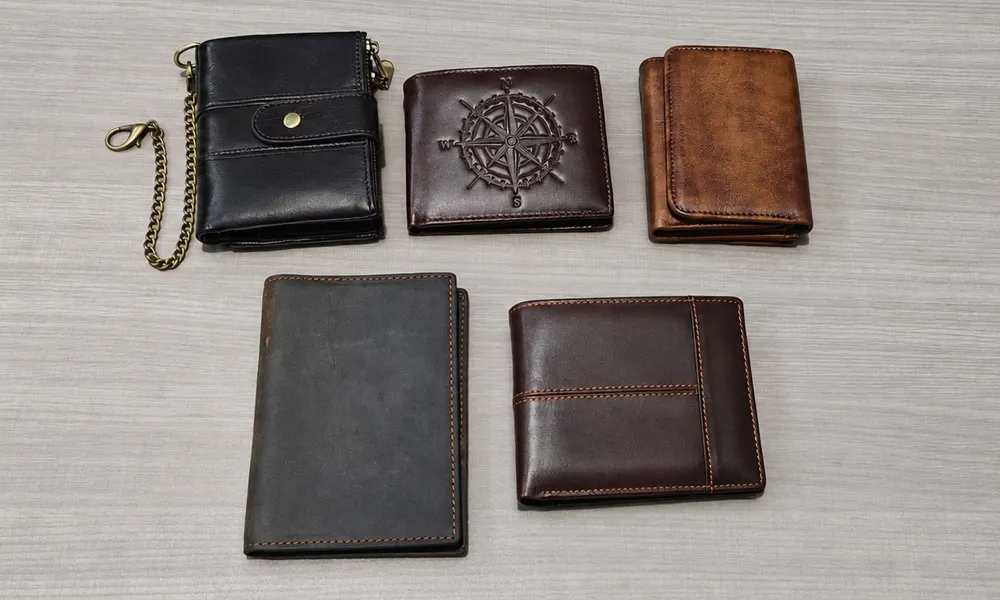
Test steps stay identical, but you need to check different spots based on wallet build. For a standard RFID-blocking bifold wallet, test card slots on both left and right panels separately. For a men’s leather trifold wallet with an ID window, inspect all three folded sections. Pay extra attention to the ID window pocket; only mark this slot as shielded once it consistently passes your scans. When testing an RFID-blocking money clip wallet, check every card slot thoroughly. A metal money clip is not proof of RFID shielding. If your order includes an RFID wallet insert, test the insert alone first, then repeat the test after fitting it inside the main wallet.
An RFID wallet can look nearly identical across styles, but fold lines, seams and pocket layout create weak spots that vary from one design to the next.
What You Need for the Phone Test
You don’t need expensive lab gear to run this RFID blocking wallet test. Gather these basic items before inspecting samples:
- A phone that supports NFC, with the feature turned on in system settings. Use a free NFC reader app to capture consistent detection results.
- A working bank card with a 13.56 MHz chip. Cover all printed card numbers and CVV to protect sensitive financial data while testing.
- The RFID-blocking leather wallet sample you’re evaluating. If you need to test durability, repeat the scan after a buyer-defined number of open-and-close cycles.
Run your baseline control test before checking individual slots. Hold the phone over the bare bank card and confirm the app picks up the card reliably every time. Write this result down as your reference point.
Keep the setup boring and repeatable: same phone, same card, same position. Use the exact same phone placement and reading distance you used for the baseline test on every follow-up scan. If you change the phone halfway through, start the test again.
How to Test an RFID-Blocking Leather Wallet Step by Step
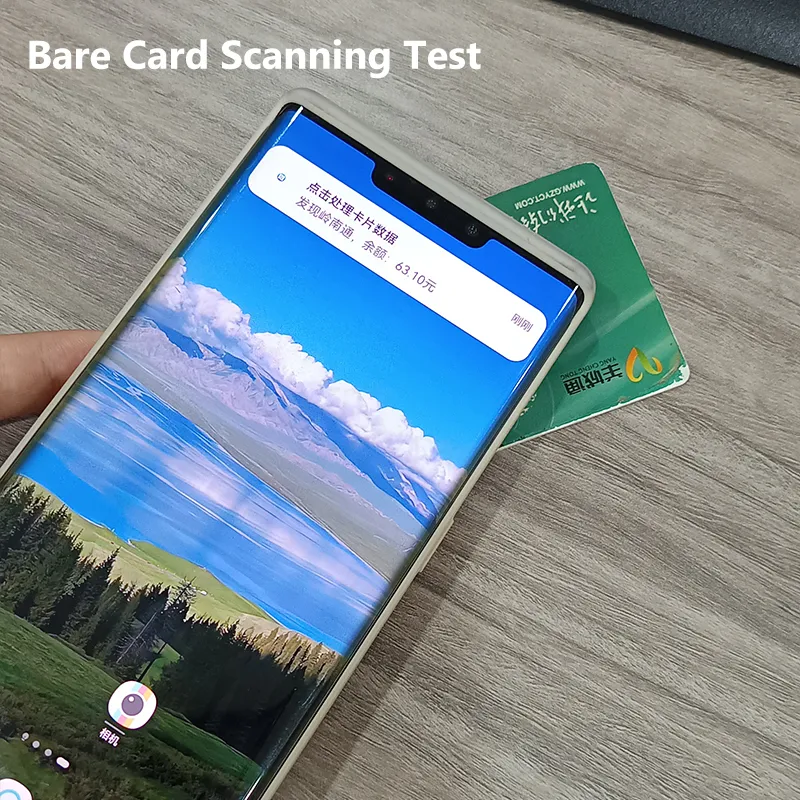
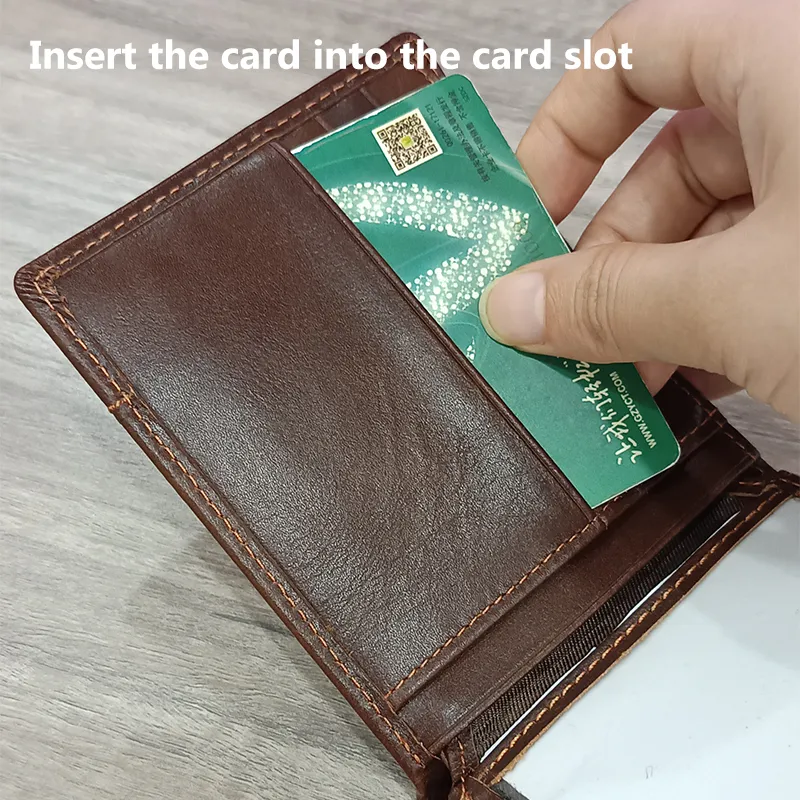
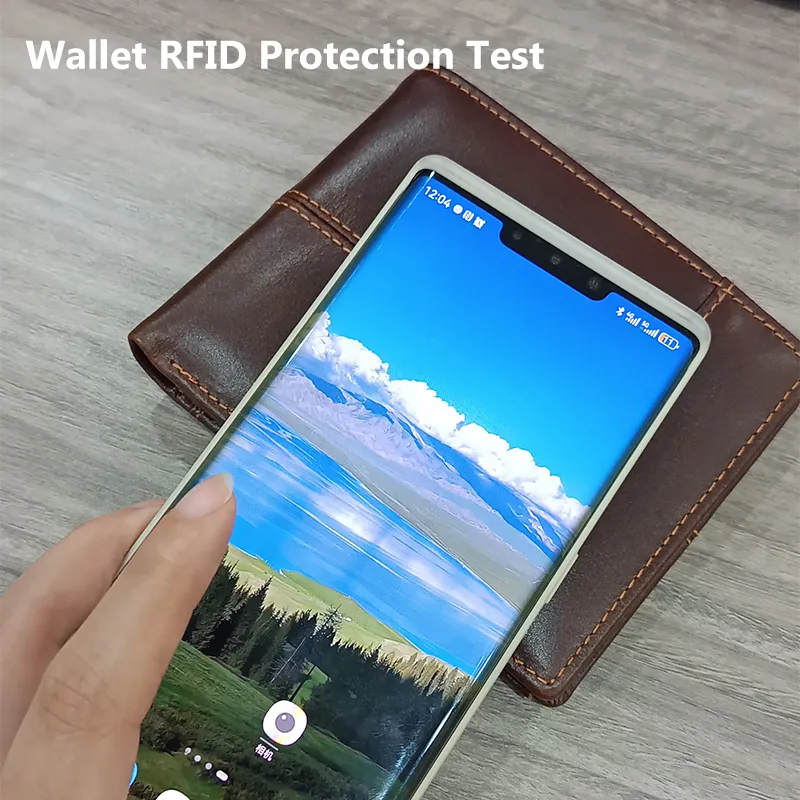
Follow this repeatable workflow for every sample:
- Turn on NFC on your phone.
- Find the general location of your phone’s NFC antenna.
- Run the baseline scan with the bank card outside the wallet.
- Repeat 3–5 times to confirm stable detection. If this step fails, stop the test.
- Slide the bank card fully into the first card slot.
- Close the wallet completely.
- Scan with the phone, matching the position and distance from your baseline test.
- Test every separate card slot, repeating 3–5 attempts per slot.
- Scan from the front, back and edge of the wallet.
- Run scans with the wallet fully closed, half-open and fully open.
- If multiple shielded pockets exist, test each one individually.
- Log each result as “detected” or “not detected” on your record sheet.
If the phone cannot read the bare card, stop—the rest of the test tells you nothing. One pocket may pass while another does not. That is why the control matters.
Can Wallet Thickness Affect the Test Result?
Thickness can push the card farther away from the reader, weakening the NFC signal. But thickness is not the same as RFID shielding. Ordinary leather, lining and filler material only increase physical distance; they do not block NFC signals on their own.
A thick wallet with no shielding material may still stop a phone from picking up the card. This creates a false pass, and you cannot credit the result to RFID blocking material.
You can rule out distance as the cause with a simple spacer test. Grab cardboard or plain leather, materials with no metal content, and stack them to match the closed wallet’s thickness. Place the bank card behind this non-metallic spacer, then scan using the same phone, position and distance from your baseline test. If the phone still detects the card behind the spacer but fails to detect it inside the wallet, the shielding material is likely responsible for the weaker signal.
Storing the wallet inside a fabric pocket adds extra variables. Fabric layers, body tissue and uneven card placement all change the reading distance. Pocket testing only simulates everyday use; it cannot replace the controlled spacer test. Even without RFID shielding, a wallet deep inside a pocket might avoid detection, but the same card can still register if the contactless POS terminal gets close enough.
A phone and a contactless POS terminal do not work the same way. Their antenna strength, hardware and software differ widely. A card that stays hidden from one phone might still be picked up by another reader.
Detection also does not equal a successful payment transaction. The reader may register the card’s presence without completing a charge. Keep this limit in mind when reviewing results.
This phone-based check remains only preliminary screening. It cannot take the place of lab testing, nor can it prove the wallet blocks every RFID frequency or all reader devices.
A Simple RFID Wallet Test Record
The table below shows actual test results completed by Marrant Leather Goods staff for style 8064 wallet.
| Sample | Card position | Wallet condition | Test direction | Number of attempts | Times detected | Observation |
|---|---|---|---|---|---|---|
| 8064-Coffee | Main bifold slot | Fully closed | Front | 4 | 0 | No detection at the baseline position and distance |
| 8064-Coffee | Side inner slot | Fully closed | Back | 4 | 3 | Intermittent detection |
| 8064-Coffee | ID window pocket | Fully closed | Front | 4 | 0 | Consistent no detection |
| 8064-Coffee | Behind non-metallic spacer | No wallet | Front | 4 | 4 | Checks whether distance alone prevents detection |
| 8064-Coffee | Main bifold slot | Closed wallet inside fabric pocket | Front | 4 | 0 | Simulates everyday use but does not replace the controlled test |
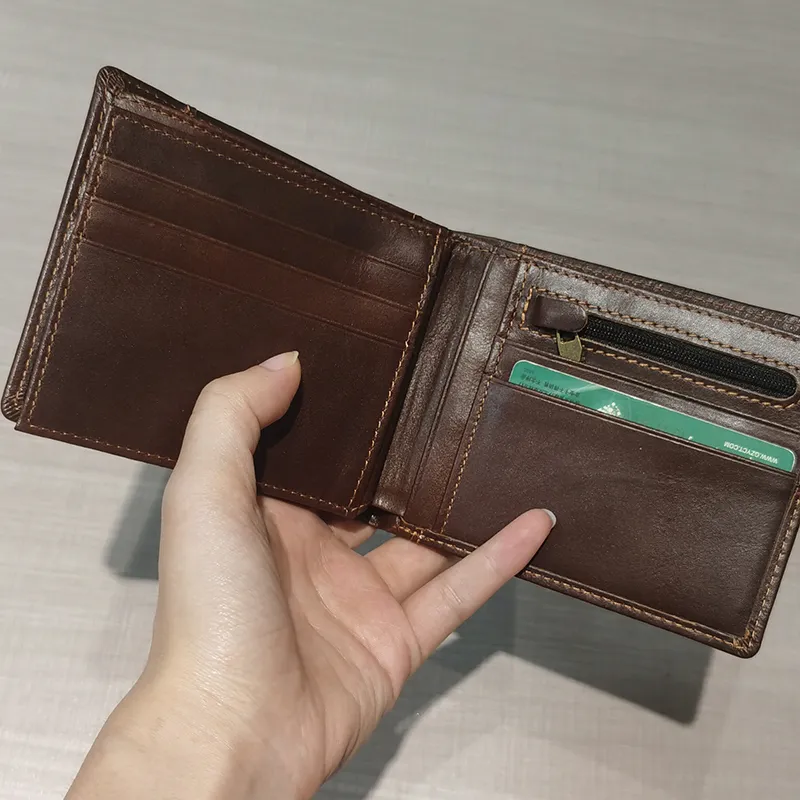
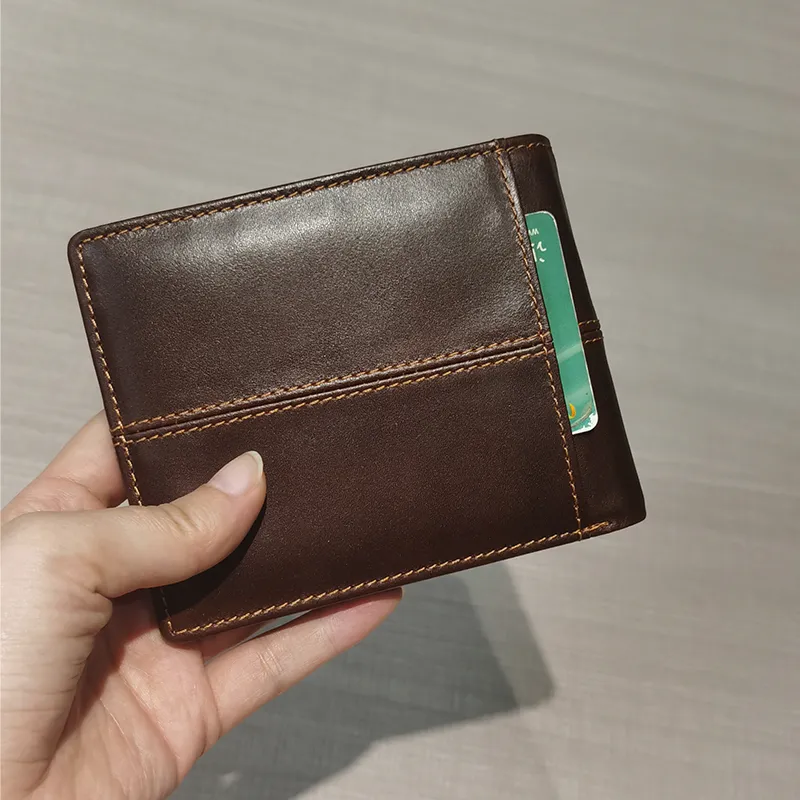
This log separates normal baseline performance from inconsistent shielding. A single “not detected” reading isn’t enough to confirm reliable blocking. For wholesale orders, test multiple samples instead of relying on just one wallet. You can attach these records during your leather bag sample approval checklist review.
Why Every Card Slot Should Be Tested
Different slots can produce different results for straightforward reasons. Shielding material may not line every pocket of the wallet. Fold lines and opening gaps can break the continuous shielding layer. Stitching holes, edge joins and material seams are common weak points.
The card’s orientation inside the pocket also changes signal behavior. Opening the wallet changes the shielding geometry around the card and may expose areas that stay covered when the wallet is fully closed. Repeated opening can shift the shielding lining over time. These small differences apply to bifold, trifold and money clip styles alike.
Why a Phone Test Is Useful but Not a Certification
For buyers, the appeal is simple: the test is quick and easy to repeat. You can even record short video clips to share remotely with your sourcing team or brand partners.
But do not read too much into one phone scan. NFC sensitivity varies widely between phone models, and antenna placement differs across devices. Phone cases can shorten or extend your reading range. Not all bank cards behave the same on the 13.56 MHz frequency.
A phone scan is a quick, convenient method, but it cannot replace formal laboratory testing.
What Wholesale Buyers Should Confirm Before Ordering
Work through this checklist before approving bulk production:
- Which wallet SKUs include RFID shielding lining?
- Which specific pockets get the shielding material?
- What target card type and frequency will you test against?
- Should the wallet pass scans while fully closed, or also while partially open?
- What sample testing protocol will both sides follow?
- How many units will be pulled for random inspection during mass production?
- Do you need test photos, video clips or log sheets for each batch?
- Will you re-test after repeated opening cycles for durability checks?
- Does the added shielding layer change wallet thickness, softness or pocket fit?
Frequently Asked Questions
Q1. Can every bank card be tested with a phone?
Not every bank card works with this phone test. Compatibility depends on the card chip, phone hardware, operating system and NFC reader app. The first step is always verifying that the phone can stably detect the bare card outside the wallet. If the baseline scan fails, swap out the bank card or testing device before you continue with the RFID blocking wallet test.
Q2. Does passing a phone test mean the wallet blocks every RFID signal?
No. A passing phone test only confirms reduced signal transmission for 13.56 MHz NFC signals under your exact test conditions. It does not prove the wallet blocks all RFID frequencies, including LF and UHF bands. Test results only apply to the specific bank card, phone, reading distance, card position and wallet closure state you used. This field screening can’t replace formal laboratory testing.
Q3. Should wholesale buyers test every card slot?
Yes. Different card slots, fold lines, opening edges and card insertion directions create uneven shielding. Weak spots often pop up near seams and folded areas instead of the main card pocket. For sample approval and bulk order random inspections, run scans on every compartment across multiple wallet samples to avoid uneven shielding in large shipments.
Tell us the wallet model, target card type, required quantity and branding method. Our team can help you review the product specification and sampling requirements before bulk production.
Conclusion
This phone-and-bank-card method is a useful first check for wholesale buyers, brand owners and corporate gift procurement teams. Start with a solid baseline test, scan every individual card slot, log results consistently, and keep the technical limits of 13.56 MHz NFC screening in mind. You can verify sample performance before approving mass production. Remember that this field check only serves as preliminary screening, not full lab certification. If you need to adjust shielding lining placement or revise custom leather wallet specifications for your order, contact Marrant Leather Goods to agree on how samples and bulk goods will be checked.