Have you ever wondered why a genuine leather bag costs hundreds or even thousands of dollars? The genuine leather bag cost you see on a store shelf has very little to do with what it actually costs to make. In this genuine leather bag cost breakdown, we pull back the curtain on top-grain cowhide bag production, using real factory data to show you exactly where your money goes — and where it does not.
Understanding the genuine leather bag cost structure helps you make smarter purchasing decisions. You will learn why two bags that look identical can carry wildly different price tags, and why the genuine leather bag cost at a department store is often 3 to 10 times higher than the factory price.
Important Disclaimer: All industry cost data in this article is for reference only. Actual top-grain cowhide bag cost varies according to real-time market raw material prices, leather grades, custom designs, production techniques and market fluctuations.
The Real Genuine Leather Bag Cost: Factory Price vs. Retail Price
A standard top-grain cowhide bag produced in a reputable factory carries a production cost of only $17–$28 at the factory gate. Yet the same bag retails for $100–$300 or more. Why? Because the genuine leather bag cost you pay at retail includes massive brand markup, channel costs, and marketing expenses that have nothing to do with product quality.
Based on Marrant production data covering over 100,000 top-grain leather bags shipped annually, here is the complete genuine leather bag cost breakdown.
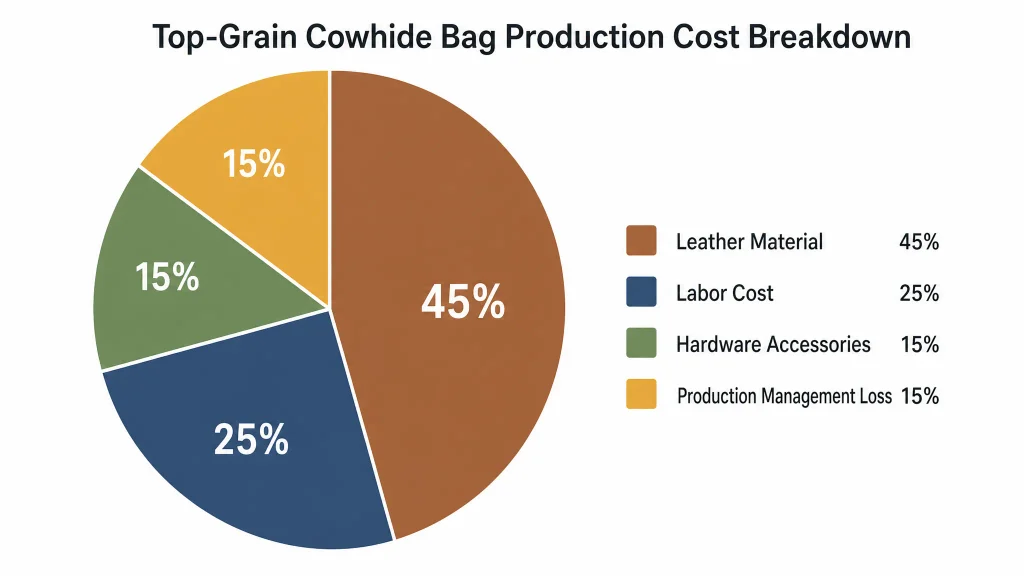
Genuine Leather Bag Cost Breakdown by Component
| Cost Component | Percentage | Details |
|---|---|---|
| Top-Grain Leather Material | 45% | Largest cost item. Standard top-grain cowhide costs $4–$7 per square foot; one bag requires 2–3 sq ft, putting material alone at $11–$21. Imported leather can cost 2x more. |
| Labor | 25% | Covers 8 production stages including cutting, stitching, edge painting, and QC. A skilled worker finishes only 3–5 bags per day. Labor runs $4–$7 per bag; high-end handmade styles can reach 40%. |
| Hardware & Accessories | 15% | Zippers, buckles, lining, dust bags, packaging. Standard hardware costs $2–$4 per bag; premium hardware like YKK can push this above 20%. |
| Production Loss & Overhead | 15% | Leather cutting waste (20–30% normal loss rate), factory utilities, operations management, QC. Roughly $2–$4 per bag. |
| Brand Markup | +300–900% | Brand marketing, channel costs, profit. Unrelated to product quality — this is the core reason retail prices are high. |
1. Top-Grain Leather: 45% of the Genuine Leather Bag Cost
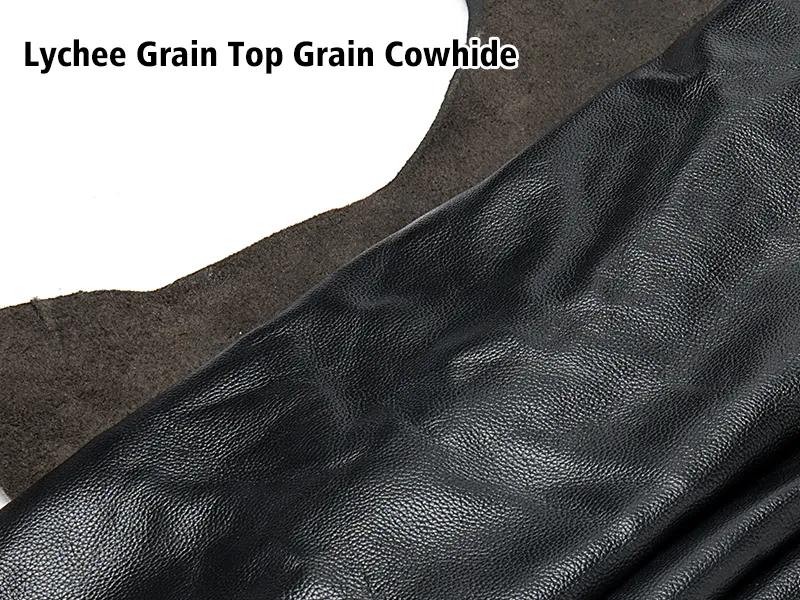
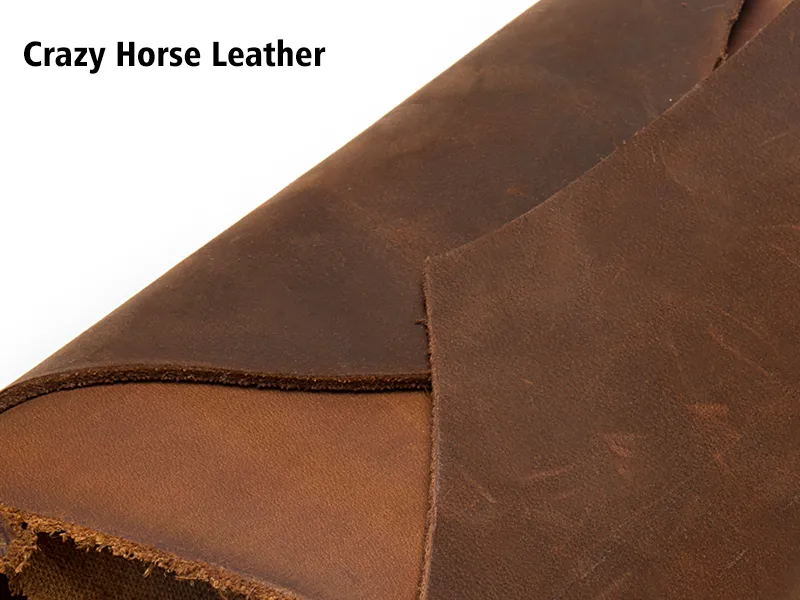
The single biggest driver of any leather bag’s price is the hide itself. Top-grain leather — the outermost layer of the cowhide, prized for its durability and natural grain — accounts for roughly 45% of the total genuine leather bag cost.
Standard top-grain cowhide retails for $4–$7 per square foot. A medium-sized bag consumes 2–3 square feet, meaning the leather alone costs $11–$21. If a brand uses imported Italian or French leather, the genuine leather bag cost from materials alone can double or triple.
This is also where many cut-rate sellers save money. Bags advertised at $20–$30 rarely use true top-grain leather; they substitute split leather, bonded leather, or PU-coated materials that look similar but last a fraction as long.
2. Labor: 25% of the Genuine Leather Bag Cost
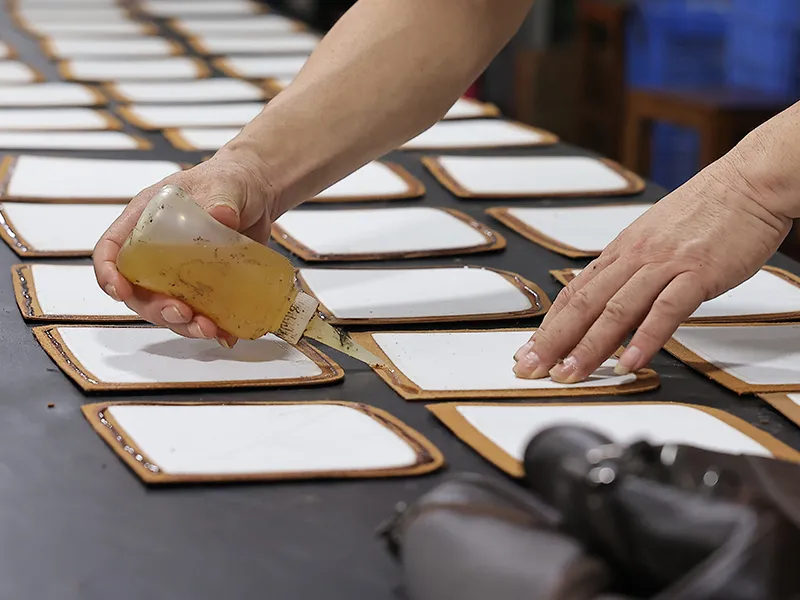
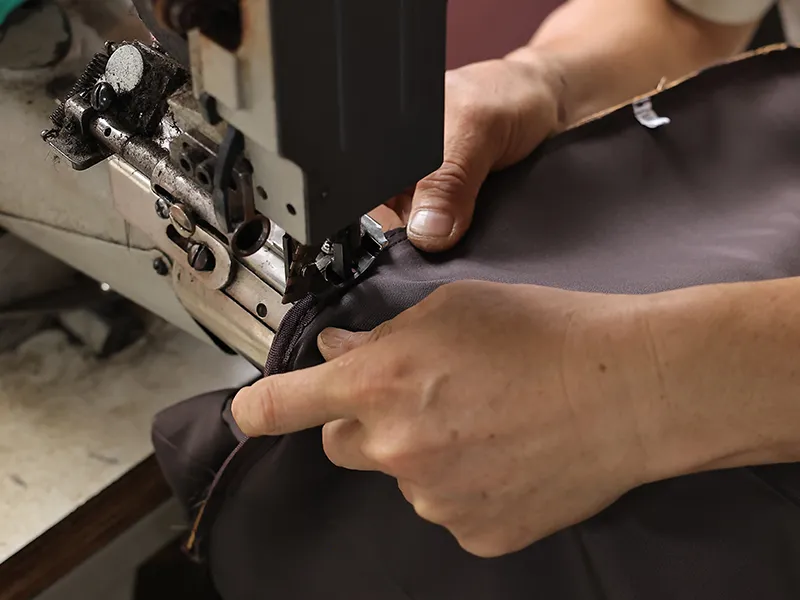
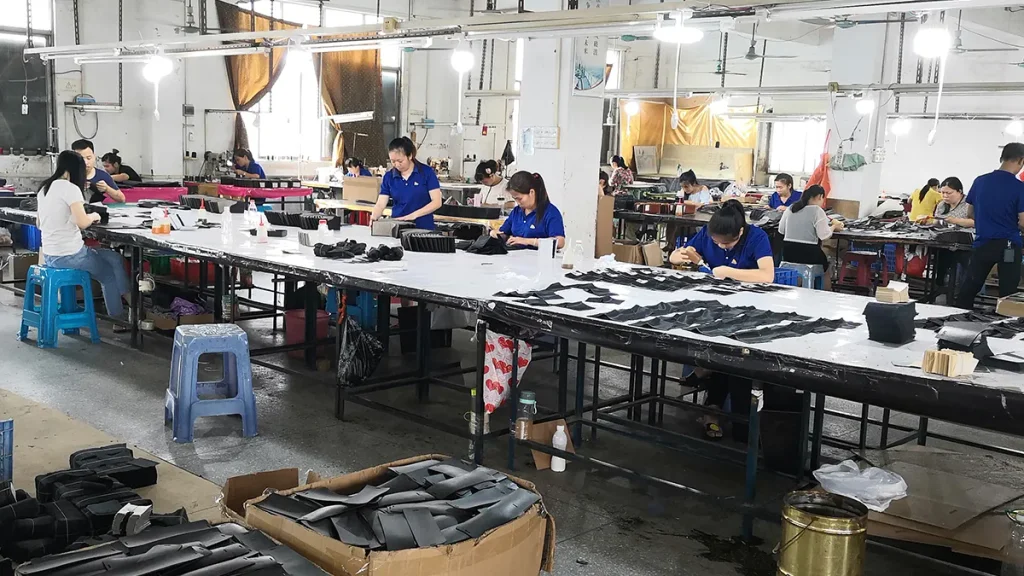
Labor is the second-largest component of the genuine leather bag cost, at about 25%. A quality top-grain leather bag passes through at least eight specialized stages: pattern making, cutting, skiving, stitching, edge painting, assembly, hardware installation, and final quality inspection.
A skilled artisan can complete only 3–5 bags per day. That translates to roughly $4–$7 in labor per bag for standard production. For fully handmade or artisanal styles, labor can swell to 40% of the genuine leather bag cost, because every stitch is done by hand and each bag takes days to complete.
3. Hardware and Accessories: 15% of the Genuine Leather Bag Cost
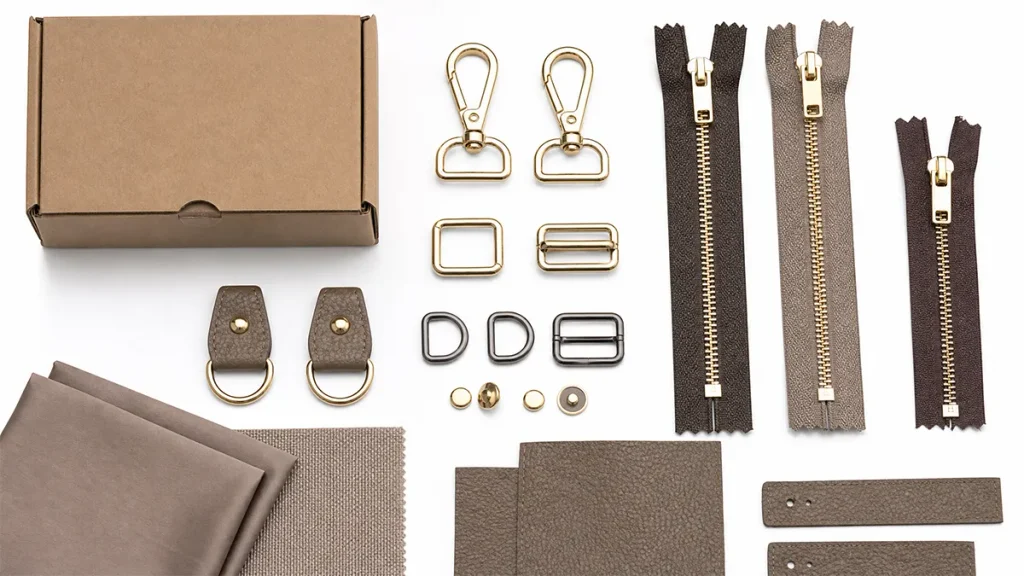
Hardware and accessories make up about 15% of the total production cost. This category includes zippers, buckles, clasps, D-rings, lining fabric, dust bags, and retail packaging.
Standard zinc-alloy hardware costs $2–$4 per bag. However, upgrading to premium components — YKK zippers, solid brass buckles, custom-engraved logos — can push this category above 20% of the genuine leather bag cost. Hardware is also one of the first places cheap brands cut corners, which is why budget bags often suffer broken zippers and tarnished buckles within months.
4. Production Loss and Overhead: 15% of the Genuine Leather Bag Cost
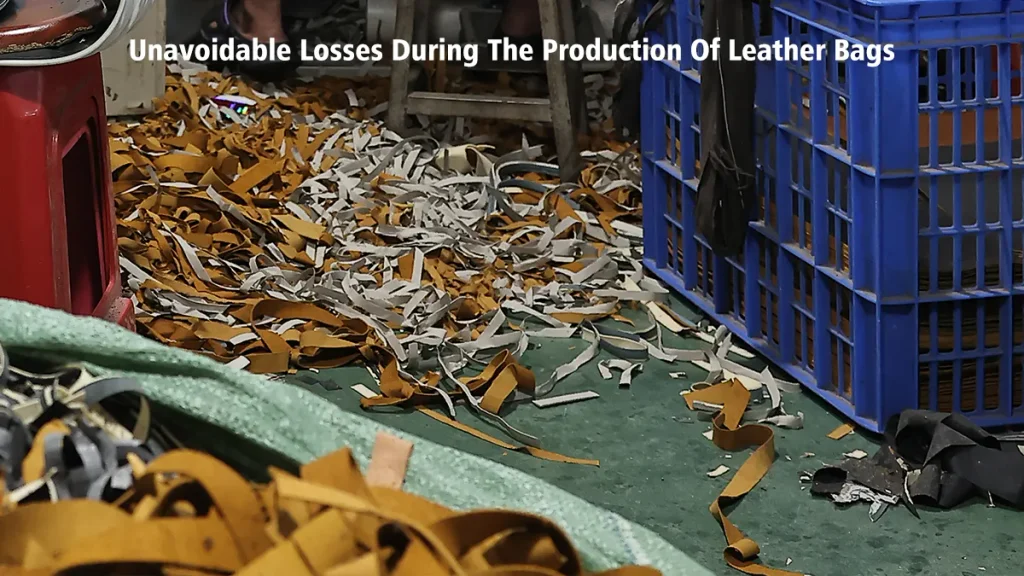
The final 15% of production cost comes from production loss and factory overhead. Leather is a natural material with inherent imperfections — scars, stretch marks, and uneven thickness — so cutters must work around defects. A normal waste rate is 20–30%, meaning nearly a third of every hide ends up as scrap.
Add factory utilities, equipment maintenance, operations staff, and quality control, and you get another $2–$4 per bag. This category is often invisible to consumers but is a real and unavoidable part of the genuine leather bag cost.
5. Brand Markup: The 300–900% Hidden Cost
Here is the part that surprises most shoppers: none of the above explains why a genuine leather bag costs $200+ at retail. The factory genuine leather bag cost is $17–$28. Everything above that is brand markup.
Retail brands add 300–900% on top of the factory price to cover:
- National and international advertising campaigns
- Department store rent and commissions
- Wholesale distributor margins
- Brand licensing and celebrity endorsements
- Corporate profit
In other words, when you buy a $200 top-grain leather bag from a department store, over 80% of what you pay has nothing to do with the bag’s quality, materials, or craftsmanship. It pays for the logo and the storefront.
Frequently Asked Questions
Q1: Can I buy a real top-grain cowhide bag at a low budget?
Yes absolutely. The actual production cost of a standard genuine top-grain leather bag is only $18-$30. By choosing factory-direct leather brands without high brand premiums, consumers can purchase authentic, durable top-grain cowhide bags at a friendly budget without overpaying for brand reputation.
Q2: Why are some so-called top-grain leather bags extremely cheap?
Ultra-low-priced leather bags on the market are almost non-authentic products. Most sellers use split leather, spliced leather or recycled leather to counterfeit top-grain cowhide, or cut standard production processes and adopt defective low-grade leather to reduce costs. These fake leather bags have less than 1/3 the service life of standard genuine leather bags and easily peel, crack or harden after short-term use.
Q3: Does higher price mean better quality for genuine leather bags?
Not necessarily. Once a leather bag’s retail price exceeds $45, the increased cost mainly belongs to brand marketing, channel circulation and store operating expenses, which have no direct relation to leather quality and craftsmanship. For formal factory-produced top-grain cowhide bags, most price increments above production cost are pure brand profits rather than quality upgrades.
Q4: How can I verify a bag is real top-grain leather?
A: Check the grain pattern (natural, irregular, not uniform), smell (genuine leather has a distinct earthy scent), and edge finish (top-grain shows a fibrous, unfinished edge on close inspection). Reputable factory-direct brands will clearly state “top-grain cowhide” and provide material certifications.
👉 See also: Methods for identifying genuine leather bags
Conclusion: Master the Genuine Leather Bag Price Breakdown for Wise Shopping
After analyzing the full top-grain cowhide bag cost structure, consumers can clearly distinguish between real product value and virtual brand premium. The core quality of a leather bag depends on authentic top-grain cowhide material and standardized handmade procedures, not high retail pricing. Mastering the accurate genuine leather bag price breakdown helps you avoid shopping traps and buy high-quality real leather bags at a reasonable real cost.
👉 Discover More Genuine Leather Bags
Content may be reused for non‑commercial purposes with source credit: Marrant Leather Official Site.