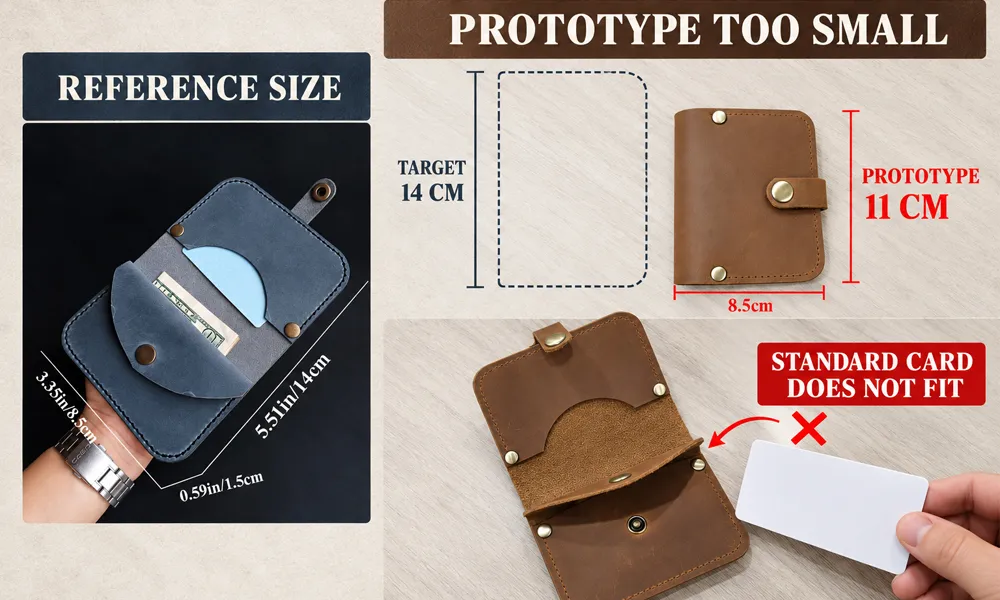
A card slot can have all the right millimetre marks on paper, and still end up too tight to use. We once handed a pattern maker a product photo with clear dimension labels, and asked them to turn it into a real leather card holder. The numbers looked obvious, so we never stopped to spell out exactly what each one was measuring. When the first sample came off the bench, the slot was so much smaller than expected, no standard card could slide in. We had no choice but to scrap that first version and start the pattern all over again.
That experience taught us card slot tolerance is never something you can nail just by copying a number off a picture. The problem was never a single typo—it was that no one had sat down and agreed what that printed measurement was even supposed to represent.
Why a Dimensioned Photo Still Gives You the Wrong Slot
A product shot with millimetre labels looks like a full, clear spec, but it never tells the whole story of a stitched leather pocket. That one number on the print could mean the width of the flat cut leather, the width of the slot opening you see on the outside, the gap between two lines of stitching, the actual empty space inside the pocket, or even the full outer width of the whole card holder. None of those are the same thing.
Start with the Actual Card, Not the Pattern
Skip jumping straight to drawing lines on paper. Start with the real card people are going to use. The ID-1 format defined under ISO/IEC 7810 measures 85.60 × 53.98 mm and is commonly used for payment cards and many identification cards.
This is the card dimension, not the finished slot dimension. If you just copy that number straight onto your pattern, you will almost always end up with a pocket that the card cannot even fit through the opening. Local ID cards, thick access fobs and thick printed business cards all have slightly different sizes, so lock in exactly which physical card you are building for first.
Design Clearance Is Not the Same as Production Tolerance
These two get mixed up all the time, and that confusion wastes so many sampling rounds. Design clearance is the extra little bit of space you intentionally build into the slot, so the card can slide in and out smoothly. Production tolerance is the tiny, natural variation in finished size that shows up across dozens or hundreds of identical pieces.
You can hit every single production tolerance number on your sheet and still end up with a slot that does not work, if your starting clearance was already too tight. Even a tiny stitch drift, uneven skiving or a little glue bleed can push some pockets out of acceptable range. If you want to catch these little gaps early, check out our notes on wallet specifications buyers often miss.
Where All Your Usable Slot Space Disappears
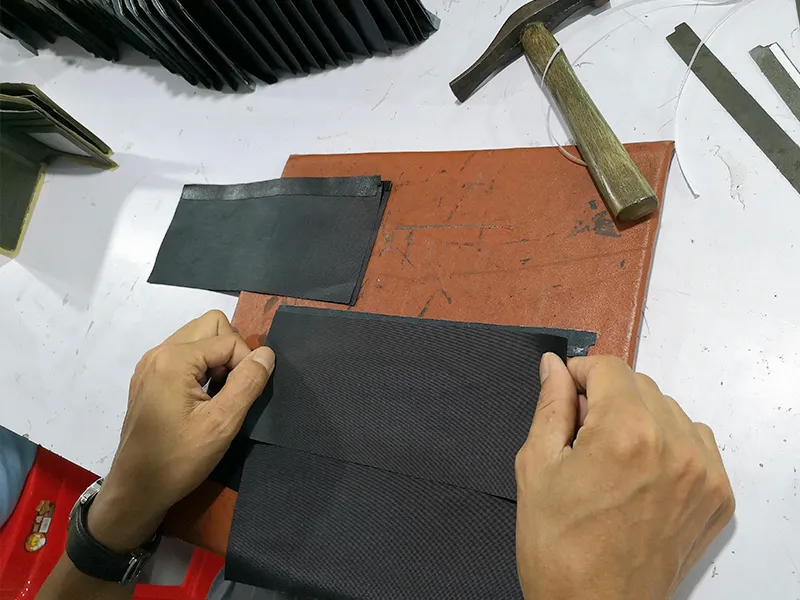
The empty space inside a card holder shrinks in small, easy-to-miss ways that no flat 2D drawing will ever show you. When you fold the leather edge over to finish the slot opening, that folded strip eats up a chunk of the width you had on the flat pattern. Thicker leather and stacked layers on the spine side of the pocket take up even more room.
If your stitching line drifts even a little inward, it narrows the path the card has to travel. Even a thin line of glue that creeps a few millimetres inside the pocket will stiffen the entry and make the whole slot feel way tighter. Lining material and reinforcement panels add extra thickness too, none of which showed up on your original flat pattern.
The Same Pattern Fits Differently in Different Leather
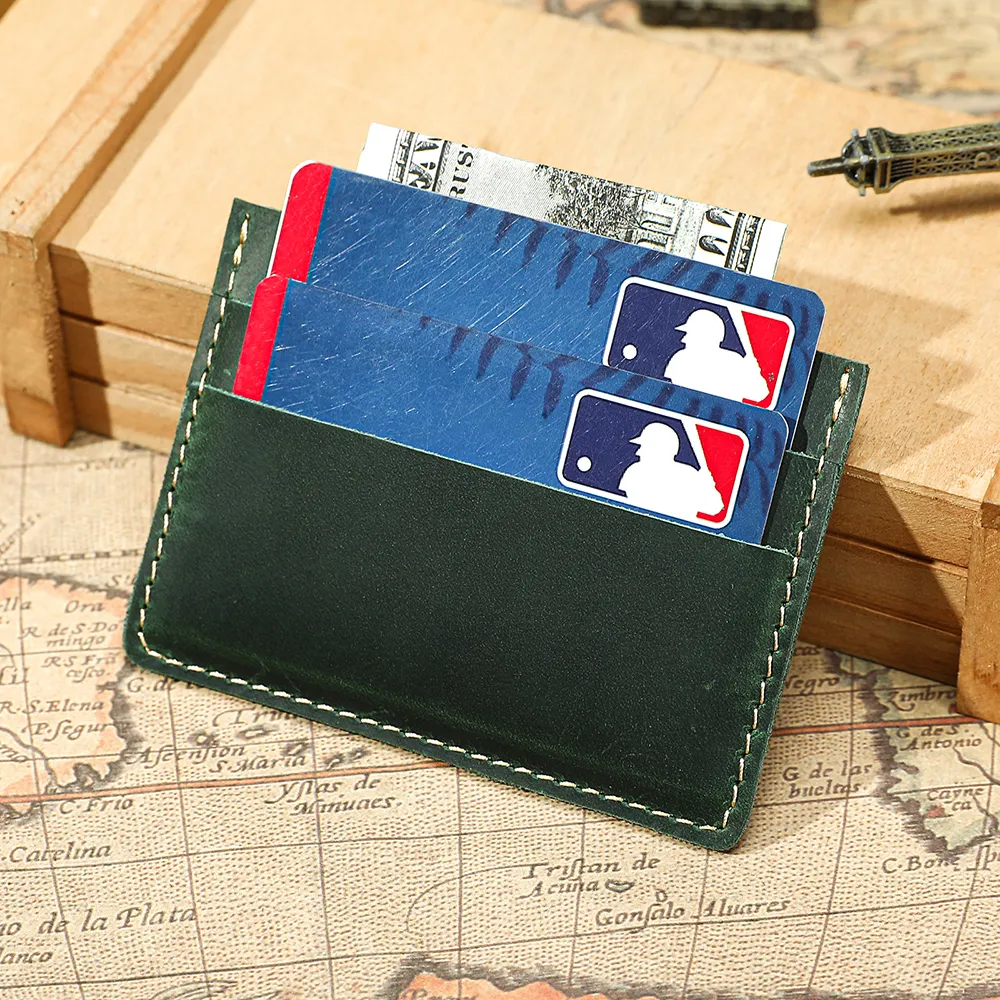
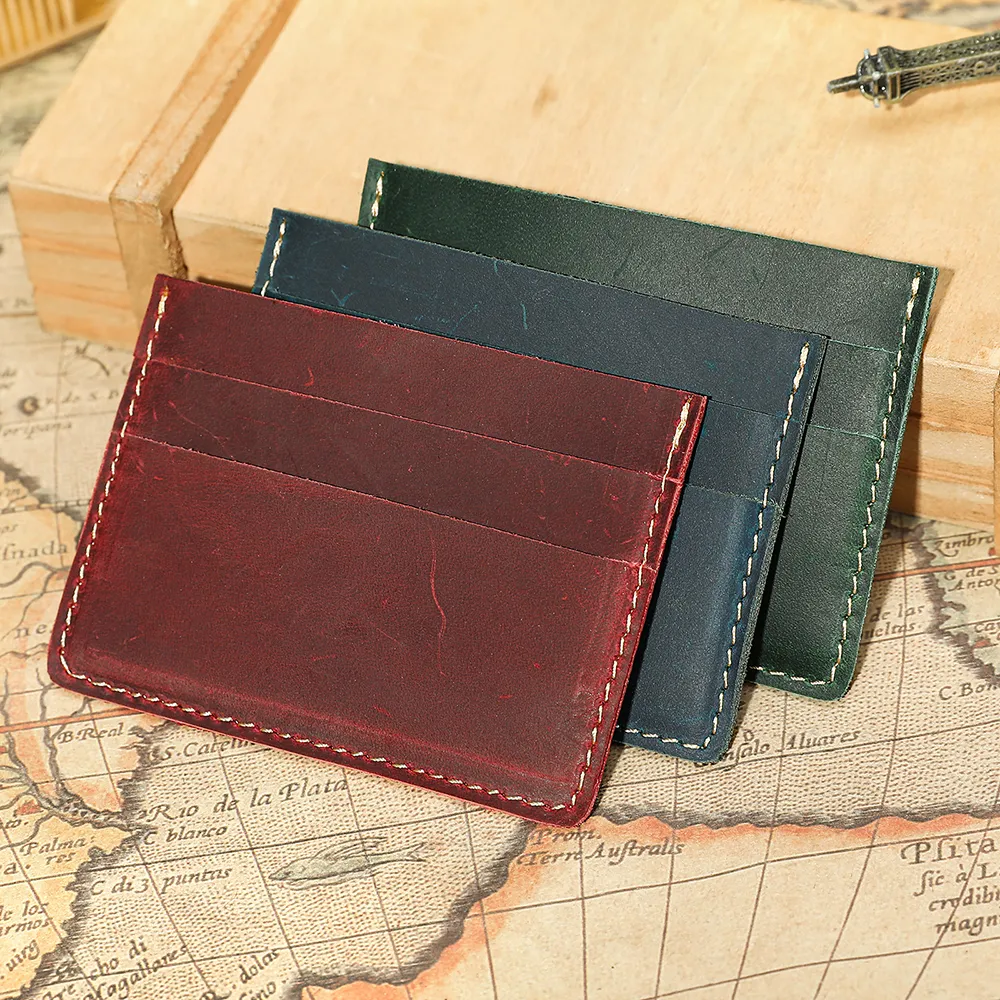
A firm leather with limited stretch will hold the slot shape differently from a softer, more flexible leather. Thickness, temper and skiving should all be considered before the same pattern is reused. A slot finished with folded edges will never feel the same as one finished with burnished edges. It is common to hear someone say “it will break in after a few uses”, but that is never a good excuse to approve a sample that makes you push hard, bend the card, or dig your nail under the edge just to pull it back out. If the very first insertion feels wrong, the slot is already too tight.
One Card per Slot Is Nothing Like Two Cards
One requirement that is often left unwritten is how many cards each pocket should actually hold. A slot made for one single card feels totally secure when empty, but it will pinch and jam the second someone tries to force a second card inside.
A pocket built for two cards needs extra room at the opening, different skiving on the entry edges, and just enough give to take double the thickness without stretching out permanently. Even a central slip pocket needs its own clear capacity rule, you cannot just split the total stated card count evenly across every single slot. Make sure you write that down clearly on your OEM specification sheet.
How to Test a Card Holder Sample the Right Way
You cannot approve a slot just by measuring it with a ruler. The only real check is to test it with the actual card. Grab the exact test card you all agreed on at the start, and use a sample that is already cut from your final confirmed leather, lining and reinforcement materials.
Check that very first insertion, before the slot has had any chance to stretch open. Make sure the card slides back out smoothly without catching. Flip the whole holder upside down and shake it a little, to make sure the card does not just fall out on its own. Load every slot up to its maximum stated number of cards, then confirm the whole holder still closes flat with no unexpected bulges. Compare every slot side by side, so you can spot if one is noticeably tighter or looser than the rest. You can incorporate all these steps into your workflow using our sample approval checklist.
| Condition | What the buyer may notice | Possible production or design cause |
|---|---|---|
| Too tight | Card needs force to insert, bends, or sticks on removal | Internal width too small, thick folded edges, stitching too far in, glue inside |
| Balanced fit | Card slides in and out smoothly, stays put when carried | Clearance matched to material, even stitching, no excess glue |
| Too loose | Card shifts, a gap stays open, or falls out when inverted | Too much clearance, stretched leather, stitching too far out |
| Uneven between slots | Some pockets tight, others loose on the same sample | Inconsistent stitching or skiving, thickness variation across the hide |
| Fine empty, bulky loaded | One card per slot is fine, but the holder will not close when full | No allowance for stacked thickness, capacity never tested with real cards |
How to Control Card Slot Tolerance in Bulk Production
Once the specification is measurable, a bulk run becomes easier to control. Before you lock in the order, walk through and confirm all these points with your factory:
- the exact test card type you will use for approval
- how many cards each individual slot is supposed to hold
- exactly which spot on the slot opening you will use to measure width
- the real usable empty space inside the finished pocket
- how much of the card should stick up out of the slot for easy access
- where the stitching line should sit relative to the slot edge
- exactly which area of the pocket gets skived, and which does not
- the no-glue zone right around the slot opening
- how the slot edge will be finished and constructed
- the agreed production inspection plan includes a functional card insertion and removal test
- that everyone is working from the exact same approved golden sample
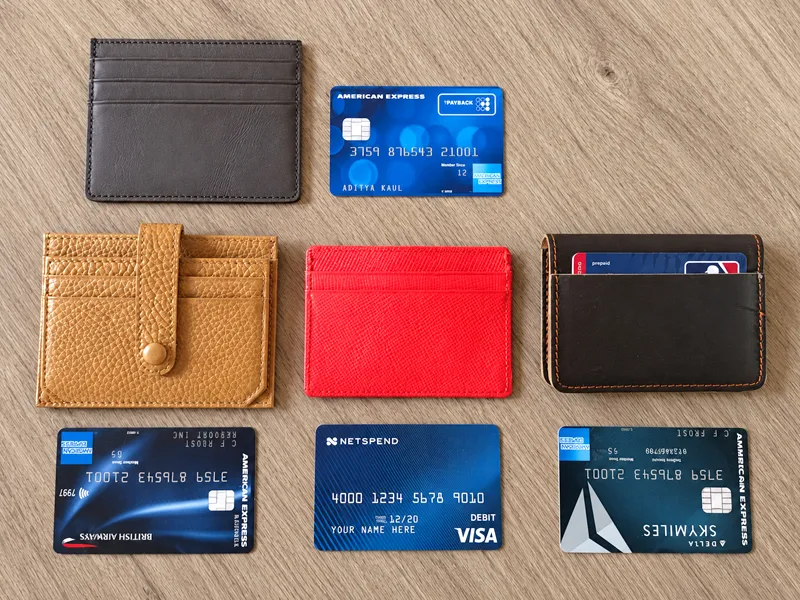
No single universal millimetre tolerance works for every leather and every design, so lock in your acceptable range around the golden sample you already tested and agreed on. If you want to feel different slot performances in real life before you lock your own design, you can browse our full range in the wholesale leather wallets and card holders catalog.
Frequently Asked Questions
Q1: What is the correct card slot size for a leather card holder?
There is no single universal number that fits every design. It depends on the exact card you are using, the leather, the opening finish, and the cards per pocket. Always start from the physical test card, not an arbitrary dimension copied from a reference.
Q2: Should a new leather card slot feel tight?
It should feel secure, not resistant. If you have to push hard, bend the card, or lift it out with a nail, it is too tight. Some softening over time is normal, but that should never be treated as a fix for a badly sized pocket in a new sample.
Q3: How should buyers check card slot consistency in bulk production?
Do not only measure outer dimensions. Pull units from different batches across the whole run, load every slot with your agreed test card, and run the exact same insertion and removal test you used on the approved golden sample. Confirming sample frequency and inspection scope should be defined between buyer and factory on the final order sheet.
If you are developing a new custom leather card holder line and want to define your slot requirements clearly before sampling, reach out to discuss your project.
Conclusion
Card slot tolerance is never just one single number on a spec sheet. It is all the small, practical decisions you make about how you define the pattern, set your clearance, select your material, finish the edges, place your stitches and test your samples. When buyers and factories align on what every measurement actually means, and agree that the physical card test is the real final approval, most slot-related issues can be prevented early in the process.